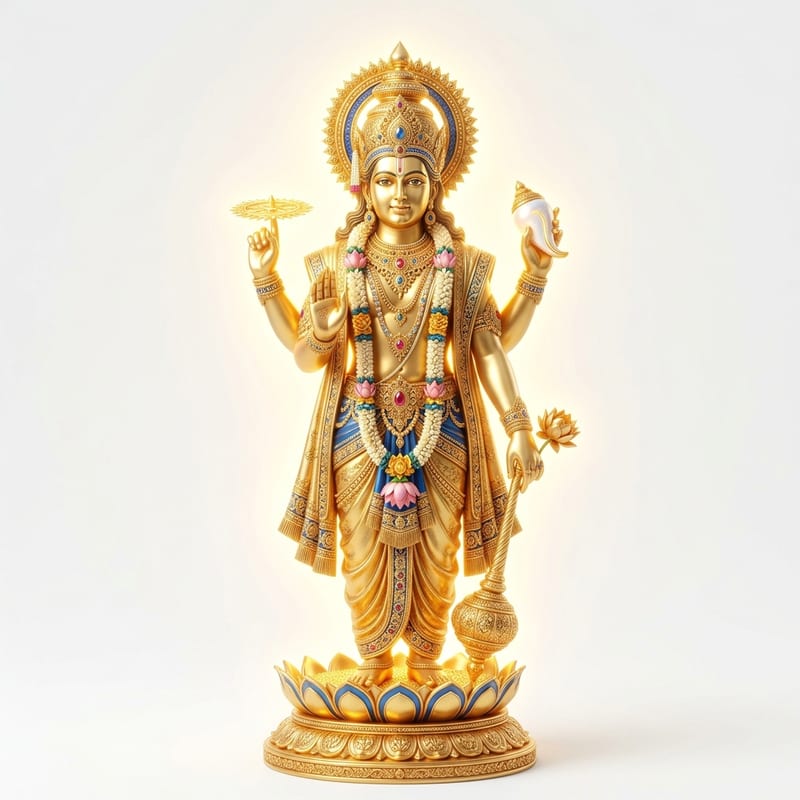
ശ്രീവിഷ്ണുസഹസ്രനാമസ്തോത്രമ്
The Hymn of the Thousand Names of Lord Vishnu (Shri Vishnu Sahasranama Stotram).
ഓം
ശ്രീപരമാത്മനേ നമഃ ।
നാരായണം നമസ്കൃത്യ നരം ചൈവ നരോത്തമമ് ।
ദേവീം സരസ്വതീം വ്യാസം തതോ ജയമുദീരയേത് ॥
Om. Salutations to the Supreme Self (Paramatman). Having bowed down to Narayana, and to Nara, the best of men, as well as to the Goddess Sarasvati and Sage Vyasa, one should then utter the word of victory (Jaya).
ഓം അഥ സകലസൌഭാഗ്യദായകം ശ്രീവിഷ്ണുസഹസ്രനാമസ്തോത്രമ് ।
ഹരിഃ ഓം ॥
Om. Now begins the Shri Vishnu Sahasranama Stotram, which bestows all forms of prosperity and auspiciousness. Harih Om.
ശുക്ലാമ്ബരധരം വിഷ്ണും ശശിവര്ണം ചതുര്ഭുജമ് ।
പ്രസന്നവദനം ധ്യായേത് സര്വവിഘ്നോപശാന്തയേ ॥ ൧॥
One should meditate upon Lord Vishnu, who wears white garments, who is of the color of the moon, who has four arms, and who has a serene and cheerful countenance, for the pacification of all obstacles.
യസ്യ ദ്വിരദവക്ത്രാദ്യാഃ പാരിഷദ്യാഃ പരഃ ശതമ് ।
വിഘ്നം നിഘ്നന്തി സതതം വിഷ്വക്സേനം തമാശ്രയേ ॥ ൨॥
I take refuge in Vishvaksena, whose attendants, led by the elephant-faced Ganesha and numbering more than a hundred, constantly destroy all obstacles.
വ്യാസം വസിഷ്ഠനപ്താരം ശക്തേഃ പൌത്രമകല്മഷമ് ।
പരാശരാത്മജം വന്ദേ ശുകതാതം തപോനിധിമ് ॥ ൩॥
I bow down to Sage Vyasa, the great-grandson of Vashistha, the grandson of Shakti, the sinless son of Parashara, the father of Shuka, and an ocean of penance.
വ്യാസായ വിഷ്ണുരൂപായ വ്യാസരൂപായ വിഷ്ണവേ ।
നമോ വൈ ബ്രഹ്മനിധയേ വാസിഷ്ഠായ നമോ നമഃ ॥ ൪॥
Salutations to Vyasa who is of the form of Vishnu, and to Vishnu who is of the form of Vyasa. Salutations, repeated salutations, to him who is a treasure of Brahman (Vedic knowledge) and a descendant of Vashistha.
അവികാരായ ശുദ്ധായ നിത്യായ പരമാത്മനേ ।
സദൈകരൂപരൂപായ വിഷ്ണവേ സര്വജിഷ്ണവേ ॥ ൫॥
Salutations to Vishnu, the all-conquering, who is changeless, pure, eternal, the Supreme Self, and who always possesses a single, unchanging form.
യസ്യ സ്മരണമാത്രേണ ജന്മസംസാരബന്ധനാത് ।
വിമുച്യതേ നമസ്തസ്മൈ വിഷ്ണവേ പ്രഭവിഷ്ണവേ ॥ ൬॥
Salutations to that Vishnu, the all-powerful Lord, by mere remembrance of whom one is liberated from the bondage of the cycle of birth and worldly existence.
(നമഃ സമസ്തഭൂതാനാമാദിഭൂതായ ഭൂഭൃതേ ।
അനേകരൂപരൂപായ വിഷ്ണവേ പ്രഭവിഷ്ണവേ ॥)
ഓം നമോ വിഷ്ണവേ പ്രഭവിഷ്ണവേ ॥
(Salutations to Vishnu, the all-powerful Lord, who is the primeval source of all beings, the supporter of the earth, and who manifests in manifold forms.) Om, salutations to Vishnu, the all-powerful Lord.
ശ്രീവൈശമ്പായന ഉവാച---
ശ്രുത്വാ ധര്മാനശേഷേണ പാവനാനി ച സര്വശഃ ।
യുധിഷ്ഠിരഃ ശാന്തനവം പുനരേവാഭ്യഭാഷത ॥ ൭॥
Shri Vaishampayana said: Having heard all duties (dharmas) in their entirety and all purifying practices from every perspective, Yudhishthira once again addressed the son of Shantanu (Bhishma).
യുധിഷ്ഠിര ഉവാച---
കിമേകം ദൈവതം ലോകേ കിം വാപ്യേകം പരായണമ് ।
സ്തുവന്തഃ കം കമര്ചന്തഃ പ്രാപ്നുയുര്മാനവാഃ ശുഭമ് ॥ ൮॥
Yudhishthira said: Who is the one supreme deity in the world? What is the sole supreme refuge? By praising whom and by worshipping whom do human beings attain auspiciousness and welfare?
കോ ധര്മഃ സര്വധര്മാണാം ഭവതഃ പരമോ മതഃ ।
കിം ജപന്മുച്യതേ ജന്തുര്ജന്മസംസാരബന്ധനാത് ॥ ൯॥
Which dharma (duty) among all dharmas is, in your opinion, the supreme one? By chanting whose name or mantra does a living being get liberated from the bondage of the cycle of birth and worldly existence?
ഭീഷ്മ ഉവാച---
ജഗത്പ്രഭും ദേവദേവമനന്തം പുരുഷോത്തമമ് ।
സ്തുവന് നാമസഹസ്രേണ പുരുഷഃ സതതോത്ഥിതഃ ॥ ൧൦॥
Bhishma said: A person, being ever-alert and active, should praise the Lord of the universe, the God of gods, the infinite, the Supreme Purusha (Purushottama), by chanting His thousand names.
തമേവ ചാര്ചയന്നിത്യം ഭക്ത്യാ പുരുഷമവ്യയമ് ।
ധ്യായന് സ്തുവന് നമസ്യംശ്ച യജമാനസ്തമേവ ച ॥ ൧൧॥
And by always worshipping with devotion that same imperishable Purusha, meditating upon Him, praising Him, bowing down to Him, and performing worship unto Him alone.
അനാദിനിധനം വിഷ്ണും സര്വലോകമഹേശ്വരമ് ।
ലോകാധ്യക്ഷം സ്തുവന്നിത്യം സര്വദുഃഖാതിഗോ ഭവേത് ॥ ൧൨॥
By constantly praising Lord Vishnu, who is without beginning or end, the Supreme Lord of all the worlds, and the overseer of the universe, one transcends all sorrows.
ബ്രഹ്മണ്യം സര്വധര്മജ്ഞം ലോകാനാം കീര്തിവര്ധനമ് ।
ലോകനാഥം മഹദ്ഭൂതം സര്വഭൂതഭവോദ്ഭവമ് ॥ ൧൩॥
He who is the patron of spiritual knowledge and seekers, the knower of all righteousness, the enhancer of the glory of the worlds, the Lord of the universe, the Great Being, and the ultimate source of the origin and existence of all living beings.
ഏഷ മേ സര്വധര്മാണാം ധര്മോഽധികതമോ മതഃ ।
യദ്ഭക്ത്യാ പുണ്ഡരീകാക്ഷം സ്തവൈരര്ചേന്നരഃ സദാ ॥ ൧൪॥
This I consider to be the supreme duty among all duties: that a person should always, with devotion, worship the lotus-eyed Lord (Vishnu) by chanting His praises.
പരമം യോ മഹത്തേജഃ പരമം യോ മഹത്തപഃ ।
പരമം യോ മഹദ്ബ്രഹ്മ പരമം യഃ പരായണമ് ॥ ൧൫॥
He who is the supreme, great effulgence; He who is the supreme, great penance; He who is the supreme, great Brahman; He who is the supreme, ultimate refuge.
പവിത്രാണാം പവിത്രം യോ മങ്ഗലാനാം ച മങ്ഗലമ് ।
ദൈവതം ദൈവതാനാം ച ഭൂതാനാം യോഽവ്യയഃ പിതാ ॥ ൧൬॥
He who is the most pure of all pure things, the most auspicious of all auspicious things, the God of gods, and the imperishable father of all beings.
യതഃ സര്വാണി ഭൂതാനി ഭവന്ത്യാദിയുഗാഗമേ ।
യസ്മിംശ്ച പ്രലയം യാന്തി പുനരേവ യുഗക്ഷയേ ॥ ൧൭॥
From whom all beings originate at the commencement of the primeval cosmic age, and into whom they merge back again at the end of the cosmic cycle.
തസ്യ ലോകപ്രധാനസ്യ ജഗന്നാഥസ്യ ഭൂപതേ ।
വിഷ്ണോര്നാമസഹസ്രം മേ ശൃണു പാപഭയാപഹമ് ॥ ൧൮॥
Listen to the thousand names of that foremost Lord of the world, the master of the universe, Vishnu, which destroy all sins and fears, O King.
യാനി നാമാനി ഗൌണാനി വിഖ്യാതാനി മഹാത്മനഃ ।
ഋഷിഭിഃ പരിഗീതാനി താനി വക്ഷ്യാമി ഭൂതയേ ॥ ൧൯॥
I shall recite, for the well-being and prosperity of all, those well-known names of the Great Soul (Vishnu) which are based on His divine attributes and have been sung by the sages.
ഋഷിര്നാമ്നാം സഹസ്രസ്യ വേദവ്യാസോ മഹാമുനിഃ ।
ഛന്ദോഽനുഷ്ടുപ് തഥാ ദേവോ ഭഗവാന് ദേവകീസുതഃ ॥ ൨൦॥
The sage for these thousand names is the great sage Veda Vyasa. The meter is Anushtup, and the deity is the divine son of Devaki (Krishna).
അമൃതാംശൂദ്ഭവോ ബീജം ശക്തിര്ദേവകീനന്ദനഃ ।
ത്രിസാമാ ഹൃദയം തസ്യ ശാന്ത്യര്ഥേ വിനിയോജ്യതേ ॥ ൨൧॥
"Amritanshudbhava" (He who is the source of the nectar-rayed moon) is the seed (Bija); "Devakinandana" (the son of Devaki) is the power (Shakti); "Trisama" (He who is praised by the three Sama hymns) is the heart (Hridaya); and this is consecrated for the purpose of attaining peace.
വിഷ്ണും ജിഷ്ണും മഹാവിഷ്ണും പ്രഭവിഷ്ണും മഹേശ്വരമ് ।
അനേകരൂപദൈത്യാന്തം നമാമി പുരുഷോത്തമമ് ॥ ൨൨॥
I bow to the Supreme Purusha, Vishnu, the victorious, the great Vishnu, the glorious, the supreme Lord, of manifold forms, the destroyer of demons.
പൂര്വന്യാസഃ
Purva Nyasa (Introductory Installations):
ശ്രീവേദവ്യാസ ഉവാച---
ഓം അസ്യ ശ്രീവിഷ്ണോര്ദിവ്യസഹസ്രനാമസ്തോത്രമഹാമന്ത്രസ്യ ।
ശ്രീവേദവ്യാസോ ഭഗവാന് ഋഷിഃ ।
അനുഷ്ടുപ് ഛന്ദഃ ।
ശ്രീമഹാവിഷ്ണുഃ പരമാത്മാ ശ്രീമന്നാരായണോ ദേവതാ ।
അമൃതാംശൂദ്ഭവോ ഭാനുരിതി ബീജമ് ।
ദേവകീനന്ദനഃ സ്രഷ്ടേതി ശക്തിഃ ।
ഉദ്ഭവഃ ക്ഷോഭണോ ദേവ ഇതി പരമോ മന്ത്രഃ ।
ശങ്ഖഭൃന്നന്ദകീ ചക്രീതി കീലകമ് ।
ശാര്ങ്ഗധന്വാ ഗദാധര ഇത്യസ്ത്രമ് ।
രഥാങ്ഗപാണിരക്ഷോഭ്യ ഇതി നേത്രമ് ।
ത്രിസാമാ സാമഗഃ സാമേതി കവചമ് ।
ആനന്ദം പരബ്രഹ്മേതി യോനിഃ ।
ഋതുഃ സുദര്ശനഃ കാല ഇതി ദിഗ്ബന്ധഃ ।
ശ്രീവിശ്വരൂപ ഇതി ധ്യാനമ് ।
ശ്രീമഹാവിഷ്ണുപ്രീത്യര്ഥേ സഹസ്രനാമസ്തോത്രപാഠേ വിനിയോഗഃ ॥
Sri Veda Vyasa said: For this great mantra of the divine thousand names of Sri Vishnu, the venerable sage is Sri Veda Vyasa. The meter is Anushtup. The Supreme Lord, Sriman Narayana, the all-pervading Vishnu, is the presiding deity. The seed (bija) is 'He who is born of the nectar-rayed moon' (Amritamshudbhavo Bhanuh). The power (shakti) is 'The son of Devaki, the Creator' (Devakinandanah Srashta). The supreme mantra is 'The origin, the agitator, the Lord' (Udbhavah Kshobhano Devah). The pin (kilakam) is 'The bearer of the conch, the sword Nandaki, and the discus' (Shankhabhrinnandaki Chakri). The weapon (astram) is 'The wielder of the Sharnga bow and the mace' (Sharngadhanva Gadadharah). The eye (netram) is 'The one with the chariot wheel in hand, the unshakeable' (Rathangapanirakshobhyah). The armor (kavacham) is 'The singer of the Sama Veda, the Sama itself' (Trisama Samagah Sama). The womb (yoni) is 'Bliss, the Supreme Brahman' (Anandam Parabrahma). The binding of the directions (digbandhah) is 'The seasons, the beautiful discus, time' (Rituh Sudarshanah Kalah). The meditation (dhyanam) is on 'The universal form' (Sri Vishvarupa). The purpose of this recitation is for the pleasure of Sri Maha Vishnu.
അഥ ന്യാസഃ ।
ഓം ശിരസി വേദവ്യാസര്ഷയേ നമഃ ।
മുഖേ അനുഷ്ടുപ്ഛന്ദസേ നമഃ ।
ഹൃദി ശ്രീകൃഷ്ണപരമാത്മദേവതായൈ നമഃ ।
ഗുഹ്യേ അമൃതാംശൂദ്ഭവോ ഭാനുരിതി ബീജായ നമഃ ।
പാദയോര്ദേവകീനന്ദനഃ സ്രഷ്ടേതി ശക്തയേ നമഃ ।
സര്വാങ്ഗേ ശങ്ഖഭൃന്നന്ദകീ ചക്രീതി കീലകായ നമഃ ।
കരസമ്പൂടേ മമ ശ്രീകൃഷ്ണപ്രീത്യര്ഥേ ജപേ വിനിയോഗഃ ॥
Now the Nyasa (installation of mantras on the body):
Om. Salutations to the sage Veda Vyasa on the head.
Salutations to the Anushtup meter on the mouth.
Salutations to the presiding deity, the Supreme Lord Sri Krishna, in the heart.
Salutations to the seed mantra 'Amritamshudbhavo Bhanuh' on the hidden parts.
Salutations to the power mantra 'Devakinandanah Srashta' on the feet.
Salutations to the pin mantra 'Shankhabhrinnandaki Chakri' on all parts of the body.
With folded hands, I undertake this chanting for the pleasure of Sri Krishna.
ഇതി ഋഷ്യാദിന്യാസഃ ॥
Thus ends the installation of sages and deities.
അഥ കരന്യാസഃ ।
ഓം വിശ്വം വിഷ്ണുര്വഷട്കാര ഇത്യങ്ഗുഷ്ഠാഭ്യാം നമഃ ।
അമൃതാംശൂദ്ഭവോ ഭാനുരിതി തര്ജനീഭ്യാം നമഃ ।
ബ്രഹ്മണ്യോ ബ്രഹ്മകൃദ്ബ്രഹ്മേതി മധ്യമാഭ്യാം നമഃ ।
സുവര്ണബിന്ദുരക്ഷോഭ്യ ഇത്യനാമികാഭ്യാം നമഃ ।
നിമിഷോഽനിമിഷഃ സ്രഗ്വീതി കനിഷ്ഠികാഭ്യാം നമഃ ।
രഥാങ്ഗപാണിരക്ഷോഭ്യ ഇതി കരതലകരപൃഷ്ഠാഭ്യാം നമഃ ।
ഇതി കരന്യാസഃ ॥
Now the Kara Nyasa (installation on the hands):
Om. Salutations to the thumbs with the mantra 'Vishvam Vishnur Vashatkarah'.
Salutations to the index fingers with the mantra 'Amritamshudbhavo Bhanuh'.
Salutations to the middle fingers with the mantra 'Brahmanyo Brahmakrid Brahma'.
Salutations to the ring fingers with the mantra 'Suvarnabindur Akshobhyah'.
Salutations to the little fingers with the mantra 'Nimisho Nimishah Sragvi'.
Salutations to the front and back of the palms with the mantra 'Rathangapanir Akshobhyah'.
Thus ends the Kara Nyasa.
അഥ ഷഡങ്ഗന്യാസഃ ।
ഓം വിശ്വം വിഷ്ണുര്വഷട്കാര ഇതി ഹൃദയായ നമഃ ।
അമൃതാംശൂദ്ഭവോ ഭാനുരിതി ശിരസേ സ്വാഹാ ।
ബ്രഹ്മണ്യോ ബ്രഹ്മകൃദ്ബ്രഹ്മേതി ശിഖായൈ വഷട് ।
സുവര്ണബിന്ദുരക്ഷോഭ്യ ഇതി കവചായ ഹുമ് ।
നിമിഷോഽനിമിഷഃ സ്രഗ്വീതി നേത്രത്രയായ വൌഷട് ।
രഥാങ്ഗപാണിരക്ഷോഭ്യ ഇത്യസ്ത്രായ ഫട് ।
(
സുവ്രതഃ സുമുഖഃ സൂക്ഷ്മേതി ജ്ഞാനായ ഹൃദയായ നമഃ ।
സഹസ്രമൂര്ധാ വിശ്വാത്മേതി ഐശ്വരായ ശിരസേ സ്വാഹാ ।
സഹസ്രാര്ചിഃ സപ്തജിഹ്വേതി ശക്ത്യൈ ശിഖായൈ വഷട് ।
ത്രിസാമാ സാമഗഃ സാമേതി ബലായ കവചായ ഹുമ് ।
രഥാങ്ഗപാണിരക്ഷോഭ്യ ഇതി തേജസേ നേത്രത്രയായ വൌഷട് ।
ശാര്ങ്ഗധന്വാ ഗദാധര ഇതി വീര്യായ അസ്ത്രായ ഫട് ।
ഋതുഃ സുദര്ശനഃ കാല ഇതി ഭൂര്ഭുവഃസുവരോമിതി ദിഗ്ബന്ധഃ ॥)
ഇതി ഷഡങ്ഗന്യാസഃ ॥
Now the Shadanga Nyasa (installation on the six parts of the body):
Om. Salutations to the heart with the mantra 'Vishvam Vishnur Vashatkarah'.
Svaha to the head with the mantra 'Amritamshudbhavo Bhanuh'.
Vashat to the tuft of hair (shikha) with the mantra 'Brahmanyo Brahmakrid Brahma'.
Hum to the armor (kavacha) with the mantra 'Suvarnabindur Akshobhyah'.
Vaushat to the three eyes with the mantra 'Nimisho Nimishah Sragvi'.
Phat to the weapon (astra) with the mantra 'Rathangapanir Akshobhyah'.
(Alternatively: Salutations to the heart for knowledge with 'Suvratah Sumukhah Sukshmah'. Svaha to the head for sovereignty with 'Sahasramurdha Vishvatma'. Vashat to the shikha for power with 'Sahasrarchih Saptajihvah'. Hum to the armor for strength with 'Trisama Samagah Sama'. Vaushat to the eyes for brilliance with 'Rathangapanir Akshobhyah'. Phat to the weapon for valor with 'Sharngadhanva Gadadharah'. May the directions be bound with 'Rituh Sudarshanah Kalah, Om Bhur Bhuvas Suvah'.)
Thus ends the Shadanga Nyasa.
ശ്രീകൃഷ്ണപ്രീത്യര്ഥേ വിഷ്ണോര്ദിവ്യസഹസ്രനാമജപമഹം
കരിഷ്യേ ഇതി സങ്കല്പഃ ।
അഥ ധ്യാനമ് ।
ക്ഷീരോദന്വത്പ്രദേശേ ശുചിമണിവിലസത്സൈകതേ മൌക്തികാനാം
മാലാകൢപ്താസനസ്ഥഃ സ്ഫടികമണിനിഭൈര്മൌക്തികൈര്മണ്ഡിതാങ്ഗഃ ।
ശുഭ്രൈരഭ്രൈരദഭ്രൈരുപരിവിരചിതൈര്മുക്തപീയൂഷവര്ഷൈ-
രാനന്ദീ നഃ പുനീയാദരിനലിനഗദാശങ്ഖപാണിര്മുകുന്ദഃ ॥ ൧॥
Resolution (Sankalpa): I make this resolve to chant the divine thousand names of Vishnu for the pleasure of Lord Sri Krishna.
Now the Meditation (Dhyanam):
May Mukunda, who holds the discus, the lotus, the mace, and the conch in His hands, purify us. He is seated on a throne formed by garlands of pearls, located in the region of the milky ocean where the sandy shores gleam with pure gems. His body is adorned with pearls shining like crystal gems, and He is experiencing supreme bliss while being continuously showered with nectar by the pure, abundant white clouds formed above Him.
ഭൂഃ പാദൌ യസ്യ നാഭിര്വിയദസുരനിലശ്ചന്ദ്രസൂര്യൌ ച നേത്രേ
കര്ണാവാശാഃ ശിരോ ദ്യൌര്മുഖമപി ദഹനോ യസ്യ വാസ്തേയമബ്ധിഃ ।
അന്തഃസ്ഥം യസ്യ വിശ്വം സുരനരഖഗഗോഭോഗിഗന്ധര്വദൈത്യൈഃ
ചിത്രം രംരമ്യതേ തം ത്രിഭുവനവപുഷം വിഷ്ണുമീശം നമാമി ॥ ൨॥
I bow to the Lord Vishnu, whose body is the three worlds: whose feet are the earth, whose navel is the sky, whose breath is the wind, whose eyes are the sun and moon, whose ears are the directions, whose head is the heaven, whose mouth is fire, whose abdomen is the ocean, within whom the universe is situated, and who is wonderfully delighted in by gods, men, birds, cattle, serpents, Gandharvas, and Daityas.
ഓം നമോ ഭഗവതേ വാസുദേവായ ॥
Om. Salutations to the Supreme Lord Vasudeva.
ഓം ശാന്താകാരം ഭുജഗശയനം പദ്മനാഭം സുരേശം
വിശ്വാധാരം ഗഗനസദൃശം മേഘവര്ണം ശുഭാങ്ഗമ് ।
ലക്ഷ്മീകാന്തം കമലനയനം യോഗിഭിര്ധ്യാനഗമ്യം (യോഗിഹൃദ്ധ്യാനഗമ്യം)
വന്ദേ വിഷ്ണും ഭവഭയഹരം സര്വലോകൈകനാഥമ് ॥ ൩॥
I bow to Vishnu, the sole master of all worlds, the destroyer of the fear of worldly existence, whose form is peaceful, who sleeps on a serpent bed, whose navel has a lotus, who is the Lord of gods, the support of the universe, vast like the sky, dark like a cloud, of beautiful limbs, the beloved of Lakshmi, lotus-eyed, and who is attainable by yogis through meditation.
മേഘശ്യാമം പീതകൌശേയവാസം
ശ്രീവത്സാങ്കം കൌസ്തുഭോദ്ഭാസിതാങ്ഗമ് ।
പുണ്യോപേതം പുണ്ഡരീകായതാക്ഷം
വിഷ്ണും വന്ദേ സര്വലോകൈകനാഥമ് ॥ ൪॥
I bow to Vishnu, the sole master of all worlds, who is dark like a cloud, wearing a yellow silk garment, marked with the Srivatsa, whose body shines with the Kaustubha gem, endowed with merit, and lotus-eyed.
നമഃ സമസ്തഭൂതാനാമാദിഭൂതായ ഭൂഭൃതേ ।
അനേകരൂപരൂപായ വിഷ്ണവേ പ്രഭവിഷ്ണവേ ॥ ൫॥
Salutations to the Primal Source of all beings, the Supporter of the earth. Salutations to Vishnu, the Mighty Lord, who assumes manifold forms.
സശങ്ഖചക്രം സകിരീടകുണ്ഡലം
സപീതവസ്ത്രം സരസീരുഹേക്ഷണമ് ।
സഹാരവക്ഷഃസ്ഥലകൌസ്തുഭശ്രിയം (സ്ഥലശോഭികൌസ്തുഭം)
നമാമി വിഷ്ണും ശിരസാ ചതുര്ഭുജമ് ॥ ൬॥
I bow my head to the four-armed Vishnu, who holds a conch and discus, wears a crown and earrings, is clad in yellow garments, has lotus-like eyes, and whose chest is adorned with a garland and the Kaustubha gem.
ഛായായാം പാരിജാതസ്യ ഹേമസിംഹാസനോപരി
ആസീനമമ്ബുദശ്യാമമായതാക്ഷമലംകൃതമ് ।
ചന്ദ്രാനനം ചതുര്ബാഹും ശ്രീവത്സാങ്കിതവക്ഷസം
രുക്മിണീസത്യഭാമാഭ്യാം സഹിതം കൃഷ്ണമാശ്രയേ ॥ ൭॥
I take refuge in Krishna, accompanied by Rukmini and Satyabhama, seated on a golden throne under the shade of the Parijata tree, dark like a cloud, with large eyes, adorned, with a moon-like face, four arms, and a chest marked by the Srivatsa.
സ്തോത്രമ്
Stotram (The Hymn of 1000 Names):
ഹരിഃ ഓം ।
ഓം വിശ്വം വിഷ്ണുര്വഷട്കാരോ ഭൂതഭവ്യഭവത്പ്രഭുഃ ।
ഭൂതകൃദ്ഭൂതഭൃദ്ഭാവോ ഭൂതാത്മാ ഭൂതഭാവനഃ ॥ ൧॥
പൂതാത്മാ പരമാത്മാ ച മുക്താനാം പരമാ ഗതിഃ ।
അവ്യയഃ പുരുഷഃ സാക്ഷീ ക്ഷേത്രജ്ഞോഽക്ഷര ഏവ ച ॥ ൨॥
He who is the Pure Soul (Putatma), the Supreme Soul (Paramatma), the ultimate goal of the liberated (Muktanam Parama Gati), the Imperishable (Avyaya), the Supreme Person (Purusha), the Witness (Sakshi), the Knower of the field/body (Kshetrajna), and the Indestructible (Akshara).
യോഗോ യോഗവിദാം നേതാ പ്രധാനപുരുഷേശ്വരഃ ।
നാരസിംഹവപുഃ ശ്രീമാന് കേശവഃ പുരുഷോത്തമഃ ॥ ൩॥
He who is Yoga (the path of spiritual union), the Guide of those who know Yoga, the Lord of primordial matter (Pradhana) and the individual soul (Purusha); He whose form is half-man and half-lion, who is possessed of divine beauty and majesty (Shriman), whose locks of hair are beautiful (Keshavah), and who is the Supreme Spirit (Purushottamah).
സര്വഃ ശര്വഃ ശിവഃ സ്ഥാണുര്ഭൂതാദിര്നിധിരവ്യയഃ ।
സമ്ഭവോ ഭാവനോ ഭര്താ പ്രഭവഃ പ്രഭുരീശ്വരഃ ॥ ൪॥
He who is Everything (Sarva), the Auspicious (Sharva), the Eternally Pure (Shiva), the Immovable (Sthanu), the Source of all beings (Bhutadi), the Imperishable Treasure (Nidhiravyaya), who manifests of His own will (Sambhava), the Benefactor (Bhavana), the Supporter (Bharta), the Creator (Prabhava), the Lord (Prabhu), and the Controller (Ishvara).
സ്വയമ്ഭൂഃ ശമ്ഭുരാദിത്യഃ പുഷ്കരാക്ഷോ മഹാസ്വനഃ ।
അനാദിനിധനോ ധാതാ വിധാതാ ധാതുരുത്തമഃ ॥ ൫॥
Svayambhu (the self-born), Shambhu (the source of auspiciousness), Aditya (the Sun / son of Aditi), Pushkaraksha (the lotus-eyed), Mahasvana (of great sound/voice), Anadinidhana (without beginning or end), Dhata (the supporter), Vidhata (the dispenser of fruits of action), and Dhaturuttama (the supreme substance).
അപ്രമേയോ ഹൃഷീകേശഃ പദ്മനാഭോഽമരപ്രഭുഃ ।
വിശ്വകര്മാ മനുസ്ത്വഷ്ടാ സ്ഥവിഷ്ഠഃ സ്ഥവിരോ ധ്രുവഃ ॥ ൬॥
Aprameya (the immeasurable), Hrishikesha (the Lord of the senses), Padmanabha (the lotus-navelled), Amaraprabhu (the Lord of the immortals), Vishvakarma (the creator of the universe), Manu (the great thinker), Tvashta (the shaper of all forms), Sthavistha (the most massive), and Sthavira Dhruva (the ancient and unchanging).
അഗ്രാഹ്യഃ ശാശ്വതഃ കൃഷ്ണോ ലോഹിതാക്ഷഃ പ്രതര്ദനഃ ।
പ്രഭൂതസ്ത്രികകുബ്ധാമ പവിത്രം മങ്ഗലം പരമ് ॥ ൭॥
Agrahya (the incomprehensible), Shashvata (the eternal), Krishna (the dark-complexioned / existence-knowledge-bliss), Lohitaksha (the red-eyed), Pratardana (the destroyer of all at dissolution), Prabhuta (the abundant), Trikakubdhama (the support of the three regions), Pavitram (the pure/purifier), and Mangalam Param (the supreme auspiciousness).
ഈശാനഃ പ്രാണദഃ പ്രാണോ ജ്യേഷ്ഠഃ ശ്രേഷ്ഠഃ പ്രജാപതിഃ ।
ഹിരണ്യഗര്ഭോ ഭൂഗര്ഭോ മാധവോ മധുസൂദനഃ ॥ ൮॥
Ishana (the ruler), Pranada (the giver of life), Prana (the life-breath itself), Jyestha (the eldest), Shrestha (the most excellent), Prajapati (the Lord of all creatures), Hiranyagarbha (the golden womb / creator), Bhugarbha (He who has the Earth in His womb), Madhava (the Lord of knowledge / consort of Lakshmi), and Madhusudana (the destroyer of the demon Madhu).
ഈശ്വരോ വിക്രമീ ധന്വീ മേധാവീ വിക്രമഃ ക്രമഃ ।
അനുത്തമോ ദുരാധര്ഷഃ കൃതജ്ഞഃ കൃതിരാത്മവാന് ॥ ൯॥
Ishvara (the supreme ruler), Vikrami (the courageous / giant-strider), Dhanvi (the wielder of the bow), Medhavi (the highly intelligent), Vikrama (He who transcends), Krama (the systematic order), Anuttama (the peerless / unsurpassed), Duradharsha (the unassailable), Kritajna (the grateful), Kriti (the action/effort itself), and Atmavan (the self-possessed / established in His own glory).
സുരേശഃ ശരണം ശര്മ വിശ്വരേതാഃ പ്രജാഭവഃ ।
അഹഃ സംവത്സരോ വ്യാലഃ പ്രത്യയഃ സര്വദര്ശനഃ ॥ ൧൦॥
Suresha (the Lord of the gods), Sharanam (the ultimate refuge), Sharma (the supreme bliss/shelter), Vishvareta (the seed of the universe), Prajabhava (the origin of all beings), Aha (the day / luminous), Samvatsara (the year / time), Vyala (the ungraspable serpent), Pratyaya (the consciousness / conviction), and Sarvadarshana (the all-seeing).
അജഃ സര്വേശ്വരഃ സിദ്ധഃ സിദ്ധിഃ സര്വാദിരച്യുതഃ ।
വൃഷാകപിരമേയാത്മാ സര്വയോഗവിനിഃസൃതഃ ॥ ൧൧॥
Aja (the unborn), Sarveshvara (the Lord of all), Siddha (the perfected one), Siddhi (the goal / achievement), Sarvadi (the beginning of all), Achyuta (the infallible), Vrishakapi (He who showers virtues and lifts the world), Ameyatma (the immeasurable self), and Sarvayogavinishrita (He who is free from all attachments / attained through all yogas).
വസുര്വസുമനാഃ സത്യഃ സമാത്മാഽസമ്മിതഃ സമഃ ।
അമോഘഃ പുണ്ഡരീകാക്ഷോ വൃഷകര്മാ വൃഷാകൃതിഃ ॥ ൧൨॥
Vasu (the indwelling deity / wealth), Vasumana (the pure-minded), Satya (the truth), Samatma (the equal-minded), Asammita (the limitless), Sama (the unbiased), Amogha (the unerring), Pundarikaksha (the lotus-eyed), Vrishakarma (of righteous actions), and Vrishakriti (of the form of righteousness).
രുദ്രോ ബഹുശിരാ ബഭ്രുര്വിശ്വയോനിഃ ശുചിശ്രവാഃ ।
അമൃതഃ ശാശ്വതസ്ഥാണുര്വരാരോഹോ മഹാതപാഃ ॥ ൧൩॥
Rudra (the dispeller of sorrow), Bahushira (the many-headed), Babhru (the supporter of the worlds), Vishvayoni (the womb of the universe), Shuchishrava (He of pure fame / who hears pure words), Amrita (the immortal), Shashvatasthanu (the eternal and motionless), Vararoho (the supreme ascent / glorious seat), and Mahatapa (of great penance and energy).
സര്വഗഃ സര്വവിദ്ഭാനുര്വിഷ്വക്സേനോ ജനാര്ദനഃ ।
വേദോ വേദവിദവ്യങ്ഗോ വേദാങ്ഗോ വേദവിത് കവിഃ ॥ ൧൪॥
Sarvaga (the all-pervading), Sarvavid-bhanu (the all-knowing and luminous), Vishvaksena (He against whom no army can stand), Janardana (the savior of people / destroyer of the wicked), Veda (the Vedas themselves), Vedavid (the knower of the Vedas), Avyanga (the perfect / without defect), Vedanga (He whose limbs are the Vedas), Vedavit (the knower of the true meaning of the Vedas), and Kavi (the omniscient seer).
ലോകാധ്യക്ഷഃ സുരാധ്യക്ഷോ ധര്മാധ്യക്ഷഃ കൃതാകൃതഃ ।
ചതുരാത്മാ ചതുര്വ്യൂഹശ്ചതുര്ദംഷ്ട്രശ്ചതുര്ഭുജഃ ॥ ൧൫॥
Lokadhyaksha (the lord of the worlds), Suradhyaksha (the lord of the gods), Dharmadhyaksha (the lord of righteousness), Kritakrita (the cause and the effect / the created and uncreated), Chaturatma (the four-fold self), Chaturvyuha (the four-fold manifestation), Chaturdamstra (the four-fanged), and Chaturbhuja (the four-armed).
ഭ്രാജിഷ്ണുര്ഭോജനം ഭോക്താ സഹിഷ്ണുര്ജഗദാദിജഃ ।
അനഘോ വിജയോ ജേതാ വിശ്വയോനിഃ പുനര്വസുഃ ॥ ൧൬॥
Bhrajishnu (the effulgent), Bhojana (the object of enjoyment / food), Bhokta (the enjoyer), Sahishnu (the patient / forgiver), Jagadadija (born at the very beginning of the universe), Anagha (the sinless), Vijaya (the victorious), Jeta (the conqueror), Vishvayoni (the cause of the universe), and Punarvasu (He who dwells repeatedly in bodies).
ഉപേന്ദ്രോ വാമനഃ പ്രാംശുരമോഘഃ ശുചിരൂര്ജിതഃ ।
അതീന്ദ്രഃ സങ്ഗ്രഹഃ സര്ഗോ ധൃതാത്മാ നിയമോ യമഃ ॥ ൧൭॥
Upendra (the younger brother of Indra), Vamana (the dwarf incarnation), Pranshu (the tall / cosmic form), Amogha (the infallible), Shuchi (the pure), Urjita (the infinitely powerful), Atindra (beyond Indra / beyond the senses), Sangraha (the absorber of all), Sarga (the creator / creation), Dhritatma (the self-sustained), Niyama (the regulator), and Yama (the controller).
വേദ്യോ വൈദ്യഃ സദായോഗീ വീരഹാ മാധവോ മധുഃ ।
അതീന്ദ്രിയോ മഹാമായോ മഹോത്സാഹോ മഹാബലഃ ॥ ൧൮॥
Vedya (the one to be known), Vaidya (the supreme healer), Sadayogi (the eternal yogi), Viraha (the destroyer of heroic demons), Madhava (the Lord of knowledge), Madhu (sweet like honey), Atindriya (beyond the reach of the senses), Mahamaya (the master of great illusion), Mahotsaha (of great enthusiasm), and Mahabala (of supreme strength).
മഹാബുദ്ധിര്മഹാവീര്യോ മഹാശക്തിര്മഹാദ്യുതിഃ ।
അനിര്ദേശ്യവപുഃ ശ്രീമാനമേയാത്മാ മഹാദ്രിധൃക് ॥ ൧൯॥
Mahabuddhi (of supreme intellect), Mahavirya (of supreme valor), Mahashakti (of supreme power), Mahadyuti (of supreme splendor), Anirdeshyavapu (of indefinable form), Shriman (possessed of all glory and beauty), Ameyatma (of immeasurable soul), and Mahadridhrik (the lifter of the great mountain).
മഹേഷ്വാസോ മഹീഭര്താ ശ്രീനിവാസഃ സതാം ഗതിഃ ।
അനിരുദ്ധഃ സുരാനന്ദോ ഗോവിന്ദോ ഗോവിദാം പതിഃ ॥ ൨൦॥
The Wielder of the mighty bow (Maheshvasa), the Supporter of the earth (Mahibharta), the Abode of Lakshmi (Srinivasa), the Goal of the righteous (Satam Gati), the Unobstructed (Aniruddha), the Bliss of the gods (Surananda), the Rescuer of the earth/cows (Govinda), and the Lord of those who know the Vedas (Govidam Pati).
മരീചിര്ദമനോ ഹംസഃ സുപര്ണോ ഭുജഗോത്തമഃ ।
ഹിരണ്യനാഭഃ സുതപാഃ പദ്മനാഭഃ പ്രജാപതിഃ ॥ ൨൧॥
The Ray of Light (Marichi), the Subduer (Damana), the Swan/Pure (Hamsa), of beautiful wings (Suparna), the Best among serpents (Bhujagottama), of golden navel (Hiranyanabha), of excellent penance (Sutapa), of lotus navel (Padmanabha), and the Lord of creatures (Prajapati).
അമൃത്യുഃ സര്വദൃക് സിംഹഃ സന്ധാതാ സന്ധിമാന് സ്ഥിരഃ ।
അജോ ദുര്മര്ഷണഃ ശാസ്താ വിശ്രുതാത്മാ സുരാരിഹാ ॥ ൨൨॥
The Deathless (Amrityu), the All-Seeing (Sarvadrik), the Lion (Simha), the Uniter (Sandhata), the Possessor of unity (Sandhiman), the Firm (Sthira), the Unborn (Aja), the Invincible (Durmarshana), the Ruler (Shasta), the Famous soul (Vishrutatma), and the Slayer of the enemies of the gods (Surariha).
ഗുരുര്ഗുരുതമോ ധാമ സത്യഃ സത്യപരാക്രമഃ ।
നിമിഷോഽനിമിഷഃ സ്രഗ്വീ വാചസ്പതിരുദാരധീഃ ॥ ൨൩॥
The Teacher (Guru), the Supreme Teacher (Gurutama), the Ultimate Abode (Dhama), the Truth (Satya), of true valor (Satyaparakrama), with closing eyes (Nimisha), with unblinking eyes (Animisha), wearing the garland of victory (Sragvi), the Lord of Speech (Vachaspati), and of magnanimous intellect (Udaradhi).
അഗ്രണീര്ഗ്രാമണീഃ ശ്രീമാന് ന്യായോ നേതാ സമീരണഃ ।
സഹസ്രമൂര്ധാ വിശ്വാത്മാ സഹസ്രാക്ഷഃ സഹസ്രപാത് ॥ ൨൪॥
The Foremost Leader (Agrani), the Leader of the flock (Gramani), the Glorious (Shriman), the Justice (Nyaya), the Guide (Neta), the Wind/Mover (Samirana), the Thousand-headed (Sahasramurdha), the Soul of the universe (Vishvatma), the Thousand-eyed (Sahasraksha), and the Thousand-footed (Sahasrapat).
ആവര്തനോ നിവൃത്താത്മാ സംവൃതഃ സമ്പ്രമര്ദനഃ ।
അഹഃ സംവര്തകോ വഹ്നിരനിലോ ധരണീധരഃ ॥ ൨൫॥
The one who turns the wheel of samsara (Avartana), the Detached soul (Nivrittatma), the Concealed (Samvrita), the Great Crusher (Sampramardana), the Day (Aha), the Destroyer of time (Samvartaka), the Fire (Vahni), the Wind (Anila), and the Supporter of the Earth (Dharanidhara).
സുപ്രസാദഃ പ്രസന്നാത്മാ വിശ്വധൃഗ്വിശ്വഭുഗ്വിഭുഃ ।
സത്കര്താ സത്കൃതഃ സാധുര്ജഹ്നുര്നാരായണോ നരഃ ॥ ൨൬॥
Of excellent grace (Suprasada), of cheerful soul (Prasannatma), the Supporter of the universe (Vishvadhrik), the Enjoyer of the universe (Vishvabhuk), the All-Pervading (Vibhu), the Honorer (Satkarta), the Honored (Satkrita), the Righteous (Sadhu), the Leader of men (Jahnu), the Refuge of men (Narayana), and the Man (Nara).
അസങ്ഖ്യേയോഽപ്രമേയാത്മാ വിശിഷ്ടഃ ശിഷ്ടകൃച്ഛുചിഃ ।
സിദ്ധാര്ഥഃ സിദ്ധസങ്കല്പഃ സിദ്ധിദഃ സിദ്ധിസാധനഃ ॥ ൨൭॥
The Countless (Asankhyeya), of immeasurable soul (Aprameyatma), the Distinguished (Vishishta), the Maker of the rules/learned (Sishtakrit), the Pure (Shuchi), the Attainer of goals (Siddhartha), of fulfilled desires (Siddhasankalpa), the Giver of success (Siddhida), and the Means to success (Siddhisadhana).
വൃഷാഹീ വൃഷഭോ വിഷ്ണുര്വൃഷപര്വാ വൃഷോദരഃ ।
വര്ധനോ വര്ധമാനശ്ച വിവിക്തഃ ശ്രുതിസാഗരഃ ॥ ൨൮॥
The Day of Dharma (Vrishahi), the Showerer of boons (Vrishabha), the All-Pervading (Vishnu), the Ladder of Dharma (Vrishaparva), of a belly containing the universe (Vrishodara), the Nourisher (Vardhana), the Ever-growing (Vardhamana), the Solitary/Pure (Vivikta), and the Ocean of Shruti/Vedas (Shrutisagara).
സുഭുജോ ദുര്ധരോ വാഗ്മീ മഹേന്ദ്രോ വസുദോ വസുഃ ।
നൈകരൂപോ ബൃഹദ്രൂപഃ ശിപിവിഷ്ടഃ പ്രകാശനഃ ॥ ൨൯॥
Of beautiful arms (Subhuja), the Irresistible (Durdhara), the Eloquent (Vagmi), the Supreme Lord (Mahendra), the Giver of wealth (Vasuda), the Wealth (Vasu), of manifold forms (Naikarupa), of immense form (Brihadrupa), the Pervader of the rays (Shipivishta), and the Illuminator (Prakashana).
ഓജസ്തേജോദ്യുതിധരഃ പ്രകാശാത്മാ പ്രതാപനഃ ।
ഋദ്ധഃ സ്പഷ്ടാക്ഷരോ മന്ത്രശ്ചന്ദ്രാംശുര്ഭാസ്കരദ്യുതിഃ ॥ ൩൦॥
The Bearer of vitality, radiance, and beauty (Ojastejodyutidhara), the Radiant soul (Prakashatma), the Scorcher (Pratapana), the Prosperous (Riddha), of clear syllables (Spashtakshara), the Mantra (Mantra), the Ray of the Moon (Chandramshu), and of Sun-like brilliance (Bhaskaradyuti).
അമൃതാംശൂദ്ഭവോ ഭാനുഃ ശശബിന്ദുഃ സുരേശ്വരഃ ।
ഔഷധം ജഗതഃ സേതുഃ സത്യധര്മപരാക്രമഃ ॥ ൩൧॥
The source of the nectar-rayed Moon (Amritamshudbhava), the Sun (Bhanu), the mark of the hare/Moon (Shashabindu), the Lord of the gods (Sureshvara), the Medicine (Aushadham), the Bridge of the universe (Jagatah Setu), and of true dharma and valor (Satyadharmaparakrama).
ഭൂതഭവ്യഭവന്നാഥഃ പവനഃ പാവനോഽനലഃ ।
കാമഹാ കാമകൃത്കാന്തഃ കാമഃ കാമപ്രദഃ പ്രഭുഃ ॥ ൩൨॥
The Lord of the past, present, and future (Bhutabhavyabhavannatha), the Wind (Pavana), the Purifier (Pavana), the Fire (Anala), the Destroyer of desires (Kamaha), the Fulfiller of desires (Kamakrit), the Beloved (Kanta), the Desire (Kama), the Bestower of desires (Kamaprada), and the Lord (Prabhu).
യുഗാദികൃദ്യുഗാവര്തോ നൈകമായോ മഹാശനഃ ।
അദൃശ്യോ വ്യക്തരൂപശ്ച സഹസ്രജിദനന്തജിത് ॥ ൩൩॥
The Creator of the Yugas (Yugadikrit), the Turner of the Yugas (Yugavarta), of manifold illusions (Naikamaya), the Great Eater at dissolution (Mahashana), the Invisible (Adrishya), of manifest form (Vyaktarupa), the Conqueror of thousands (Sahasrajit), and the Infinite Conqueror (Anantajit).
ഇഷ്ടോഽവിശിഷ്ടഃ ശിഷ്ടേഷ്ടഃ ശിഖണ്ഡീ നഹുഷോ വൃഷഃ ।
ക്രോധഹാ ക്രോധകൃത്കര്താ വിശ്വബാഹുര്മഹീധരഃ ॥ ൩൪॥
The Beloved (Ishta), the Undistinguished (Avishishta), beloved by the learned (Sishteshta), wearing a peacock feather (Shikhandi), the Binder (Nahusha), the Showerer (Vrisha), the Destroyer of anger (Krodhaha), the Creator of anger (Krodhakritkarta), of universal arms (Vishvabahu), and the Supporter of the Earth (Mahidhara).
അച്യുതഃ പ്രഥിതഃ പ്രാണഃ പ്രാണദോ വാസവാനുജഃ ।
അപാംനിധിരധിഷ്ഠാനമപ്രമത്തഃ പ്രതിഷ്ഠിതഃ ॥ ൩൫॥
The Infallible (Achyuta), the Famous (Prathita), the Life Force (Prana), the Giver of life (Pranada), the younger brother of Indra (Vasavanuja), the Ocean (Apamnidhi), the Foundation (Adhishthana), the Ever-Vigilant (Apramatta), and the Established (Pratishthita).
സ്കന്ദഃ സ്കന്ദധരോ ധുര്യോ വരദോ വായുവാഹനഃ ।
വാസുദേവോ ബൃഹദ്ഭാനുരാദിദേവഃ പുരന്ദരഃ ॥ ൩൬॥
The Leaper/Kartikeya (Skanda), the Supporter of Skanda (Skandadhara), the Bearer of the yoke (Dhurya), the Bestower of boons (Varada), whose vehicle is the wind (Vayuvahana), the son of Vasudeva (Vasudeva), of great radiance (Brihadbhanu), the Primal God (Adideva), and the Destroyer of cities (Purandara).
അശോകസ്താരണസ്താരഃ ശൂരഃ ശൌരിര്ജനേശ്വരഃ ।
അനുകൂലഃ ശതാവര്തഃ പദ്മീ പദ്മനിഭേക്ഷണഃ ॥ ൩൭॥
Free from sorrow (Ashoka), the Rescuer (Tarana), the Savior (Tara), the Valiant (Shura), the descendant of Shura (Shauri), the Lord of the people (Janeshvara), the Favorable (Anukula), of a hundred whirlpools (Shatavarta), holding a lotus (Padmi), and with lotus-like eyes (Padmanibhekshana).
പദ്മനാഭോഽരവിന്ദാക്ഷഃ പദ്മഗര്ഭഃ ശരീരഭൃത് ।
മഹര്ദ്ധിരൃദ്ധോ വൃദ്ധാത്മാ മഹാക്ഷോ ഗരുഡധ്വജഃ ॥ ൩൮॥
With a lotus navel (Padmanabha), lotus-eyed (Aravindaksha), emerging from the lotus womb (Padmagarbha), the Sustainer of bodies (Sharirabhrit), of great prosperity (Maharddhi), the Prosperous (Riddha), of ancient soul (Vriddhatma), of great eyes (Mahaksha), and with Garuda on His banner (Garudadhvaja).
അതുലഃ ശരഭോ ഭീമഃ സമയജ്ഞോ ഹവിര്ഹരിഃ ।
സര്വലക്ഷണലക്ഷണ്യോ ലക്ഷ്മീവാന് സമിതിഞ്ജയഃ ॥ ൩൯॥
The Incomparable (Atula), the Destroyer/Sharabha (Sharabha), the Formidable (Bhima), the Knower of time/conventions (Samayajna), the Receiver of oblations (Havirhari), characterized by all auspicious marks (Sarvalakshanalakshanya), the Possessor of Lakshmi (Lakshmivan), and the Victor in battles (Samitinjaya).
വിക്ഷരോ രോഹിതോ മാര്ഗോ ഹേതുര്ദാമോദരഃ സഹഃ ।
മഹീധരോ മഹാഭാഗോ വേഗവാനമിതാശനഃ ॥ ൪൦॥
The Imperishable (Vikshara), the Red Fish (Rohita), the Path (Marga), the Cause (Hetu), having a rope around His belly (Damodara), the Endurer (Saha), the Supporter of the earth (Mahidhara), of great fortune (Mahabhaga), the Swift (Vegavan), and of infinite consumption (Amitashana).
ഉദ്ഭവഃ ക്ഷോഭണോ ദേവഃ ശ്രീഗര്ഭഃ പരമേശ്വരഃ ।
കരണം കാരണം കര്താ വികര്താ ഗഹനോ ഗുഹഃ ॥ ൪൧॥
The Source (Udbhava), the Agitator (Kshobhana), the Radiant Lord (Deva), the Womb of Lakshmi (Shrigarbha), the Supreme Lord (Parameshvara), the Instrument (Karanam), the Cause (Karanam), the Agent (Karta), the Creator of varieties (Vikarta), the Deep/Mysterious (Gahana), and the Concealed (Guha).
വ്യവസായോ വ്യവസ്ഥാനഃ സംസ്ഥാനഃ സ്ഥാനദോ ധ്രുവഃ ।
പരര്ദ്ധിഃ പരമസ്പഷ്ടസ്തുഷ്ടഃ പുഷ്ടഃ ശുഭേക്ഷണഃ ॥ ൪൨॥
The Resolute (Vyavasaya), the Foundation (Vyavasthana), the Ultimate Abode (Samsthana), the Giver of status (Sthanada), the Unchanging (Dhruva), of supreme glory (Pararddhi), the Supremely Clear (Paramaspashta), the Content (Tushta), the Nourished (Pushta), and of auspicious glance (Shubhekshana).
രാമോ വിരാമോ വിരജോ മാര്ഗോ നേയോ നയോഽനയഃ । (വിരാമോ വിരതോ)
വീരഃ ശക്തിമതാം ശ്രേഷ്ഠോ ധര്മോ ധര്മവിദുത്തമഃ ॥ ൪൩॥
The Delighter (Rama), the Cessation (Virama), the Passionless (Viraja), the Path (Marga), the Guide (Neya), the Leader (Naya), the Unled (Anaya), the Hero (Vira), the Best among the powerful (Shaktimatam Shreshtha), the Dharma (Dharma), and the Best among knowers of Dharma (Dharmaviduttama).
വൈകുണ്ഠഃ പുരുഷഃ പ്രാണഃ പ്രാണദഃ പ്രണവഃ പൃഥുഃ ।
ഹിരണ്യഗര്ഭഃ ശത്രുഘ്നോ വ്യാപ്തോ വായുരധോക്ഷജഃ ॥ ൪൪॥
The Remover of obstacles (Vaikuntha), the Supreme Person (Purusha), the Life (Prana), the Giver of life (Pranada), the sacred syllable Om (Pranava), the Vast (Prithu), the Golden Womb (Hiranyagarbha), the Slayer of enemies (Shatrughna), the Pervader (Vyapta), the Wind (Vayu), and the Transcendental (Adhokshaja).
ഋതുഃ സുദര്ശനഃ കാലഃ പരമേഷ്ഠീ പരിഗ്രഹഃ ।
ഉഗ്രഃ സംവത്സരോ ദക്ഷോ വിശ്രാമോ വിശ്വദക്ഷിണഃ ॥ ൪൫॥
The Season (Ritu), of auspicious vision (Sudarshana), the Time (Kala), stationed in the highest abode (Parameshti), the Receiver (Parigraha), the Fierce (Ugra), the Year (Samvatsara), the Skilful (Daksha), the Resting Place (Vishrama), and the Universally Capable (Vishvadakshina).
വിസ്താരഃ സ്ഥാവരസ്ഥാണുഃ പ്രമാണം ബീജമവ്യയമ് ।
അര്ഥോഽനര്ഥോ മഹാകോശോ മഹാഭോഗോ മഹാധനഃ ॥ ൪൬॥
The Extension (Vistara), the Immovable Pillar (Sthavarasthanu), the Authority (Pramanam), the Imperishable Seed (Bijamavyayam), the Meaning/Wealth (Artha), the Meaningless/Desireless (Anartha), the Great Treasure (Mahakosha), the Great Enjoyment (Mahabhoga), and the Great Wealth (Mahadhana).
അനിര്വിണ്ണഃ സ്ഥവിഷ്ഠോഽഭൂര്ധര്മയൂപോ മഹാമഖഃ ।
നക്ഷത്രനേമിര്നക്ഷത്രീ ക്ഷമഃ ക്ഷാമഃ സമീഹനഃ ॥ ൪൭॥
The Unwearied (Anirvinna), the Immense (Sthavishtha), the Unborn (Abhu), the Pillar of Dharma (Dharmayupa), the Great Sacrifice (Mahamakha), the Nave of the wheel of stars (Nakshatranemi), the Lord of stars (Nakshatri), the Forgiving (Kshama), the Diminished/Dwelling in all (Kshama), and the Well-wisher (Samihana).
യജ്ഞ ഇജ്യോ മഹേജ്യശ്ച ക്രതുഃ സത്രം സതാം ഗതിഃ ।
സര്വദര്ശീ വിമുക്താത്മാ സര്വജ്ഞോ ജ്ഞാനമുത്തമമ് ॥ ൪൮॥
The Sacrifice (Yajna), the Worshipful (Ijya), the Most Worshipful (Mahejya), the Ritual (Kratu), the Protector of the good (Satram), the Goal of the good (Satam Gati), the All-Seeing (Sarvadarshi), the Liberated Soul (Vimuktatma), the All-Knowing (Sarvajna), and the Supreme Knowledge (Jnanamuttamam).
സുവ്രതഃ സുമുഖഃ സൂക്ഷ്മഃ സുഘോഷഃ സുഖദഃ സുഹൃത് ।
മനോഹരോ ജിതക്രോധോ വീരബാഹുര്വിദാരണഃ ॥ ൪൯॥
Of excellent vows (Suvrata), of auspicious face (Sumukha), the Subtle (Sukshma), of auspicious sound (Sughosha), the Giver of happiness (Sukhada), the Good Heart/Friend (Suhrit), the Mind-stealer (Manohara), the Conqueror of anger (Jitakrodha), of heroic arms (Virabahu), and the Tearer of enemies (Vidarana).
സ്വാപനഃ സ്വവശോ വ്യാപീ നൈകാത്മാ നൈകകര്മകൃത് ।
വത്സരോ വത്സലോ വത്സീ രത്നഗര്ഭോ ധനേശ്വരഃ ॥ ൫൦॥
The Sender of sleep (Svapana), Independent (Svavasha), the Pervader (Vyapi), of manifold souls (Naikatma), of manifold actions (Naikakarmakrit), the Abode/Year (Vatsara), the Affectionate (Vatsala), the Father (Vatsi), the Womb of gems (Ratnagarbha), and the Lord of wealth (Dhaneshvara).
ധര്മഗുബ്ധര്മകൃദ്ധര്മീ സദസത്ക്ഷരമക്ഷരമ് ।
അവിജ്ഞാതാ സഹസ്രാംശുര്വിധാതാ കൃതലക്ഷണഃ ॥ ൫൧॥
The Protector of Dharma (Dharmagup), the Creator of Dharma (Dharmakrit), the Righteous (Dharmi), the True and the Untrue (Sadasat), the Perishable and the Imperishable (Ksharamaksharam), the Unknown (Avijnata), the Thousand-rayed (Sahasramshu), the Creator (Vidhata), and of defined characteristics (Kritalakshana).
ഗഭസ്തിനേമിഃ സത്ത്വസ്ഥഃ സിംഹോ ഭൂതമഹേശ്വരഃ ।
ആദിദേവോ മഹാദേവോ ദേവേശോ ദേവഭൃദ്ഗുരുഃ ॥ ൫൨॥
The Center of the planetary system (Gabhastinemi), established in goodness (Sattvastha), the Lion (Simha), the Supreme Lord of beings (Bhutamaheshvara), the Primal God (Adideva), the Greatest God (Mahadeva), the Lord of gods (Devesha), and the Supporter and Teacher of gods (Devabhritguru).
ഉത്തരോ ഗോപതിര്ഗോപ്താ ജ്ഞാനഗമ്യഃ പുരാതനഃ ।
ശരീരഭൂതഭൃദ്ഭോക്താ കപീന്ദ്രോ ഭൂരിദക്ഷിണഃ ॥ ൫൩॥
The Rescuer (Uttara), the Lord of cows/rays (Gopati), the Protector (Gopta), reachable by knowledge (Jnanagamya), the Ancient (Puratana), the Supporter of bodies and elements (Sharirabhutabhrit), the Enjoyer (Bhokta), the Lord of monkeys (Kapindra), and the Giver of abundant dakshina (Bhuridakshina).
സോമപോഽമൃതപഃ സോമഃ പുരുജിത്പുരുസത്തമഃ ।
വിനയോ ജയഃ സത്യസന്ധോ ദാശാര്ഹഃ സാത്വതാമ്പതിഃ ॥ ൫൪॥ വിനിയോജ്യഃ
The Drinker of Soma (Somapa), the Drinker of Nectar (Amritapa), the Moon (Soma), the Conqueror of many (Purujit), the Best of the great (Purusattama), the Subduer (Vinaya), the Victory (Jaya), of truthful resolve (Satyasandha), worthy of gifts (Dasharha), and the Lord of the Satvatas (Satvatampati).
ജീവോ വിനയിതാ സാക്ഷീ മുകുന്ദോഽമിതവിക്രമഃ ।
അമ്ഭോനിധിരനന്താത്മാ മഹോദധിശയോഽന്തകഃ ॥ ൫൫॥
The Living Soul (Jiva), the Director (Vinayita), the Witness (Sakshi), the Bestower of liberation (Mukunda), of infinite valor (Amitavikrama), the Ocean (Ambhonidhi), of infinite soul (Anantatma), resting on the great ocean (Mahodadhishaya), and the Destroyer (Antaka).
അജോ മഹാര്ഹഃ സ്വാഭാവ്യോ ജിതാമിത്രഃ പ്രമോദനഃ ।
ആനന്ദോ നന്ദനോ നന്ദഃ സത്യധര്മാ ത്രിവിക്രമഃ ॥ ൫൬॥
The Unborn (Aja), extremely worthy of reverence (Maharha), the intrinsic nature (Svabhavya), the Conqueror of enemies (Jitamitra), the Gladdener (Pramodana), the Bliss (Ananda), the Giver of Joy (Nandana), the Joy (Nanda), of truthful Dharma (Satyadharma), and of three strides (Trivikrama).
മഹര്ഷിഃ കപിലാചാര്യഃ കൃതജ്ഞോ മേദിനീപതിഃ ।
ത്രിപദസ്ത്രിദശാധ്യക്ഷോ മഹാശൃങ്ഗഃ കൃതാന്തകൃത് ॥ ൫൭॥
The Great Sage Kapila (Maharshi Kapilacharya), the Grateful (Kritajna), the Lord of the earth (Medinipati), of three steps (Tripada), the Supervisor of the gods (Tridashadhyaksha), of great horn (Mahashringa), and the Creator of the end (Kritantakrit).
മഹാവരാഹോ ഗോവിന്ദഃ സുഷേണഃ കനകാങ്ഗദീ ।
ഗുഹ്യോ ഗഭീരോ ഗഹനോ ഗുപ്തശ്ചക്രഗദാധരഃ ॥ ൫൮॥
The Great Boar (Mahavaraha), the Rescuer of the earth (Govinda), having a beautiful army (Sushena), wearing golden armlets (Kanakangadi), the Secret (Guhya), the Deep (Gabhira), the Inscrutable (Gahana), the Hidden (Gupta), and the Wielder of the Discus and Mace (Chakragadadhara).
വേധാഃ സ്വാങ്ഗോഽജിതഃ കൃഷ്ണോ ദൃഢഃ സങ്കര്ഷണോഽച്യുതഃ ।
വരുണോ വാരുണോ വൃക്ഷഃ പുഷ്കരാക്ഷോ മഹാമനാഃ ॥ ൫൯॥
The Creator (Vedha), with beautiful limbs (Svanga), the Invincible (Ajita), the Dark-complexioned (Krishna), the Firm (Dridha), the Attractor (Sankarshana), the Infallible (Achyuta), the God of Waters (Varuna), the son of Varuna (Varuna), the Tree (Vriksha), the Lotus-eyed (Pushkaraksha), and of great mind (Mahamana).
ഭഗവാന് ഭഗഹാഽഽനന്ദീ വനമാലീ ഹലായുധഃ ।
ആദിത്യോ ജ്യോതിരാദിത്യഃ സഹിഷ്ണുര്ഗതിസത്തമഃ ॥ ൬൦॥
The Divine Lord (Bhagavan), the Destroyer of wealth/sins (Bhagaha), the Blissful (Anandi), wearing a garland of forest flowers (Vanamali), wielding a plow (Halayudha), the Son of Aditi (Aditya), the Radiant Sun (Jyotiraditya), the Enduring (Sahishnu), and the Ultimate Goal (Gatisattama).
സുധന്വാ ഖണ്ഡപരശുര്ദാരുണോ ദ്രവിണപ്രദഃ ।
ദിവസ്പൃക് സര്വദൃഗ്വ്യാസോ വാചസ്പതിരയോനിജഃ ॥ ൬൧॥ (ദിവിസ്പൃക്)
Bearing an auspicious bow (Sudhanva), with a broken axe (Khandaparashu), the Fierce (Daruna), the Bestower of wealth (Dravinaprada), touching the heavens (Divisprik), the All-seeing (Sarvadrik), Vyasa (Vyasa), the Lord of Speech (Vachaspati), and the Unborn (Ayonija).
ത്രിസാമാ സാമഗഃ സാമ നിര്വാണം ഭേഷജം ഭിഷക് ।
സംന്യാസകൃച്ഛമഃ ശാന്തോ നിഷ്ഠാ ശാന്തിഃ പരായണമ് ॥ ൬൨॥
Praised by three Samans (Trisama), the Singer of Sama (Samaga), the Sama Veda (Sama), the Liberation (Nirvanam), the Medicine (Bheshajam), the Physician (Bhishak), the Creator of Sannyasa (Sannyasakrit), the Peaceful (Shama), the Calm (Shanta), the Firm Foundation (Nishtha), the Peace (Shanti), and the Ultimate Goal (Parayanam).
ശുഭാങ്ഗഃ ശാന്തിദഃ സ്രഷ്ടാ കുമുദഃ കുവലേശയഃ ।
ഗോഹിതോ ഗോപതിര്ഗോപ്താ വൃഷഭാക്ഷോ വൃഷപ്രിയഃ ॥ ൬൩॥
With beautiful limbs (Shubhanga), the Giver of Peace (Shantida), the Creator (Srashta), delighting in the earth (Kumuda), resting in the waters (Kuvaleshaya), the Benefactor of cows (Gohita), the Lord of cows (Gopati), the Protector (Gopta), with showering eyes (Vrishabhaksha), and the Lover of Dharma (Vrishapriya).
അനിവര്തീ നിവൃത്താത്മാ സങ്ക്ഷേപ്താ ക്ഷേമകൃച്ഛിവഃ ।
ശ്രീവത്സവക്ഷാഃ ശ്രീവാസഃ ശ്രീപതിഃ ശ്രീമതാംവരഃ ॥ ൬൪॥
The Un-retreating (Anivarti), the Detached Soul (Nivrittatma), the Condenser (Sankshepta), the Doer of Good (Kshemakrit), the Auspicious (Shiva), with the Srivatsa mark on His chest (Shrivatsavaksha), the Abode of Lakshmi (Shrivasa), the Lord of Lakshmi (Shripati), and the Best among the glorious (Shrimatamvara).
ശ്രീദഃ ശ്രീശഃ ശ്രീനിവാസഃ ശ്രീനിധിഃ ശ്രീവിഭാവനഃ ।
ശ്രീധരഃ ശ്രീകരഃ ശ്രേയഃ ശ്രീമാഁല്ലോകത്രയാശ്രയഃ ॥ ൬൫॥
The Giver of Wealth (Shrida), the Lord of Wealth (Shrisha), the Abode of Wealth (Shrinivasa), the Treasure of Wealth (Shrinidhi), the Distributor of Wealth (Shrivibhavana), the Bearer of Wealth (Shridhara), the Creator of Wealth (Shrikara), the Supreme Good (Shreya), and the Refuge of the three worlds containing Lakshmi (Shriman-Lokatrayashraya).
സ്വക്ഷഃ സ്വങ്ഗഃ ശതാനന്ദോ നന്ദിര്ജ്യോതിര്ഗണേശ്വരഃ ।
വിജിതാത്മാഽവിധേയാത്മാ സത്കീര്തിശ്ഛിന്നസംശയഃ ॥ ൬൬॥
With beautiful eyes (Svaksha), with beautiful limbs (Svanga), of hundredfold bliss (Shatananda), the Infinite Bliss (Nandi), the Lord of luminous bodies (Jyotirganeshvara), of conquered mind (Vijitatma), of uncontrolled soul/Independent (Avidheyatma), of pure fame (Satkirti), and the Destroyer of doubts (Chhinnasamshaya).
ഉദീര്ണഃ സര്വതശ്ചക്ഷുരനീശഃ ശാശ്വതസ്ഥിരഃ ।
ഭൂശയോ ഭൂഷണോ ഭൂതിര്വിശോകഃ ശോകനാശനഃ ॥ ൬൭॥
The Exalted (Udirna), with eyes everywhere (Sarvatashchakshu), having no superior (Anisha), the Eternal and Firm (Shashvatasthira), resting on the earth (Bhushaya), the Adornment (Bhushana), the Prosperity (Bhuti), the Sorrowless (Vishoka), and the Destroyer of sorrow (Shokanashana).
അര്ചിഷ്മാനര്ചിതഃ കുമ്ഭോ വിശുദ്ധാത്മാ വിശോധനഃ ।
അനിരുദ്ധോഽപ്രതിരഥഃ പ്രദ്യുമ്നോഽമിതവിക്രമഃ ॥ ൬൮॥
The Radiant (Archishman), the Worshipped (Archita), the Pot/Container of the universe (Kumbha), of pure soul (Vishuddhatma), the Purifier (Vishodhana), the Unobstructed (Aniruddha), without an equal opponent (Apratiratha), of immense wealth (Pradyumna), and of infinite valor (Amitavikrama).
കാലനേമിനിഹാ വീരഃ ശൌരിഃ ശൂരജനേശ്വരഃ ।
ത്രിലോകാത്മാ ത്രിലോകേശഃ കേശവഃ കേശിഹാ ഹരിഃ ॥ ൬൯॥
The Slayer of Kalanemi (Kalaneminiha), the Hero (Vira), the Descendant of Shura (Shauri), the Valiant Lord of people (Shurajaneshvara), the Soul of the three worlds (Trilokatma), the Lord of the three worlds (Trilokesha), the Slayer of Keshi/with beautiful hair (Keshava), the Slayer of Keshi (Keshiha), and the Destroyer of sins (Hari).
കാമദേവഃ കാമപാലഃ കാമീ കാന്തഃ കൃതാഗമഃ ।
അനിര്ദേശ്യവപുര്വിഷ്ണുര്വീരോഽനന്തോ ധനഞ്ജയഃ ॥ ൭൦॥
The Lord of desires (Kamadeva), the Protector of desires (Kamapala), the Desirous/Fulfiller (Kami), the Beautiful/Beloved (Kanta), the Author of Agamas (Kritagama), of indescribable form (Anirdeshyavapu), the All-pervading (Vishnu), the Hero (Vira), the Infinite (Ananta), and the Winner of wealth (Dhananjaya).
ബ്രഹ്മണ്യോ ബ്രഹ്മകൃദ് ബ്രഹ്മാ ബ്രഹ്മ ബ്രഹ്മവിവര്ധനഃ ।
ബ്രഹ്മവിദ് ബ്രാഹ്മണോ ബ്രഹ്മീ ബ്രഹ്മജ്ഞോ ബ്രാഹ്മണപ്രിയഃ ॥ ൭൧॥
The Lover of Brahman/Vedas (Brahmanya), the Creator of Brahma (Brahmakrit), Brahma (Brahma), the Supreme Brahman (Brahma), the Increaser of Brahman (Brahmavivardhana), the Knower of Brahman (Brahmavit), the Brahmana (Brahmana), the Possessor of Brahman (Brahmi), the Knower of Brahman (Bmahmajna), and the Lover of Brahmanas (Brahmanapriya).
മഹാക്രമോ മഹാകര്മാ മഹാതേജാ മഹോരഗഃ ।
മഹാക്രതുര്മഹായജ്വാ മഹായജ്ഞോ മഹാഹവിഃ ॥ ൭൨॥
Of great strides (Mahakrama), of great actions (Mahakarma), of great brilliance (Mahateja), the Great Serpent (Mahoraga), the Great Sacrifice (Mahakratu), the Great Sacrificer (Mahayajva), the Great Ritual (Mahayajna), and the Great Oblation (Mahahavi).
സ്തവ്യഃ സ്തവപ്രിയഃ സ്തോത്രം സ്തുതിഃ സ്തോതാ രണപ്രിയഃ ।
പൂര്ണഃ പൂരയിതാ പുണ്യഃ പുണ്യകീര്തിരനാമയഃ ॥ ൭൩॥
Worthy of praise (Stavya), Lover of praise (Stavapriya), the Hymn (Stotram), the Act of praise (Stuti), the Praiser (Stota), Lover of battle (Ranapriya), the Complete/Full (Purna), the Fulfiller (Purayita), the Holy (Punya), of holy fame (Punyakirti), and free from diseases (Anamaya).
മനോജവസ്തീര്ഥകരോ വസുരേതാ വസുപ്രദഃ ।
വസുപ്രദോ വാസുദേവോ വസുര്വസുമനാ ഹവിഃ ॥ ൭൪॥
Swift as the mind (Manojava), the Creator of holy places (Tirthakara), of golden seed (Vasureta), the Giver of wealth (Vasuprada), the Bestower of wealth (Vasuprada), the Son of Vasudeva (Vasudeva), the Refuge/Wealth (Vasu), of pure mind (Vasumana), and the Oblation (Havi).
സദ്ഗതിഃ സത്കൃതിഃ സത്താ സദ്ഭൂതിഃ സത്പരായണഃ ।
ശൂരസേനോ യദുശ്രേഷ്ഠഃ സന്നിവാസഃ സുയാമുനഃ ॥ ൭൫॥
The Righteous Goal (Sadgati), the Righteous Action (Satkriti), the True Existence (Satta), the Righteous Prosperity (Sadbhuti), the Supreme Goal of the good (Satparayana), having a valiant army (Shurasena), the Best of the Yadus (Yadushreshtha), the Abode of the good (Sannivasa), and surrounded by the Yamuna (Suyamuna).
ഭൂതാവാസോ വാസുദേവഃ സര്വാസുനിലയോഽനലഃ ।
ദര്പഹാ ദര്പദോ ദൃപ്തോ ദുര്ധരോഽഥാപരാജിതഃ ॥ ൭൬॥
The Abode of beings (Bhutavasa), the Indwelling Lord (Vasudeva), the Resting place of all souls (Sarvasunilaya), the Fire/Infinite (Anala), the Destroyer of pride (Darpaha), the Giver of pride (Darpada), the Proud/Joyous (Dripta), the Irresistible (Durdhara), and the Undefeated (Aparajita).
വിശ്വമൂര്തിര്മഹാമൂര്തിര്ദീപ്തമൂര്തിരമൂര്തിമാന് ।
അനേകമൂര്തിരവ്യക്തഃ ശതമൂര്തിഃ ശതാനനഃ ॥ ൭൭॥
The Form of the Universe (Vishvamurti), of Great Form (Mahamurti), of Radiant Form (Diptamurti), the Formless (Amurtiman), of manifold forms (Anekamurti), the Unmanifest (Avyakta), of a hundred forms (Shatamurti), and of a hundred faces (Shatananah).
ഏകോ നൈകഃ സവഃ കഃ കിം യത് തത്പദമനുത്തമമ് ।
ലോകബന്ധുര്ലോകനാഥോ മാധവോ ഭക്തവത്സലഃ ॥ ൭൮॥
The One (Eka), the Many (Naika), the Sacrifice (Sava), Who/Happiness (Ka), What (Kim), That (Yat), the Supreme State (Tatpadamanuttamam), the Friend of the world (Lokabandhu), the Lord of the world (Lokanatha), the Lord of Knowledge (Madhava), and the Lover of devotees (Bhaktavatsala).
സുവര്ണവര്ണോ ഹേമാങ്ഗോ വരാങ്ഗശ്ചന്ദനാങ്ഗദീ ।
വീരഹാ വിഷമഃ ശൂന്യോ ഘൃതാശീരചലശ്ചലഃ ॥ ൭൯॥
Of golden color (Suvarnavarna), with golden limbs (Hemanga), with beautiful limbs (Varanga), adorned with sandalwood armlets (Chandanangadi), the Slayer of heroic demons (Viraha), the Unequal (Vishama), the Void (Shunya), the Bestower of desires (Ghritashi), the Immovable (Achala), and the Moving (Chala).
അമാനീ മാനദോ മാന്യോ ലോകസ്വാമീ ത്രിലോകധൃക് ।
സുമേധാ മേധജോ ധന്യഃ സത്യമേധാ ധരാധരഃ ॥ ൮൦॥
Free from false ego (Amani), the Giver of honor (Manada), the Honorable (Manya), the Master of the world (Lokasvami), the Supporter of the three worlds (Trilokadhrik), of excellent intelligence (Sumedha), born of sacrifice (Medhaja), the Fortunate (Dhanya), of true intelligence (Satyamedha), and the Supporter of the Earth (Dharadhara).
തേജോവൃഷോ ദ്യുതിധരഃ സര്വശസ്ത്രഭൃതാം വരഃ ।
പ്രഗ്രഹോ നിഗ്രഹോ വ്യഗ്രോ നൈകശൃങ്ഗോ ഗദാഗ്രജഃ ॥ ൮൧॥
Showering radiance (Tejovrisha), bearing radiance (Dyutidhara), the Best among wielders of weapons (Sarvashastrabhritam Vara), the Receiver/Controller (Pragraha), the Restrainer (Nigraha), the Intent (Vyagra), with many peaks (Naikashringa), and the elder brother of Gada (Gadagraja).
ചതുര്മൂര്തിശ്ചതുര്ബാഹുശ്ചതുര്വ്യൂഹശ്ചതുര്ഗതിഃ ।
ചതുരാത്മാ ചതുര്ഭാവശ്ചതുര്വേദവിദേകപാത് ॥ ൮൨॥
Of four forms (Chaturmurti), of four arms (Chaturbahu), of four manifestations (Chaturvyuha), the Fourfold Goal (Chaturgati), the Four-souled (Chaturatma), of four states (Chaturbhava), the Knower of the four Vedas (Chaturvedavit), and the One-footed (Ekapada).
സമാവര്തോഽനിവൃത്താത്മാ ദുര്ജയോ ദുരതിക്രമഃ ।
ദുര്ലഭോ ദുര്ഗമോ ദുര്ഗോ ദുരാവാസോ ദുരാരിഹാ ॥ ൮൩॥
The Whirlpool/Turner of Samsara (Samavarta), the Un-retreating soul (Anivrittatma), the Invincible (Durjaya), the Unsurpassable (Duratikrama), the Difficult to attain (Durlabha), the Difficult to access (Durgama), the Fortress (Durga), of inaccessible abode (Duravasa), and the Slayer of formidable enemies (Durariha).
ശുഭാങ്ഗോ ലോകസാരങ്ഗഃ സുതന്തുസ്തന്തുവര്ധനഃ ।
ഇന്ദ്രകര്മാ മഹാകര്മാ കൃതകര്മാ കൃതാഗമഃ ॥ ൮൪॥
With beautiful limbs (Shubhanga), the Essence of the worlds (Lokasaranga), the Beautiful Thread (Sutantu), the Increaser of the thread/lineage (Tantuvardhana), of acts like Indra (Indrakarma), of great acts (Mahakarma), the Accomplished (Kritakarma), and the Author of Agamas (Kritagama).
ഉദ്ഭവഃ സുന്ദരഃ സുന്ദോ രത്നനാഭഃ സുലോചനഃ ।
അര്കോ വാജസനഃ ശൃങ്ഗീ ജയന്തഃ സര്വവിജ്ജയീ ॥ ൮൫॥
The Source (Udbhava), the Beautiful (Sundara), the Merciful (Sunda), of gem-like navel (Ratnanabha), of beautiful eyes (Sulochanah), the Sun/Worshipped (Arka), the Giver of food (Vajasana), having a horn (Shringi), the Victorious (Jayanta), the All-knowing (Sarvavit), and the Conqueror (Jayi).
സുവര്ണബിന്ദുരക്ഷോഭ്യഃ സര്വവാഗീശ്വരേശ്വരഃ ।
മഹാഹ്രദോ മഹാഗര്തോ മഹാഭൂതോ മഹാനിധിഃ ॥ ൮൬॥
Of golden limbs/syllables (Suvarnabindu), the Unshakable (Akshobhya), the Lord of the Lords of Speech (Sarvavagishvareshvara), the Great Lake (Mahahrada), the Great Chasm (Mahagarta), the Great Being (Mahabhuta), and the Great Treasure (Mahanidhi).
കുമുദഃ കുന്ദരഃ കുന്ദഃ പര്ജന്യഃ പാവനോഽനിലഃ ।
അമൃതാശോഽമൃതവപുഃ സര്വജ്ഞഃ സര്വതോമുഖഃ ॥ ൮൭॥
The Gladdener of the Earth (Kumuda), the Tearer of the earth (Kundara), the Giver of jasmine-like purity (Kunda), the Rain-cloud (Parjanya), the Purifier (Pavana), the Wind (Anila), the Eater of Nectar (Amritasha), of immortal body (Amritavapu), the All-knowing (Sarvajna), and facing everywhere (Sarvatomukha).
സുലഭഃ സുവ്രതഃ സിദ്ധഃ ശത്രുജിച്ഛത്രുതാപനഃ ।
ന്യഗ്രോധോഽദുമ്ബരോഽശ്വത്ഥശ്ചാണൂരാന്ധ്രനിഷൂദനഃ ॥ ൮൮॥
The Easily Attainable (Sulabha), of excellent vows (Suvrata), the Perfected (Siddha), the Conqueror of enemies (Shatrujit), the Tormentor of enemies (Shatrutapana), the Banyan Tree (Nyagrodha), the Fig Tree (Udumbara), the Peepal Tree (Ashvattha), and the Slayer of Chanura and Andhra (Chanurandhranishudana).
സഹസ്രാര്ചിഃ സപ്തജിഹ്വഃ സപ്തൈധാഃ സപ്തവാഹനഃ ।
അമൂര്തിരനഘോഽചിന്ത്യോ ഭയകൃദ്ഭയനാശനഃ ॥ ൮൯॥
Of a thousand rays (Sahasrarchi), the Seven-tongued (Saptajihva), the Seven-flamed (Saptaidha), having seven vehicles (Saptavahana), the Formless (Amurti), the Sinless (Anagha), the Inconceivable (Achintya), the Creator of fear (Bhayakrit), and the Destroyer of fear (Bhayanashana).
അണുര്ബൃഹത്കൃശഃ സ്ഥൂലോ ഗുണഭൃന്നിര്ഗുണോ മഹാന് ।
അധൃതഃ സ്വധൃതഃ സ്വാസ്യഃ പ്രാഗ്വംശോ വംശവര്ധനഃ ॥ ൯൦॥
The Atom (Anu), the Immense (Brihat), the Lean (Krisha), the Stout (Sthula), the Bearer of qualities (Gunabhrit), the Attribute-less (Nirguna), the Great (Mahan), the Unsupported (Adhrita), the Self-supported (Svadhrita), with a beautiful face (Svasya), the Primal Ancestor (Pragvamsha), and the Increaser of the lineage (Vamshavardhana).
ഭാരഭൃത് കഥിതോ യോഗീ യോഗീശഃ സര്വകാമദഃ ।
ആശ്രമഃ ശ്രമണഃ ക്ഷാമഃ സുപര്ണോ വായുവാഹനഃ ॥ ൯൧॥
The Bearer of the burden (Bharabhrit), the Declared/Praised (Kathita), the Yogi (Yogi), the Lord of Yogis (Yogisha), the Giver of all desires (Sarvakamada), the Hermitage/Rest (Ashrama), the Ascetic (Shramana), the Diminished (Kshama), of beautiful wings (Suparna), and having the wind as a vehicle (Vayuvahana).
ധനുര്ധരോ ധനുര്വേദോ ദണ്ഡോ ദമയിതാ ദമഃ ।
അപരാജിതഃ സര്വസഹോ നിയന്താഽനിയമോഽയമഃ ॥ ൯൨॥
The Wielder of the bow (Dhanurdhara), the Science of Archery (Dhanurveda), the Punishing Rod (Danda), the Punisher (Damayita), the Punishment (Dama), the Undefeated (Aparajita), the Endurer of all (Sarvasaha), the Controller (Niyanta), the Unbound (Aniyama), and the Deathless (Ayama).
സത്ത്വവാന് സാത്ത്വികഃ സത്യഃ സത്യധര്മപരായണഃ ।
അഭിപ്രായഃ പ്രിയാര്ഹോഽര്ഹഃ പ്രിയകൃത് പ്രീതിവര്ധനഃ ॥ ൯൩॥
Endowed with goodness (Sattvavan), the Pure/Sattvic (Sattvika), the Truth (Satya), devoted to True Dharma (Satyadharmaparayana), the Ultimate Object of desire (Abhipraya), Worthy of love (Priyarha), the Deserving (Arha), the Doer of what is pleasant (Priyakrit), and the Increaser of joy (Pritivardhana).
വിഹായസഗതിര്ജ്യോതിഃ സുരുചിര്ഹുതഭുഗ്വിഭുഃ ।
രവിര്വിരോചനഃ സൂര്യഃ സവിതാ രവിലോചനഃ ॥ ൯൪॥
Moving in the sky (Vihayasagati), the Light (Jyoti), of beautiful brilliance (Suruchi), the Fire (Hutabhuk), the All-pervading (Vibhu), the Sun (Ravi), the Illuminator (Virochana), the Sun (Surya), the Creator (Savita), and having the sun as an eye (Ravilochana).
അനന്തോ ഹുതഭുഗ്ഭോക്താ സുഖദോ നൈകജോഽഗ്രജഃ ।
അനിര്വിണ്ണഃ സദാമര്ഷീ ലോകാധിഷ്ഠാനമദ്ഭുതഃ ॥ ൯൫॥
The Infinite (Ananta), the Eater of oblations (Hutabhuk), the Enjoyer (Bhokta), the Giver of happiness (Sukhada), born many times (Naikaja), the First-born (Agraja), the Unwearied (Anirvinna), the Ever-patient (Sadamarshi), the Foundation of the worlds (Lokadhishthana), and the Wonderful (Adbhuta).
സനാത്സനാതനതമഃ കപിലഃ കപിരവ്യയഃ ।
സ്വസ്തിദഃ സ്വസ്തികൃത്സ്വസ്തി സ്വസ്തിഭുക്സ്വസ്തിദക്ഷിണഃ ॥ ൯൬॥
The Ancient (Sanat), the Most Ancient (Sanatanatama), the Sage Kapila (Kapila), the Sun/Monkey (Kapi), the Imperishable (Avyaya), the Giver of Auspiciousness (Svastida), the Doer of Auspiciousness (Svastikrit), the Auspiciousness (Svasti), the Enjoyer of Auspiciousness (Svastibhuk), and the Skilful in Auspiciousness (Svastidakshina).
അരൌദ്രഃ കുണ്ഡലീ ചക്രീ വിക്രമ്യൂര്ജിതശാസനഃ ।
ശബ്ദാതിഗഃ ശബ്ദസഹഃ ശിശിരഃ ശര്വരീകരഃ ॥ ൯൭॥
The Non-fierce (Araudra), wearing earrings (Kundali), wielding the discus (Chakri), the Valiant (Vikrami), of rigorous commands (Urjitashasana), transcending words (Shabdatiga), enduring words (Shabdasaha), the Winter/Cool (Shishira), and the Creator of the night (Sharvarikara).
അക്രൂരഃ പേശലോ ദക്ഷോ ദക്ഷിണഃ ക്ഷമിണാംവരഃ ।
വിദ്വത്തമോ വീതഭയഃ പുണ്യശ്രവണകീര്തനഃ ॥ ൯൮॥
The Non-cruel (Akrura), the Beautiful/Tender (Peshala), the Skilful (Daksha), the Gracious (Dakshina), the Best of the forgiving (Kshaminamvara), the Supreme Scholar (Vidvattama), free from fear (Vitabhaya), and whose names are holy to hear and recite (Punyashravanakirtana).
ഉത്താരണോ ദുഷ്കൃതിഹാ പുണ്യോ ദുഃസ്വപ്നനാശനഃ ।
വീരഹാ രക്ഷണഃ സന്തോ ജീവനഃ പര്യവസ്ഥിതഃ ॥ ൯൯॥
The Savior (Uttarana), the Destroyer of evil deeds (Dushkritiha), the Holy (Punya), the Destroyer of bad dreams (Duhsvapnanashana), the Slayer of heroic demons (Viraha), the Protector (Rakshana), the Good (Santa), the Life (Jivana), and the All-pervading (Paryavasthita).
അനന്തരൂപോഽനന്തശ്രീര്ജിതമന്യുര്ഭയാപഹഃ ।
ചതുരശ്രോ ഗഭീരാത്മാ വിദിശോ വ്യാദിശോ ദിശഃ ॥ ൧൦൦॥
Of infinite forms (Anantarupa), of infinite glory (Anantashri), the Conqueror of anger (Jitamanyu), the Destroyer of fear (Bhayapaha), the Square/Just (Chaturashra), of deep soul (Gabhiratma), the Distributor of directions (Vidisha), the Commander (Vyadisha), and the Directions (Disha).
അനാദിര്ഭൂര്ഭുവോ ലക്ഷ്മീഃ സുവീരോ രുചിരാങ്ഗദഃ ।
ജനനോ ജനജന്മാദിര്ഭീമോ ഭീമപരാക്രമഃ ॥ ൧൦൧॥
The Beginningless (Anadi), the Lord of the Earth and Heaven (Bhurbhuvo), Lakshmi/Wealth (Lakshmi), of excellent valor (Suvira), wearing beautiful armlets (Ruchirangada), the Creator (Janana), the First of all births (Janajanmadi), the Formidable (Bhima), and of formidable valor (Bhimaparakrama).
ആധാരനിലയോഽധാതാ പുഷ്പഹാസഃ പ്രജാഗരഃ ।
ഊര്ധ്വഗഃ സത്പഥാചാരഃ പ്രാണദഃ പ്രണവഃ പണഃ ॥ ൧൦൨॥
The Foundation (Adhara), the Abode (Nilaya), the Un-supported (Adhata), having flowers as his smile (Pushpahasa), the Ever-awake (Prajagara), moving upwards (Urdhvaga), walking the path of truth (Satpathachara), the Giver of life (Pranada), the sacred syllable Om (Pranava), and the Supreme Manager (Pana).
പ്രമാണം പ്രാണനിലയഃ പ്രാണഭൃത്പ്രാണജീവനഃ ।
തത്ത്വം തത്ത്വവിദേകാത്മാ ജന്മമൃത്യുജരാതിഗഃ ॥ ൧൦൩॥
The Authority (Pramanam), the Abode of Life (Prananilaya), the Supporter of Life (Pranabhrit), the Enlivener (Pranajivana), the Truth (Tattva), the Knower of Truth (Tattvavit), the Single Soul (Ekatma), and transcending birth, death, and old age (Janmamrityujaratiga).
ഭൂര്ഭുവഃസ്വസ്തരുസ്താരഃ സവിതാ പ്രപിതാമഹഃ ।
യജ്ഞോ യജ്ഞപതിര്യജ്വാ യജ്ഞാങ്ഗോ യജ്ഞവാഹനഃ ॥ ൧൦൪॥
The Tree of the three worlds (Bhurbhuvasvastaru), the Rescuer (Tara), the Creator/Sun (Savita), the Great Grandfather (Prapitamaha), the Sacrifice (Yajna), the Lord of Sacrifices (Yajnapati), the Sacrificer (Yajva), the Limbs of Sacrifice (Yajnanga), and the Carrier of Sacrifice (Yajnavahana).
യജ്ഞഭൃദ് യജ്ഞകൃദ് യജ്ഞീ യജ്ഞഭുഗ് യജ്ഞസാധനഃ ।
യജ്ഞാന്തകൃദ് യജ്ഞഗുഹ്യമന്നമന്നാദ ഏവ ച ॥ ൧൦൫॥
The Bearer of Sacrifice (Yajnabhrit), the Performer of Sacrifice (Yajnakrit), the Principle of Sacrifice (Yajni), the Enjoyer of Sacrifice (Yajnabhuk), the Means of Sacrifice (Yajnasadhana), the Finisher of Sacrifice (Yajnantakrit), the Secret of Sacrifice (Yajnaguhyam), the Food (Annam), and the Eater of Food (Annada).
ആത്മയോനിഃ സ്വയഞ്ജാതോ വൈഖാനഃ സാമഗായനഃ ।
ദേവകീനന്ദനഃ സ്രഷ്ടാ ക്ഷിതീശഃ പാപനാശനഃ ॥ ൧൦൬॥
The Self-caused (Atmayoni), the Self-born (Svayamjata), the Piercer of the earth/Vaikhanasa (Vaikhana), the Singer of Sama (Samagayana), the Son of Devaki (Devakinandana), the Creator (Srashta), the Lord of the Earth (Kshitisha), and the Destroyer of Sins (Papanashana).
ശങ്ഖഭൃന്നന്ദകീ ചക്രീ ശാര്ങ്ഗധന്വാ ഗദാധരഃ ।
രഥാങ്ഗപാണിരക്ഷോഭ്യഃ സര്വപ്രഹരണായുധഃ ॥ ൧൦൭॥
Holding the Conch, the Nandaka sword, and the Discus (Shankhabhrinnandakichakri), Wielding the Sharnga bow and the Mace (Sharngadhanva Gadadhara), holding the Discus in hand, the Unshakable (Rathangapanirakshobhya), and having all weapons for striking (Sarvapraharanayudha).
സര്വപ്രഹരണായുധ ഓം നമ ഇതി ।
വനമാലീ ഗദീ ശാര്ങ്ഗീ ശങ്ഖീ ചക്രീ ച നന്ദകീ ।
ശ്രീമാന് നാരായണോ വിഷ്ണുര്വാസുദേവോഽഭിരക്ഷതു ॥ ൧൦൮॥
Om, Salutations to the One who wields all weapons. Adorned with a garland of forest flowers, holding a mace, a Sharnga bow, a conch, a discus, and the Nandaka sword, may the glorious Narayana, Vishnu, Vasudeva, protect us.
ശ്രീവാസുദേവോഽഭിരക്ഷതു ഓം നമ ഇതി ।
ഉത്തരന്യാസഃ, ഫലശ്രുതിഃ
May the glorious Vasudeva protect us. Om, Salutations.
(Here begins the Uttara Nyasa and the Phala Shruti - the fruits of recitation)
ഭീഷ്മ ഉവാച---
ഇതീദം കീര്തനീയസ്യ കേശവസ്യ മഹാത്മനഃ ।
നാമ്നാം സഹസ്രം ദിവ്യാനാമശേഷേണ പ്രകീര്തിതമ് ॥ ൧॥
Bhishma said: Thus, the thousand divine names of the great-souled Keshava, who is worthy of being glorified, have been completely recounted.
യ ഇദം ശൃണുയാന്നിത്യം യശ്ചാപി പരികീര്തയേത് ।
നാശുഭം പ്രാപ്നുയാത്കിഞ്ചിത്സോഽമുത്രേഹ ച മാനവഃ ॥ ൨॥
That human being who hears this daily and who also recites it, will not attain any inauspiciousness or misfortune whatsoever, either here or in the next world.
വേദാന്തഗോ ബ്രാഹ്മണഃ സ്യാത്ക്ഷത്രിയോ വിജയീ ഭവേത് ।
വൈശ്യോ ധനസമൃദ്ധഃ സ്യാച്ഛൂദ്രഃ സുഖമവാപ്നുയാത് ॥ ൩॥
A Brahmana will become a master of Vedanta; a Kshatriya will become victorious; a Vaishya will become prosperous in wealth; and a Shudra will attain happiness.
ധര്മാര്ഥീ പ്രാപ്നുയാദ്ധര്മമര്ഥാര്ഥീ ചാര്ഥമാപ്നുയാത് ।
കാമാനവാപ്നുയാത്കാമീ പ്രജാര്ഥീ പ്രാപ്നുയാത്പ്രജാമ് ॥ ൪॥
One seeking dharma will attain dharma; one seeking wealth will attain wealth; a seeker of desires will attain his desires; and one seeking progeny will attain progeny.
ഭക്തിമാന് യഃ സദോത്ഥായ ശുചിസ്തദ്ഗതമാനസഃ ।
സഹസ്രം വാസുദേവസ്യ നാമ്നാമേതത്പ്രകീര്തയേത് ॥ ൫॥
A devoted person, always getting up, purifying himself, and fixing his mind on Him, who recites this thousand names of Vasudeva...
യശഃ പ്രാപ്നോതി വിപുലം ജ്ഞാതിപ്രാധാന്യമേവ ച ।
അചലാം ശ്രിയമാപ്നോതി ശ്രേയഃ പ്രാപ്നോത്യനുത്തമമ് ॥ ൬॥
...Attains great fame and prominence among his kinsmen. He attains unshakable wealth and achieves the highest good.
ന ഭയം ക്വചിദാപ്നോതി വീര്യം തേജശ്ച വിന്ദതി ।
ഭവത്യരോഗോ ദ്യുതിമാന്ബലരൂപഗുണാന്വിതഃ ॥ ൭॥
He does not attain fear anywhere, and acquires valor and energy. He becomes free from diseases, radiant, and endowed with strength, beauty, and good qualities.
രോഗാര്തോ മുച്യതേ രോഗാദ്ബദ്ധോ മുച്യേത ബന്ധനാത് ।
ഭയാന്മുച്യേത ഭീതസ്തു മുച്യേതാപന്ന ആപദഃ ॥ ൮॥
The diseased is freed from disease; the bound is freed from bondage; the frightened is freed from fear; and the one in trouble is freed from troubles.
ദുര്ഗാണ്യതിതരത്യാശു പുരുഷഃ പുരുഷോത്തമമ് ।
സ്തുവന്നാമസഹസ്രേണ നിത്യം ഭക്തിസമന്വിതഃ ॥ ൯॥
A person quickly crosses over difficulties by always praising the Supreme Purusha with these thousand names with devotion.
വാസുദേവാശ്രയോ മര്ത്യോ വാസുദേവപരായണഃ ।
സര്വപാപവിശുദ്ധാത്മാ യാതി ബ്രഹ്മ സനാതനമ് ॥ ൧൦॥
A mortal who takes refuge in Vasudeva and is devoted to Vasudeva, becomes purified of all sins and attains the eternal Brahman.
ന വാസുദേവഭക്താനാമശുഭം വിദ്യതേ ക്വചിത് ।
ജന്മമൃത്യുജരാവ്യാധിഭയം നൈവോപജായതേ ॥ ൧൧॥
There is never any inauspiciousness anywhere for the devotees of Vasudeva. The fear of birth, death, old age, and disease does not arise for them.
ഇമം സ്തവമധീയാനഃ ശ്രദ്ധാഭക്തിസമന്വിതഃ ।
യുജ്യേതാത്മസുഖക്ഷാന്തിശ്രീധൃതിസ്മൃതികീര്തിഭിഃ ॥ ൧൨॥
One who studies this hymn, endowed with faith and devotion, becomes united with happiness of the soul, patience, wealth, firmness, memory, and fame.
ന ക്രോധോ ന ച മാത്സര്യം ന ലോഭോ നാശുഭാ മതിഃ ।
ഭവന്തി കൃതപുണ്യാനാം ഭക്താനാം പുരുഷോത്തമേ ॥ ൧൩॥
Neither anger, nor envy, nor greed, nor evil thoughts exist in those devotees of the Supreme Purusha who have performed meritorious deeds.
ദ്യൌഃ സചന്ദ്രാര്കനക്ഷത്രാ ഖം ദിശോ ഭൂര്മഹോദധിഃ ।
വാസുദേവസ്യ വീര്യേണ വിധൃതാനി മഹാത്മനഃ ॥ ൧൪॥
The heaven with the moon, sun, and stars, the sky, the directions, the earth, and the great ocean are upheld by the power of the great-souled Vasudeva.
സസുരാസുരഗന്ധര്വം സയക്ഷോരഗരാക്ഷസമ് ।
ജഗദ്വശേ വര്തതേദം കൃഷ്ണസ്യ സചരാചരമ് ॥ ൧൫॥
This universe of moving and unmoving beings, including gods, demons, Gandharvas, Yakshas, serpents, and Rakshasas, is under the control of Krishna.
ഇന്ദ്രിയാണി മനോ ബുദ്ധിഃ സത്ത്വം തേജോ ബലം ധൃതിഃ ।
വാസുദേവാത്മകാന്യാഹുഃ ക്ഷേത്രം ക്ഷേത്രജ്ഞ ഏവ ച ॥ ൧൬॥
The senses, mind, intellect, sattva (purity), energy, strength, and firmness are said to have Vasudeva as their soul; so too the field (body) and the knower of the field (soul).
സര്വാഗമാനാമാചാരഃ പ്രഥമം പരികല്പ്യതേ । (പരികല്പതേ, പരികല്പിതഃ)
ആചാരപ്രഭവോ ധര്മോ ധര്മസ്യ പ്രഭുരച്യുതഃ ॥ ൧൭॥
Right conduct is declared to be the foremost among all scriptures. Dharma is born of right conduct, and the imperishable Lord is the master of dharma.
ഋഷയഃ പിതരോ ദേവാ മഹാഭൂതാനി ധാതവഃ ।
ജങ്ഗമാജങ്ഗമം ചേദം ജഗന്നാരായണോദ്ഭവമ് ॥ ൧൮॥
The sages, ancestors, gods, the great elements, the metals, and this moving and unmoving universe are born of Narayana.
യോഗോ ജ്ഞാനം തഥാ സാങ്ഖ്യം വിദ്യാഃ ശില്പാദികര്മ ച ।
വേദാഃ ശാസ്ത്രാണി വിജ്ഞാനമേതത്സര്വം ജനാര്ദനാത് ॥ ൧൯॥
Yoga, knowledge, the Sankhya philosophy, sciences, arts and crafts, the Vedas, the scriptures, and specific knowledge - all these originate from Janardana.
ഏകോ വിഷ്ണുര്മഹദ്ഭൂതം പൃഥഗ്ഭൂതാന്യനേകശഃ ।
ത്രീംല്ലോകാന്വ്യാപ്യ ഭൂതാത്മാ ഭുങ്ക്തേ വിശ്വഭുഗവ്യയഃ ॥ ൨൦॥
Vishnu is the one great being who appears separately as many beings. Permeating the three worlds, the soul of all beings, the imperishable one, enjoys the universe.
ഇമം സ്തവം ഭഗവതോ വിഷ്ണോര്വ്യാസേന കീര്തിതമ് ।
പഠേദ്യ ഇച്ഛേത്പുരുഷഃ ശ്രേയഃ പ്രാപ്തും സുഖാനി ച ॥ ൨൧॥
A person who wishes to attain the highest good and happiness should read this hymn of Lord Vishnu sung by Vyasa.
വിശ്വേശ്വരമജം ദേവം ജഗതഃ പ്രഭുമവ്യയമ് ।
ഭജന്തി യേ പുഷ്കരാക്ഷം ന തേ യാന്തി പരാഭവമ് ॥ ൨൨॥
Those who worship the lotus-eyed Lord, the master of the universe, the unborn, the imperishable Lord of the world, never face defeat.
ന തേ യാന്തി പരാഭവമ് ഓം നമ ഇതി ।
അര്ജുന ഉവാച---
പദ്മപത്രവിശാലാക്ഷ പദ്മനാഭ സുരോത്തമ ।
ഭക്താനാമനുരക്താനാം ത്രാതാ ഭവ ജനാര്ദന ॥ ൨൩॥
They never meet with defeat. Om, salutations [to the Lord].
Arjuna said:
O Lord with eyes as wide as lotus petals, O Lotus-navelled One, O Supreme among the gods,
Be the savior of Your devotees who are deeply devoted to You, O Janardana.
ശ്രീഭഗവാനുവാച ---
യോ മാം നാമസഹസ്രേണ സ്തോതുമിച്ഛതി പാണ്ഡവ ।
സോഹഽമേകേന ശ്ലോകേന സ്തുത ഏവ ന സംശയഃ ॥ ൨൪॥
The Supreme Lord said: O Arjuna, whoever wishes to praise Me by reciting the thousand names, I am undoubtedly praised even if he recites just one verse (sloka).
സ്തുത ഏവ ന സംശയ ഓം നമ ഇതി ।
വ്യാസ ഉവാച---
വാസനാദ്വാസുദേവസ്യ വാസിതം ഭുവനത്രയമ് ।
സര്വഭൂതനിവാസോഽസി വാസുദേവ നമോഽസ്തു തേ ॥ ൨൫॥
Indeed, He is praised, there is no doubt, by the utterance "Om, salutations."
Vyasa said:
By the all-pervading fragrance of Vasudeva's presence, the three worlds are enveloped and inhabited.
You are the supreme dwelling place of all living beings; O Vasudeva, salutations unto You.
ശ്രീവാസുദേവ നമോഽസ്തു ത ഓം നമ ഇതി ।
പാര്വത്യുവാച---
കേനോപായേന ലഘുനാ വിഷ്ണോര്നാമസഹസ്രകമ് ।
പഠ്യതേ പണ്ഡിതൈര്നിത്യം ശ്രോതുമിച്ഛാമ്യഹം പ്രഭോ ॥ ൨൬॥
O Sri Vasudeva, salutations unto You; Om, obeisance.
Parvati said:
By what simple and brief means is the thousand names of Lord Vishnu recited daily by the learned? I desire to hear this, O Lord.
ഈശ്വര ഉവാച---
ശ്രീരാമരാമരാമേതി രമേ രാമേ മനോരമേ । (രാമരാമേതി രാമേതി)
സഹസ്രനാമതത്തുല്യം രാമനാമ വരാനനേ ॥ ൨൭॥
Lord Ishvara said:
"O beautiful-faced one who delights my mind! By chanting 'Sri Rama, Rama, Rama,' I revel in the blissful consciousness of Rama. Indeed, this single name of Rama is equivalent to the thousand names of the Divine."
ശ്രീരാമനാമ വരാനന ഓം നമ ഇതി ।
Om, Salutations to the name of Sri Rama, O fair-faced one.
ബ്രഹ്മോവാച ---
നമോഽസ്ത്വനന്തായ സഹസ്രമൂര്തയേ
സഹസ്രപാദാക്ഷിശിരോരുബാഹവേ ।
സഹസ്രനാമ്നേ പുരുഷായ ശാശ്വതേ
സഹസ്രകോടിയുഗധാരിണേ നമഃ ॥ ൨൮॥
Brahma said:
Salutations to the Infinite One, who manifests in a thousand forms,
Who possesses a thousand feet, eyes, heads, thighs, and arms.
Obeisance to the Eternal Supreme Being who bears a thousand names,
To Him who sustains thousands of millions of eons, salutations.
സഹസ്രകോടിയുഗധാരിണേ നമ ഓം നമ ഇതി ।
Om, Salutations to Him who sustains thousands of crores of Yugas.
ഓം തത്സദിതി ശ്രീമഹാഭാരതേ ശതസാഹസ്ര്യാം സംഹിതായാം വൈയാസിക്യാമാനുശാസനികേ
പര്വണി ഭീഷ്മയുധിഷ്ഠിരസംവാദേ ശ്രീവിഷ്ണോര്ദിവ്യസഹസ്രനാമസ്തോത്രമ് ॥
Om Tat Sat. Thus ends the divine thousand names of Sri Vishnu in the Anushasana Parva of the great epic Mahabharata, a compilation of one hundred thousand verses by Vyasa, during the dialogue between Bhishma and Yudhishthira.
സഞ്ജയ ഉവാച---
യത്ര യോഗേശ്വരഃ കൃഷ്ണോ യത്ര പാര്ഥോ ധനുര്ധരഃ ।
തത്ര ശ്രീര്വിജയോ ഭൂതിര്ധ്രുവാ നീതിര്മതിര്മമ ॥ ൨൯॥
Sanjaya said:
Wherever there is Krishna, the Lord of Yoga, and wherever there is Partha, the wielder of the bow, there will surely be fortune, victory, prosperity, and unshakeable righteousness. This is my firm conviction.
ശ്രീഭഗവാനുവാച ---
അനന്യാശ്ചിന്തയന്തോ മാം യേ ജനാഃ പര്യുപാസതേ ।
തേഷാം നിത്യാഭിയുക്താനാം യോഗക്ഷേമം വഹാമ്യഹമ് ॥ ൩൦॥
The Supreme Lord said:
To those who worship Me with undivided devotion, meditating on Me alone, and who are ever-steadfast in union with Me—I personally bring what they lack and protect what they already possess.
പരിത്രാണായ സാധൂനാം വിനാശായ ച ദുഷ്കൃതാമ് ।
ധര്മസംസ്ഥാപനാര്ഥായ സമ്ഭവാമി യുഗേ യുഗേ ॥ ൩൧॥
To deliver the pious and to annihilate the miscreants, as well as to reestablish the principles of religion, I Myself appear, millennium after millennium.
ആര്താ വിഷണ്ണാഃ ശിഥിലാശ്ച ഭീതാ ഘോരേഷു ച വ്യാധിഷു വര്തമാനാഃ ।
സങ്കീര്ത്യ നാരായണശബ്ദമാത്രം വിമുക്തദുഃഖാഃ സുഖിനോ ഭവന്തി ॥ ൩൨॥ (ഭവന്തു)
Those who are afflicted, distressed, weak, and terrified, or those suffering from terrible diseases, by merely chanting the word "Narayana", become free from sorrow and become happy.
കായേന വാചാ മനസേന്ദ്രിയൈര്വാ ബുദ്ധ്യാത്മനാ വാ പ്രകൃതേഃ സ്വഭാവാത് । (പ്രകൃതിസ്വഭാവാത് ।)
കരോമി യദ്യത് സകലം പരസ്മൈ നാരായണായേതി സമര്പയാമി ॥ ൩൩॥
Whatever I do with my body, speech, mind, senses, intellect, or soul, or by my own nature, I offer it all to the Supreme Lord Narayana.
ഇതി ശ്രീവിഷ്ണോര്ദിവ്യസഹസ്രനാമസ്തോത്രം സമ്പൂര്ണമ് ।
Thus the divine thousand names of Sri Vishnu are complete.
മഹാഭാരതേ അനുശാസനപര്വണി അധ്യായഃ ൧൪൯
Mahabharata, Anushasana Parva, Chapter 149.
ഓം ആപദാമപഹര്താരം ദാതാരം സര്വസമ്പദാമ് ।
ലോകാഭിരാമം ശ്രീരാമം ഭൂയോ ഭൂയോ നമാമ്യഹമ് ॥
Om. I bow again and again to Sri Rama, the beloved of the worlds, the destroyer of calamities and the giver of all wealth.
ആര്താനാമാര്തിഹന്താരം ഭീതാനാം ഭീതിനാശനമ് ।
ദ്വിഷതാം കാലദണ്ഡം തം രാമചന്ദ്രം നമാമ്യഹമ് ॥
I bow to Ramachandra, the destroyer of the distress of the distressed, the destroyer of the fear of the frightened, and the staff of death for enemies.
നമഃ കോദണ്ഡഹസ്തായ സന്ധീകൃതശരായ ച ।
ഖണ്ഡിതാഖിലദൈത്യായ രാമായാപന്നിവാരിണേ ॥
Salutations to Rama, holding the Kodanda bow in His hand, with an arrow fitted to the string, the destroyer of all demons, and the remover of distress.
രാമായ രാമഭദ്രായ രാമചന്ദ്രായ വേധസേ ।
രഘുനാഥായ നാഥായ സീതായാഃ പതയേ നമഃ ॥
Salutations to Rama, Ramabhadra, Ramachandra, the Creator, Raghunatha, the Lord, and the husband of Sita.
അഗ്രതഃ പൃഷ്ഠതശ്ചൈവ പാര്ശ്വതശ്ച മഹാബലൌ ।
ആകര്ണപൂര്ണധന്വാനൌ രക്ഷേതാം രാമലക്ഷ്മണൌ ॥
May the two very powerful ones, Rama and Lakshmana, with their bows drawn to the ear, protect me from the front, the back, and the sides.
സന്നദ്ധഃ കവചീ ഖഡ്ഗീ ചാപബാണധരോ യുവാ ।
ഗച്ഛന് മമാഗ്രതോ നിത്യം രാമഃ പാതു സലക്ഷ്മണഃ ॥
May the youth Rama, accompanied by Lakshmana, equipped, wearing armor, holding a sword, bow, and arrow, always walk before me and protect me.
അച്യുതാനന്തഗോവിന്ദനാമോച്ചാരണഭേഷജാത് ।
നശ്യന്തി സകലാ രോഗാസ്സത്യം സത്യം വദാമ്യഹമ് ॥
By the medicine of chanting the names Achyuta, Ananta, and Govinda, all diseases are destroyed. I speak the truth, the truth.
സത്യം സത്യം പുനസ്സത്യമുദ്ധൃത്യ ഭുജമുച്യതേ ।
വേദാച്ഛാസ്ത്രം പരം നാസ്തി ന ദൈവം കേശവാത്പരമ് ॥ (ന ദേവഃ കേശവാത്പരഃ - ഗരുഡപുരാണ ൩.൧൦.൫൫)
Truth, truth, and again truth is spoken with raised arms: There is no scripture higher than the Vedas, and no deity higher than Keshava.
ശരീരേ ജര്ജരീഭൂതേ വ്യാധിഗ്രസ്തേ കലേവരേ ।
ഔഷധം ജാഹ്നവീതോയം വൈദ്യോ നാരായണോ ഹരിഃ ॥
When the body becomes decrepit and the physical frame is gripped by disease, the medicine is the water of the Ganges, and the physician is Narayana, Hari.
ആലോഡ്യ സര്വശാസ്ത്രാണി വിചാര്യ ച പുനഃ പുനഃ ।
ഇദമേകം സുനിഷ്പന്നം ധ്യേയോ നാരായണോ ഹരിഃ ॥
After churning all the scriptures and pondering over them again and again, this one conclusion has been firmly reached: Narayana, Hari, is the one to be meditated upon.
യദക്ഷരപദഭ്രഷ്ടം മാത്രാഹീനം തു യദ്ഭവേത് ।
തത്സര്വം ക്ഷമ്യതാം ദേവ നാരായണ നമോഽസ്തു തേ ॥
Whatever may be deficient in letter, word, or measure, may all that be forgiven, O Lord Narayana. Salutations to You.
വിസര്ഗബിന്ദുമാത്രാണി പദപാദാക്ഷരാണി ച ।
ന്യൂനാനി ചാതിരിക്താനി ക്ഷമസ്വ പുരുഷോത്തമ ॥
Whatever has been omitted in visarga, bindu, matra, pada, pada, and akshara, or whatever is in excess, forgive me, O Purushottama.
Alternate Concluding Shlokas
നമഃ കമലനാഭായ നമസ്തേ ജലശായിനേ ।
നമസ്തേ കേശവാനന്ത വാസുദേവ നമോഽസ്തുതേ ॥
Salutations to Him with a lotus navel, salutations to Him resting on the waters, salutations to You, O Keshava, Ananta, Vasudeva.
നമോ ബ്രഹ്മണ്യദേവായ ഗോബ്രാഹ്മണഹിതായ ച ।
ജഗദ്ധിതായ കൃഷ്ണായ ഗോവിന്ദായ നമോ നമഃ ॥
Salutations to the Lord of Brahmanas, the benefactor of cows and Brahmanas, the benefactor of the universe, Krishna, Govinda. Salutations, salutations.
ആകാശാത്പതിതം തോയം യഥാ ഗച്ഛതി സാഗരമ് ।
സര്വദേവനമസ്കാരഃ കേശവം പ്രതി ഗച്ഛതി ॥
Just as the water falling from the sky goes to the ocean, the salutations offered to all gods go to Keshava.
ഏഷ നിഷ്കണ്ടകഃ പന്ഥാ യത്ര സമ്പൂജ്യതേ ഹരിഃ ।
കുപഥം തം വിജാനീയാദ് ഗോവിന്ദരഹിതാഗമമ് ॥
This is the path free of thorns (obstacles) where Lord Hari is worshipped. One should know that the scripture devoid of Govinda is a wrong path.
സര്വവേദേഷു യത്പുണ്യം സര്വതീര്ഥേഷു യത്ഫലമ് ।
തത്ഫലം സമവാപ്നോതി സ്തുത്വാ ദേവം ജനാര്ദനമ് ॥
Whatever merit there is in all the Vedas, whatever fruit there is in all holy places, that fruit one fully attains by praising the Lord Janardana.
യോ നരഃ പഠതേ നിത്യം ത്രികാലം കേശവാലയേ ।
ദ്വികാലമേകകാലം വാ ക്രൂരം സര്വം വ്യപോഹതി ॥
A man who reads this daily in the temple of Keshava, at three times, two times, or one time, destroys all cruelty.
ദഹ്യന്തേ രിപവസ്തസ്യ സൌമ്യാഃ സര്വേ സദാ ഗ്രഹാഃ ।
വിലീയന്തേ ച പാപാനി സ്തവേ ഹ്യസ്മിന് പ്രകീര്തിതേ ॥
His enemies are burnt, all planets always become auspicious to him, and sins are dissolved when this hymn is proclaimed.
യേന ധ്യാതഃ ശ്രുതോ യേന യേനായം പഠ്യതേ സ്തവഃ ।
ദത്താനി സര്വദാനാനി സുരാഃ സര്വേ സമര്ചിതാഃ ॥
By whom He is meditated upon, by whom He is heard, by whom this hymn is read, all charities have been given by him, and all gods have been well-worshipped.
ഇഹ ലോകേ പരേ വാപി ന ഭയം വിദ്യതേ ക്വചിത് ।
നാമ്നാം സഹസ്രം യോഽധീതേ ദ്വാദശ്യാം മമ സന്നിധൌ ॥
There is no fear anywhere in this world or the next for one who reads the thousand names on the twelfth day (Dvadashi) in My presence.
ശനൈര്ദഹന്തി പാപാനി കല്പകോടിശതാനി ച ।
അശ്വത്ഥസന്നിധൌ പാര്ഥ ധ്യാത്വാ മനസി കേശവമ് ॥
Gradually, the sins of hundreds of crores of Kalpas are burnt by meditating on Keshava in the mind in the presence of an Ashvattha tree, O Partha.
പഠേന്നാമസഹസ്രം തു ഗവാം കോടിഫലം ലഭേത് ।
ശിവാലയേ പഠേന്നിത്യം തുലസീവനസംസ്ഥിതഃ ॥
One who reads the thousand names obtains the merit of a crore of cows. One who reads it daily situated in a Tulasi forest in a Shiva temple...
നരോ മുക്തിമവാപ്നോതി ചക്രപാണേര്വചോ യഥാ ।
ബ്രഹ്മഹത്യാദികം ഘോരം സര്വപാപം വിനശ്യതി ॥
...That person attains liberation according to the words of the Wielder of the Discus (Vishnu). The terrible sins like Brahmana-killing and all other sins are destroyed.
വിലയം യാന്തി പാപാനി ചാന്യപാപസ്യ കാ കഥാ ।
സര്വപാപവിനിര്മുക്തോ വിഷ്ണുലോകം സ ഗച്ഛതി ॥
Sins vanish away, what to speak of other sins! Completely freed from all sins, he goes to the abode of Vishnu.