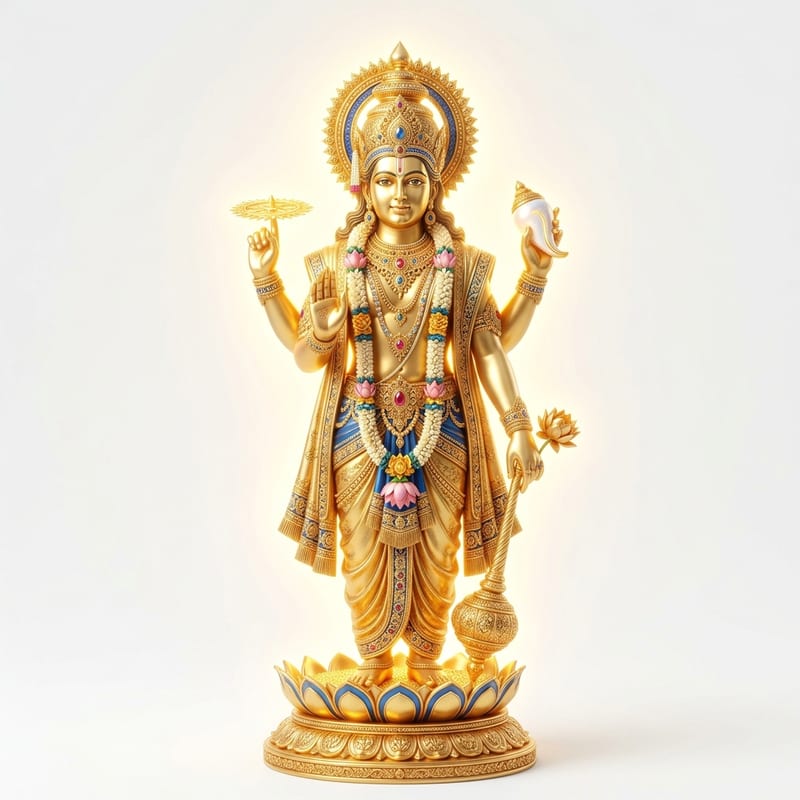
ಶ್ರೀವಿಷ್ಣುಸಹಸ್ರನಾಮಸ್ತೋತ್ರಮ್
The Hymn of the Thousand Names of Lord Vishnu (Shri Vishnu Sahasranama Stotram).
ಓಂ
ಶ್ರೀಪರಮಾತ್ಮನೇ ನಮಃ ।
ನಾರಾಯಣಂ ನಮಸ್ಕೃತ್ಯ ನರಂ ಚೈವ ನರೋತ್ತಮಮ್ ।
ದೇವೀಂ ಸರಸ್ವತೀಂ ವ್ಯಾಸಂ ತತೋ ಜಯಮುದೀರಯೇತ್ ॥
Om. Salutations to the Supreme Self (Paramatman). Having bowed down to Narayana, and to Nara, the best of men, as well as to the Goddess Sarasvati and Sage Vyasa, one should then utter the word of victory (Jaya).
ಓಂ ಅಥ ಸಕಲಸೌಭಾಗ್ಯದಾಯಕಂ ಶ್ರೀವಿಷ್ಣುಸಹಸ್ರನಾಮಸ್ತೋತ್ರಮ್ ।
ಹರಿಃ ಓಂ ॥
Om. Now begins the Shri Vishnu Sahasranama Stotram, which bestows all forms of prosperity and auspiciousness. Harih Om.
ಶುಕ್ಲಾಮ್ಬರಧರಂ ವಿಷ್ಣುಂ ಶಶಿವರ್ಣಂ ಚತುರ್ಭುಜಮ್ ।
ಪ್ರಸನ್ನವದನಂ ಧ್ಯಾಯೇತ್ ಸರ್ವವಿಘ್ನೋಪಶಾನ್ತಯೇ ॥ ೧॥
One should meditate upon Lord Vishnu, who wears white garments, who is of the color of the moon, who has four arms, and who has a serene and cheerful countenance, for the pacification of all obstacles.
ಯಸ್ಯ ದ್ವಿರದವಕ್ತ್ರಾದ್ಯಾಃ ಪಾರಿಷದ್ಯಾಃ ಪರಃ ಶತಮ್ ।
ವಿಘ್ನಂ ನಿಘ್ನನ್ತಿ ಸತತಂ ವಿಷ್ವಕ್ಸೇನಂ ತಮಾಶ್ರಯೇ ॥ ೨॥
I take refuge in Vishvaksena, whose attendants, led by the elephant-faced Ganesha and numbering more than a hundred, constantly destroy all obstacles.
ವ್ಯಾಸಂ ವಸಿಷ್ಠನಪ್ತಾರಂ ಶಕ್ತೇಃ ಪೌತ್ರಮಕಲ್ಮಷಮ್ ।
ಪರಾಶರಾತ್ಮಜಂ ವನ್ದೇ ಶುಕತಾತಂ ತಪೋನಿಧಿಮ್ ॥ ೩॥
I bow down to Sage Vyasa, the great-grandson of Vashistha, the grandson of Shakti, the sinless son of Parashara, the father of Shuka, and an ocean of penance.
ವ್ಯಾಸಾಯ ವಿಷ್ಣುರೂಪಾಯ ವ್ಯಾಸರೂಪಾಯ ವಿಷ್ಣವೇ ।
ನಮೋ ವೈ ಬ್ರಹ್ಮನಿಧಯೇ ವಾಸಿಷ್ಠಾಯ ನಮೋ ನಮಃ ॥ ೪॥
Salutations to Vyasa who is of the form of Vishnu, and to Vishnu who is of the form of Vyasa. Salutations, repeated salutations, to him who is a treasure of Brahman (Vedic knowledge) and a descendant of Vashistha.
ಅವಿಕಾರಾಯ ಶುದ್ಧಾಯ ನಿತ್ಯಾಯ ಪರಮಾತ್ಮನೇ ।
ಸದೈಕರೂಪರೂಪಾಯ ವಿಷ್ಣವೇ ಸರ್ವಜಿಷ್ಣವೇ ॥ ೫॥
Salutations to Vishnu, the all-conquering, who is changeless, pure, eternal, the Supreme Self, and who always possesses a single, unchanging form.
ಯಸ್ಯ ಸ್ಮರಣಮಾತ್ರೇಣ ಜನ್ಮಸಂಸಾರಬನ್ಧನಾತ್ ।
ವಿಮುಚ್ಯತೇ ನಮಸ್ತಸ್ಮೈ ವಿಷ್ಣವೇ ಪ್ರಭವಿಷ್ಣವೇ ॥ ೬॥
Salutations to that Vishnu, the all-powerful Lord, by mere remembrance of whom one is liberated from the bondage of the cycle of birth and worldly existence.
(ನಮಃ ಸಮಸ್ತಭೂತಾನಾಮಾದಿಭೂತಾಯ ಭೂಭೃತೇ ।
ಅನೇಕರೂಪರೂಪಾಯ ವಿಷ್ಣವೇ ಪ್ರಭವಿಷ್ಣವೇ ॥)
ಓಂ ನಮೋ ವಿಷ್ಣವೇ ಪ್ರಭವಿಷ್ಣವೇ ॥
(Salutations to Vishnu, the all-powerful Lord, who is the primeval source of all beings, the supporter of the earth, and who manifests in manifold forms.) Om, salutations to Vishnu, the all-powerful Lord.
ಶ್ರೀವೈಶಮ್ಪಾಯನ ಉವಾಚ---
ಶ್ರುತ್ವಾ ಧರ್ಮಾನಶೇಷೇಣ ಪಾವನಾನಿ ಚ ಸರ್ವಶಃ ।
ಯುಧಿಷ್ಠಿರಃ ಶಾನ್ತನವಂ ಪುನರೇವಾಭ್ಯಭಾಷತ ॥ ೭॥
Shri Vaishampayana said: Having heard all duties (dharmas) in their entirety and all purifying practices from every perspective, Yudhishthira once again addressed the son of Shantanu (Bhishma).
ಯುಧಿಷ್ಠಿರ ಉವಾಚ---
ಕಿಮೇಕಂ ದೈವತಂ ಲೋಕೇ ಕಿಂ ವಾಪ್ಯೇಕಂ ಪರಾಯಣಮ್ ।
ಸ್ತುವನ್ತಃ ಕಂ ಕಮರ್ಚನ್ತಃ ಪ್ರಾಪ್ನುಯುರ್ಮಾನವಾಃ ಶುಭಮ್ ॥ ೮॥
Yudhishthira said: Who is the one supreme deity in the world? What is the sole supreme refuge? By praising whom and by worshipping whom do human beings attain auspiciousness and welfare?
ಕೋ ಧರ್ಮಃ ಸರ್ವಧರ್ಮಾಣಾಂ ಭವತಃ ಪರಮೋ ಮತಃ ।
ಕಿಂ ಜಪನ್ಮುಚ್ಯತೇ ಜನ್ತುರ್ಜನ್ಮಸಂಸಾರಬನ್ಧನಾತ್ ॥ ೯॥
Which dharma (duty) among all dharmas is, in your opinion, the supreme one? By chanting whose name or mantra does a living being get liberated from the bondage of the cycle of birth and worldly existence?
ಭೀಷ್ಮ ಉವಾಚ---
ಜಗತ್ಪ್ರಭುಂ ದೇವದೇವಮನನ್ತಂ ಪುರುಷೋತ್ತಮಮ್ ।
ಸ್ತುವನ್ ನಾಮಸಹಸ್ರೇಣ ಪುರುಷಃ ಸತತೋತ್ಥಿತಃ ॥ ೧೦॥
Bhishma said: A person, being ever-alert and active, should praise the Lord of the universe, the God of gods, the infinite, the Supreme Purusha (Purushottama), by chanting His thousand names.
ತಮೇವ ಚಾರ್ಚಯನ್ನಿತ್ಯಂ ಭಕ್ತ್ಯಾ ಪುರುಷಮವ್ಯಯಮ್ ।
ಧ್ಯಾಯನ್ ಸ್ತುವನ್ ನಮಸ್ಯಂಶ್ಚ ಯಜಮಾನಸ್ತಮೇವ ಚ ॥ ೧೧॥
And by always worshipping with devotion that same imperishable Purusha, meditating upon Him, praising Him, bowing down to Him, and performing worship unto Him alone.
ಅನಾದಿನಿಧನಂ ವಿಷ್ಣುಂ ಸರ್ವಲೋಕಮಹೇಶ್ವರಮ್ ।
ಲೋಕಾಧ್ಯಕ್ಷಂ ಸ್ತುವನ್ನಿತ್ಯಂ ಸರ್ವದುಃಖಾತಿಗೋ ಭವೇತ್ ॥ ೧೨॥
By constantly praising Lord Vishnu, who is without beginning or end, the Supreme Lord of all the worlds, and the overseer of the universe, one transcends all sorrows.
ಬ್ರಹ್ಮಣ್ಯಂ ಸರ್ವಧರ್ಮಜ್ಞಂ ಲೋಕಾನಾಂ ಕೀರ್ತಿವರ್ಧನಮ್ ।
ಲೋಕನಾಥಂ ಮಹದ್ಭೂತಂ ಸರ್ವಭೂತಭವೋದ್ಭವಮ್ ॥ ೧೩॥
He who is the patron of spiritual knowledge and seekers, the knower of all righteousness, the enhancer of the glory of the worlds, the Lord of the universe, the Great Being, and the ultimate source of the origin and existence of all living beings.
ಏಷ ಮೇ ಸರ್ವಧರ್ಮಾಣಾಂ ಧರ್ಮೋಽಧಿಕತಮೋ ಮತಃ ।
ಯದ್ಭಕ್ತ್ಯಾ ಪುಣ್ಡರೀಕಾಕ್ಷಂ ಸ್ತವೈರರ್ಚೇನ್ನರಃ ಸದಾ ॥ ೧೪॥
This I consider to be the supreme duty among all duties: that a person should always, with devotion, worship the lotus-eyed Lord (Vishnu) by chanting His praises.
ಪರಮಂ ಯೋ ಮಹತ್ತೇಜಃ ಪರಮಂ ಯೋ ಮಹತ್ತಪಃ ।
ಪರಮಂ ಯೋ ಮಹದ್ಬ್ರಹ್ಮ ಪರಮಂ ಯಃ ಪರಾಯಣಮ್ ॥ ೧೫॥
He who is the supreme, great effulgence; He who is the supreme, great penance; He who is the supreme, great Brahman; He who is the supreme, ultimate refuge.
ಪವಿತ್ರಾಣಾಂ ಪವಿತ್ರಂ ಯೋ ಮಙ್ಗಲಾನಾಂ ಚ ಮಙ್ಗಲಮ್ ।
ದೈವತಂ ದೈವತಾನಾಂ ಚ ಭೂತಾನಾಂ ಯೋಽವ್ಯಯಃ ಪಿತಾ ॥ ೧೬॥
He who is the most pure of all pure things, the most auspicious of all auspicious things, the God of gods, and the imperishable father of all beings.
ಯತಃ ಸರ್ವಾಣಿ ಭೂತಾನಿ ಭವನ್ತ್ಯಾದಿಯುಗಾಗಮೇ ।
ಯಸ್ಮಿಂಶ್ಚ ಪ್ರಲಯಂ ಯಾನ್ತಿ ಪುನರೇವ ಯುಗಕ್ಷಯೇ ॥ ೧೭॥
From whom all beings originate at the commencement of the primeval cosmic age, and into whom they merge back again at the end of the cosmic cycle.
ತಸ್ಯ ಲೋಕಪ್ರಧಾನಸ್ಯ ಜಗನ್ನಾಥಸ್ಯ ಭೂಪತೇ ।
ವಿಷ್ಣೋರ್ನಾಮಸಹಸ್ರಂ ಮೇ ಶೃಣು ಪಾಪಭಯಾಪಹಮ್ ॥ ೧೮॥
Listen to the thousand names of that foremost Lord of the world, the master of the universe, Vishnu, which destroy all sins and fears, O King.
ಯಾನಿ ನಾಮಾನಿ ಗೌಣಾನಿ ವಿಖ್ಯಾತಾನಿ ಮಹಾತ್ಮನಃ ।
ಋಷಿಭಿಃ ಪರಿಗೀತಾನಿ ತಾನಿ ವಕ್ಷ್ಯಾಮಿ ಭೂತಯೇ ॥ ೧೯॥
I shall recite, for the well-being and prosperity of all, those well-known names of the Great Soul (Vishnu) which are based on His divine attributes and have been sung by the sages.
ಋಷಿರ್ನಾಮ್ನಾಂ ಸಹಸ್ರಸ್ಯ ವೇದವ್ಯಾಸೋ ಮಹಾಮುನಿಃ ।
ಛನ್ದೋಽನುಷ್ಟುಪ್ ತಥಾ ದೇವೋ ಭಗವಾನ್ ದೇವಕೀಸುತಃ ॥ ೨೦॥
The sage for these thousand names is the great sage Veda Vyasa. The meter is Anushtup, and the deity is the divine son of Devaki (Krishna).
ಅಮೃತಾಂಶೂದ್ಭವೋ ಬೀಜಂ ಶಕ್ತಿರ್ದೇವಕೀನನ್ದನಃ ।
ತ್ರಿಸಾಮಾ ಹೃದಯಂ ತಸ್ಯ ಶಾನ್ತ್ಯರ್ಥೇ ವಿನಿಯೋಜ್ಯತೇ ॥ ೨೧॥
"Amritanshudbhava" (He who is the source of the nectar-rayed moon) is the seed (Bija); "Devakinandana" (the son of Devaki) is the power (Shakti); "Trisama" (He who is praised by the three Sama hymns) is the heart (Hridaya); and this is consecrated for the purpose of attaining peace.
ವಿಷ್ಣುಂ ಜಿಷ್ಣುಂ ಮಹಾವಿಷ್ಣುಂ ಪ್ರಭವಿಷ್ಣುಂ ಮಹೇಶ್ವರಮ್ ।
ಅನೇಕರೂಪದೈತ್ಯಾನ್ತಂ ನಮಾಮಿ ಪುರುಷೋತ್ತಮಮ್ ॥ ೨೨॥
I bow to the Supreme Purusha, Vishnu, the victorious, the great Vishnu, the glorious, the supreme Lord, of manifold forms, the destroyer of demons.
ಪೂರ್ವನ್ಯಾಸಃ
Purva Nyasa (Introductory Installations):
ಶ್ರೀವೇದವ್ಯಾಸ ಉವಾಚ---
ಓಂ ಅಸ್ಯ ಶ್ರೀವಿಷ್ಣೋರ್ದಿವ್ಯಸಹಸ್ರನಾಮಸ್ತೋತ್ರಮಹಾಮನ್ತ್ರಸ್ಯ ।
ಶ್ರೀವೇದವ್ಯಾಸೋ ಭಗವಾನ್ ಋಷಿಃ ।
ಅನುಷ್ಟುಪ್ ಛನ್ದಃ ।
ಶ್ರೀಮಹಾವಿಷ್ಣುಃ ಪರಮಾತ್ಮಾ ಶ್ರೀಮನ್ನಾರಾಯಣೋ ದೇವತಾ ।
ಅಮೃತಾಂಶೂದ್ಭವೋ ಭಾನುರಿತಿ ಬೀಜಮ್ ।
ದೇವಕೀನನ್ದನಃ ಸ್ರಷ್ಟೇತಿ ಶಕ್ತಿಃ ।
ಉದ್ಭವಃ ಕ್ಷೋಭಣೋ ದೇವ ಇತಿ ಪರಮೋ ಮನ್ತ್ರಃ ।
ಶಙ್ಖಭೃನ್ನನ್ದಕೀ ಚಕ್ರೀತಿ ಕೀಲಕಮ್ ।
ಶಾರ್ಙ್ಗಧನ್ವಾ ಗದಾಧರ ಇತ್ಯಸ್ತ್ರಮ್ ।
ರಥಾಙ್ಗಪಾಣಿರಕ್ಷೋಭ್ಯ ಇತಿ ನೇತ್ರಮ್ ।
ತ್ರಿಸಾಮಾ ಸಾಮಗಃ ಸಾಮೇತಿ ಕವಚಮ್ ।
ಆನನ್ದಂ ಪರಬ್ರಹ್ಮೇತಿ ಯೋನಿಃ ।
ಋತುಃ ಸುದರ್ಶನಃ ಕಾಲ ಇತಿ ದಿಗ್ಬನ್ಧಃ ।
ಶ್ರೀವಿಶ್ವರೂಪ ಇತಿ ಧ್ಯಾನಮ್ ।
ಶ್ರೀಮಹಾವಿಷ್ಣುಪ್ರೀತ್ಯರ್ಥೇ ಸಹಸ್ರನಾಮಸ್ತೋತ್ರಪಾಠೇ ವಿನಿಯೋಗಃ ॥
Sri Veda Vyasa said: For this great mantra of the divine thousand names of Sri Vishnu, the venerable sage is Sri Veda Vyasa. The meter is Anushtup. The Supreme Lord, Sriman Narayana, the all-pervading Vishnu, is the presiding deity. The seed (bija) is 'He who is born of the nectar-rayed moon' (Amritamshudbhavo Bhanuh). The power (shakti) is 'The son of Devaki, the Creator' (Devakinandanah Srashta). The supreme mantra is 'The origin, the agitator, the Lord' (Udbhavah Kshobhano Devah). The pin (kilakam) is 'The bearer of the conch, the sword Nandaki, and the discus' (Shankhabhrinnandaki Chakri). The weapon (astram) is 'The wielder of the Sharnga bow and the mace' (Sharngadhanva Gadadharah). The eye (netram) is 'The one with the chariot wheel in hand, the unshakeable' (Rathangapanirakshobhyah). The armor (kavacham) is 'The singer of the Sama Veda, the Sama itself' (Trisama Samagah Sama). The womb (yoni) is 'Bliss, the Supreme Brahman' (Anandam Parabrahma). The binding of the directions (digbandhah) is 'The seasons, the beautiful discus, time' (Rituh Sudarshanah Kalah). The meditation (dhyanam) is on 'The universal form' (Sri Vishvarupa). The purpose of this recitation is for the pleasure of Sri Maha Vishnu.
ಅಥ ನ್ಯಾಸಃ ।
ಓಂ ಶಿರಸಿ ವೇದವ್ಯಾಸರ್ಷಯೇ ನಮಃ ।
ಮುಖೇ ಅನುಷ್ಟುಪ್ಛನ್ದಸೇ ನಮಃ ।
ಹೃದಿ ಶ್ರೀಕೃಷ್ಣಪರಮಾತ್ಮದೇವತಾಯೈ ನಮಃ ।
ಗುಹ್ಯೇ ಅಮೃತಾಂಶೂದ್ಭವೋ ಭಾನುರಿತಿ ಬೀಜಾಯ ನಮಃ ।
ಪಾದಯೋರ್ದೇವಕೀನನ್ದನಃ ಸ್ರಷ್ಟೇತಿ ಶಕ್ತಯೇ ನಮಃ ।
ಸರ್ವಾಙ್ಗೇ ಶಙ್ಖಭೃನ್ನನ್ದಕೀ ಚಕ್ರೀತಿ ಕೀಲಕಾಯ ನಮಃ ।
ಕರಸಮ್ಪೂಟೇ ಮಮ ಶ್ರೀಕೃಷ್ಣಪ್ರೀತ್ಯರ್ಥೇ ಜಪೇ ವಿನಿಯೋಗಃ ॥
Now the Nyasa (installation of mantras on the body):
Om. Salutations to the sage Veda Vyasa on the head.
Salutations to the Anushtup meter on the mouth.
Salutations to the presiding deity, the Supreme Lord Sri Krishna, in the heart.
Salutations to the seed mantra 'Amritamshudbhavo Bhanuh' on the hidden parts.
Salutations to the power mantra 'Devakinandanah Srashta' on the feet.
Salutations to the pin mantra 'Shankhabhrinnandaki Chakri' on all parts of the body.
With folded hands, I undertake this chanting for the pleasure of Sri Krishna.
ಇತಿ ಋಷ್ಯಾದಿನ್ಯಾಸಃ ॥
Thus ends the installation of sages and deities.
ಅಥ ಕರನ್ಯಾಸಃ ।
ಓಂ ವಿಶ್ವಂ ವಿಷ್ಣುರ್ವಷಟ್ಕಾರ ಇತ್ಯಙ್ಗುಷ್ಠಾಭ್ಯಾಂ ನಮಃ ।
ಅಮೃತಾಂಶೂದ್ಭವೋ ಭಾನುರಿತಿ ತರ್ಜನೀಭ್ಯಾಂ ನಮಃ ।
ಬ್ರಹ್ಮಣ್ಯೋ ಬ್ರಹ್ಮಕೃದ್ಬ್ರಹ್ಮೇತಿ ಮಧ್ಯಮಾಭ್ಯಾಂ ನಮಃ ।
ಸುವರ್ಣಬಿನ್ದುರಕ್ಷೋಭ್ಯ ಇತ್ಯನಾಮಿಕಾಭ್ಯಾಂ ನಮಃ ।
ನಿಮಿಷೋಽನಿಮಿಷಃ ಸ್ರಗ್ವೀತಿ ಕನಿಷ್ಠಿಕಾಭ್ಯಾಂ ನಮಃ ।
ರಥಾಙ್ಗಪಾಣಿರಕ್ಷೋಭ್ಯ ಇತಿ ಕರತಲಕರಪೃಷ್ಠಾಭ್ಯಾಂ ನಮಃ ।
ಇತಿ ಕರನ್ಯಾಸಃ ॥
Now the Kara Nyasa (installation on the hands):
Om. Salutations to the thumbs with the mantra 'Vishvam Vishnur Vashatkarah'.
Salutations to the index fingers with the mantra 'Amritamshudbhavo Bhanuh'.
Salutations to the middle fingers with the mantra 'Brahmanyo Brahmakrid Brahma'.
Salutations to the ring fingers with the mantra 'Suvarnabindur Akshobhyah'.
Salutations to the little fingers with the mantra 'Nimisho Nimishah Sragvi'.
Salutations to the front and back of the palms with the mantra 'Rathangapanir Akshobhyah'.
Thus ends the Kara Nyasa.
ಅಥ ಷಡಙ್ಗನ್ಯಾಸಃ ।
ಓಂ ವಿಶ್ವಂ ವಿಷ್ಣುರ್ವಷಟ್ಕಾರ ಇತಿ ಹೃದಯಾಯ ನಮಃ ।
ಅಮೃತಾಂಶೂದ್ಭವೋ ಭಾನುರಿತಿ ಶಿರಸೇ ಸ್ವಾಹಾ ।
ಬ್ರಹ್ಮಣ್ಯೋ ಬ್ರಹ್ಮಕೃದ್ಬ್ರಹ್ಮೇತಿ ಶಿಖಾಯೈ ವಷಟ್ ।
ಸುವರ್ಣಬಿನ್ದುರಕ್ಷೋಭ್ಯ ಇತಿ ಕವಚಾಯ ಹುಮ್ ।
ನಿಮಿಷೋಽನಿಮಿಷಃ ಸ್ರಗ್ವೀತಿ ನೇತ್ರತ್ರಯಾಯ ವೌಷಟ್ ।
ರಥಾಙ್ಗಪಾಣಿರಕ್ಷೋಭ್ಯ ಇತ್ಯಸ್ತ್ರಾಯ ಫಟ್ ।
(
ಸುವ್ರತಃ ಸುಮುಖಃ ಸೂಕ್ಷ್ಮೇತಿ ಜ್ಞಾನಾಯ ಹೃದಯಾಯ ನಮಃ ।
ಸಹಸ್ರಮೂರ್ಧಾ ವಿಶ್ವಾತ್ಮೇತಿ ಐಶ್ವರಾಯ ಶಿರಸೇ ಸ್ವಾಹಾ ।
ಸಹಸ್ರಾರ್ಚಿಃ ಸಪ್ತಜಿಹ್ವೇತಿ ಶಕ್ತ್ಯೈ ಶಿಖಾಯೈ ವಷಟ್ ।
ತ್ರಿಸಾಮಾ ಸಾಮಗಃ ಸಾಮೇತಿ ಬಲಾಯ ಕವಚಾಯ ಹುಮ್ ।
ರಥಾಙ್ಗಪಾಣಿರಕ್ಷೋಭ್ಯ ಇತಿ ತೇಜಸೇ ನೇತ್ರತ್ರಯಾಯ ವೌಷಟ್ ।
ಶಾರ್ಙ್ಗಧನ್ವಾ ಗದಾಧರ ಇತಿ ವೀರ್ಯಾಯ ಅಸ್ತ್ರಾಯ ಫಟ್ ।
ಋತುಃ ಸುದರ್ಶನಃ ಕಾಲ ಇತಿ ಭೂರ್ಭುವಃಸುವರೋಮಿತಿ ದಿಗ್ಬನ್ಧಃ ॥)
ಇತಿ ಷಡಙ್ಗನ್ಯಾಸಃ ॥
Now the Shadanga Nyasa (installation on the six parts of the body):
Om. Salutations to the heart with the mantra 'Vishvam Vishnur Vashatkarah'.
Svaha to the head with the mantra 'Amritamshudbhavo Bhanuh'.
Vashat to the tuft of hair (shikha) with the mantra 'Brahmanyo Brahmakrid Brahma'.
Hum to the armor (kavacha) with the mantra 'Suvarnabindur Akshobhyah'.
Vaushat to the three eyes with the mantra 'Nimisho Nimishah Sragvi'.
Phat to the weapon (astra) with the mantra 'Rathangapanir Akshobhyah'.
(Alternatively: Salutations to the heart for knowledge with 'Suvratah Sumukhah Sukshmah'. Svaha to the head for sovereignty with 'Sahasramurdha Vishvatma'. Vashat to the shikha for power with 'Sahasrarchih Saptajihvah'. Hum to the armor for strength with 'Trisama Samagah Sama'. Vaushat to the eyes for brilliance with 'Rathangapanir Akshobhyah'. Phat to the weapon for valor with 'Sharngadhanva Gadadharah'. May the directions be bound with 'Rituh Sudarshanah Kalah, Om Bhur Bhuvas Suvah'.)
Thus ends the Shadanga Nyasa.
ಶ್ರೀಕೃಷ್ಣಪ್ರೀತ್ಯರ್ಥೇ ವಿಷ್ಣೋರ್ದಿವ್ಯಸಹಸ್ರನಾಮಜಪಮಹಂ
ಕರಿಷ್ಯೇ ಇತಿ ಸಙ್ಕಲ್ಪಃ ।
ಅಥ ಧ್ಯಾನಮ್ ।
ಕ್ಷೀರೋದನ್ವತ್ಪ್ರದೇಶೇ ಶುಚಿಮಣಿವಿಲಸತ್ಸೈಕತೇ ಮೌಕ್ತಿಕಾನಾಂ
ಮಾಲಾಕೢಪ್ತಾಸನಸ್ಥಃ ಸ್ಫಟಿಕಮಣಿನಿಭೈರ್ಮೌಕ್ತಿಕೈರ್ಮಣ್ಡಿತಾಙ್ಗಃ ।
ಶುಭ್ರೈರಭ್ರೈರದಭ್ರೈರುಪರಿವಿರಚಿತೈರ್ಮುಕ್ತಪೀಯೂಷವರ್ಷೈ-
ರಾನನ್ದೀ ನಃ ಪುನೀಯಾದರಿನಲಿನಗದಾಶಙ್ಖಪಾಣಿರ್ಮುಕುನ್ದಃ ॥ ೧॥
Resolution (Sankalpa): I make this resolve to chant the divine thousand names of Vishnu for the pleasure of Lord Sri Krishna.
Now the Meditation (Dhyanam):
May Mukunda, who holds the discus, the lotus, the mace, and the conch in His hands, purify us. He is seated on a throne formed by garlands of pearls, located in the region of the milky ocean where the sandy shores gleam with pure gems. His body is adorned with pearls shining like crystal gems, and He is experiencing supreme bliss while being continuously showered with nectar by the pure, abundant white clouds formed above Him.
ಭೂಃ ಪಾದೌ ಯಸ್ಯ ನಾಭಿರ್ವಿಯದಸುರನಿಲಶ್ಚನ್ದ್ರಸೂರ್ಯೌ ಚ ನೇತ್ರೇ
ಕರ್ಣಾವಾಶಾಃ ಶಿರೋ ದ್ಯೌರ್ಮುಖಮಪಿ ದಹನೋ ಯಸ್ಯ ವಾಸ್ತೇಯಮಬ್ಧಿಃ ।
ಅನ್ತಃಸ್ಥಂ ಯಸ್ಯ ವಿಶ್ವಂ ಸುರನರಖಗಗೋಭೋಗಿಗನ್ಧರ್ವದೈತ್ಯೈಃ
ಚಿತ್ರಂ ರಂರಮ್ಯತೇ ತಂ ತ್ರಿಭುವನವಪುಷಂ ವಿಷ್ಣುಮೀಶಂ ನಮಾಮಿ ॥ ೨॥
I bow to the Lord Vishnu, whose body is the three worlds: whose feet are the earth, whose navel is the sky, whose breath is the wind, whose eyes are the sun and moon, whose ears are the directions, whose head is the heaven, whose mouth is fire, whose abdomen is the ocean, within whom the universe is situated, and who is wonderfully delighted in by gods, men, birds, cattle, serpents, Gandharvas, and Daityas.
ಓಂ ನಮೋ ಭಗವತೇ ವಾಸುದೇವಾಯ ॥
Om. Salutations to the Supreme Lord Vasudeva.
ಓಂ ಶಾನ್ತಾಕಾರಂ ಭುಜಗಶಯನಂ ಪದ್ಮನಾಭಂ ಸುರೇಶಂ
ವಿಶ್ವಾಧಾರಂ ಗಗನಸದೃಶಂ ಮೇಘವರ್ಣಂ ಶುಭಾಙ್ಗಮ್ ।
ಲಕ್ಷ್ಮೀಕಾನ್ತಂ ಕಮಲನಯನಂ ಯೋಗಿಭಿರ್ಧ್ಯಾನಗಮ್ಯಂ (ಯೋಗಿಹೃದ್ಧ್ಯಾನಗಮ್ಯಂ)
ವನ್ದೇ ವಿಷ್ಣುಂ ಭವಭಯಹರಂ ಸರ್ವಲೋಕೈಕನಾಥಮ್ ॥ ೩॥
I bow to Vishnu, the sole master of all worlds, the destroyer of the fear of worldly existence, whose form is peaceful, who sleeps on a serpent bed, whose navel has a lotus, who is the Lord of gods, the support of the universe, vast like the sky, dark like a cloud, of beautiful limbs, the beloved of Lakshmi, lotus-eyed, and who is attainable by yogis through meditation.
ಮೇಘಶ್ಯಾಮಂ ಪೀತಕೌಶೇಯವಾಸಂ
ಶ್ರೀವತ್ಸಾಙ್ಕಂ ಕೌಸ್ತುಭೋದ್ಭಾಸಿತಾಙ್ಗಮ್ ।
ಪುಣ್ಯೋಪೇತಂ ಪುಣ್ಡರೀಕಾಯತಾಕ್ಷಂ
ವಿಷ್ಣುಂ ವನ್ದೇ ಸರ್ವಲೋಕೈಕನಾಥಮ್ ॥ ೪॥
I bow to Vishnu, the sole master of all worlds, who is dark like a cloud, wearing a yellow silk garment, marked with the Srivatsa, whose body shines with the Kaustubha gem, endowed with merit, and lotus-eyed.
ನಮಃ ಸಮಸ್ತಭೂತಾನಾಮಾದಿಭೂತಾಯ ಭೂಭೃತೇ ।
ಅನೇಕರೂಪರೂಪಾಯ ವಿಷ್ಣವೇ ಪ್ರಭವಿಷ್ಣವೇ ॥ ೫॥
Salutations to the Primal Source of all beings, the Supporter of the earth. Salutations to Vishnu, the Mighty Lord, who assumes manifold forms.
ಸಶಙ್ಖಚಕ್ರಂ ಸಕಿರೀಟಕುಣ್ಡಲಂ
ಸಪೀತವಸ್ತ್ರಂ ಸರಸೀರುಹೇಕ್ಷಣಮ್ ।
ಸಹಾರವಕ್ಷಃಸ್ಥಲಕೌಸ್ತುಭಶ್ರಿಯಂ (ಸ್ಥಲಶೋಭಿಕೌಸ್ತುಭಂ)
ನಮಾಮಿ ವಿಷ್ಣುಂ ಶಿರಸಾ ಚತುರ್ಭುಜಮ್ ॥ ೬॥
I bow my head to the four-armed Vishnu, who holds a conch and discus, wears a crown and earrings, is clad in yellow garments, has lotus-like eyes, and whose chest is adorned with a garland and the Kaustubha gem.
ಛಾಯಾಯಾಂ ಪಾರಿಜಾತಸ್ಯ ಹೇಮಸಿಂಹಾಸನೋಪರಿ
ಆಸೀನಮಮ್ಬುದಶ್ಯಾಮಮಾಯತಾಕ್ಷಮಲಂಕೃತಮ್ ।
ಚನ್ದ್ರಾನನಂ ಚತುರ್ಬಾಹುಂ ಶ್ರೀವತ್ಸಾಙ್ಕಿತವಕ್ಷಸಂ
ರುಕ್ಮಿಣೀಸತ್ಯಭಾಮಾಭ್ಯಾಂ ಸಹಿತಂ ಕೃಷ್ಣಮಾಶ್ರಯೇ ॥ ೭॥
I take refuge in Krishna, accompanied by Rukmini and Satyabhama, seated on a golden throne under the shade of the Parijata tree, dark like a cloud, with large eyes, adorned, with a moon-like face, four arms, and a chest marked by the Srivatsa.
ಸ್ತೋತ್ರಮ್
Stotram (The Hymn of 1000 Names):
ಹರಿಃ ಓಂ ।
ಓಂ ವಿಶ್ವಂ ವಿಷ್ಣುರ್ವಷಟ್ಕಾರೋ ಭೂತಭವ್ಯಭವತ್ಪ್ರಭುಃ ।
ಭೂತಕೃದ್ಭೂತಭೃದ್ಭಾವೋ ಭೂತಾತ್ಮಾ ಭೂತಭಾವನಃ ॥ ೧॥
ಪೂತಾತ್ಮಾ ಪರಮಾತ್ಮಾ ಚ ಮುಕ್ತಾನಾಂ ಪರಮಾ ಗತಿಃ ।
ಅವ್ಯಯಃ ಪುರುಷಃ ಸಾಕ್ಷೀ ಕ್ಷೇತ್ರಜ್ಞೋಽಕ್ಷರ ಏವ ಚ ॥ ೨॥
He who is the Pure Soul (Putatma), the Supreme Soul (Paramatma), the ultimate goal of the liberated (Muktanam Parama Gati), the Imperishable (Avyaya), the Supreme Person (Purusha), the Witness (Sakshi), the Knower of the field/body (Kshetrajna), and the Indestructible (Akshara).
ಯೋಗೋ ಯೋಗವಿದಾಂ ನೇತಾ ಪ್ರಧಾನಪುರುಷೇಶ್ವರಃ ।
ನಾರಸಿಂಹವಪುಃ ಶ್ರೀಮಾನ್ ಕೇಶವಃ ಪುರುಷೋತ್ತಮಃ ॥ ೩॥
He who is Yoga (the path of spiritual union), the Guide of those who know Yoga, the Lord of primordial matter (Pradhana) and the individual soul (Purusha); He whose form is half-man and half-lion, who is possessed of divine beauty and majesty (Shriman), whose locks of hair are beautiful (Keshavah), and who is the Supreme Spirit (Purushottamah).
ಸರ್ವಃ ಶರ್ವಃ ಶಿವಃ ಸ್ಥಾಣುರ್ಭೂತಾದಿರ್ನಿಧಿರವ್ಯಯಃ ।
ಸಮ್ಭವೋ ಭಾವನೋ ಭರ್ತಾ ಪ್ರಭವಃ ಪ್ರಭುರೀಶ್ವರಃ ॥ ೪॥
He who is Everything (Sarva), the Auspicious (Sharva), the Eternally Pure (Shiva), the Immovable (Sthanu), the Source of all beings (Bhutadi), the Imperishable Treasure (Nidhiravyaya), who manifests of His own will (Sambhava), the Benefactor (Bhavana), the Supporter (Bharta), the Creator (Prabhava), the Lord (Prabhu), and the Controller (Ishvara).
ಸ್ವಯಮ್ಭೂಃ ಶಮ್ಭುರಾದಿತ್ಯಃ ಪುಷ್ಕರಾಕ್ಷೋ ಮಹಾಸ್ವನಃ ।
ಅನಾದಿನಿಧನೋ ಧಾತಾ ವಿಧಾತಾ ಧಾತುರುತ್ತಮಃ ॥ ೫॥
Svayambhu (the self-born), Shambhu (the source of auspiciousness), Aditya (the Sun / son of Aditi), Pushkaraksha (the lotus-eyed), Mahasvana (of great sound/voice), Anadinidhana (without beginning or end), Dhata (the supporter), Vidhata (the dispenser of fruits of action), and Dhaturuttama (the supreme substance).
ಅಪ್ರಮೇಯೋ ಹೃಷೀಕೇಶಃ ಪದ್ಮನಾಭೋಽಮರಪ್ರಭುಃ ।
ವಿಶ್ವಕರ್ಮಾ ಮನುಸ್ತ್ವಷ್ಟಾ ಸ್ಥವಿಷ್ಠಃ ಸ್ಥವಿರೋ ಧ್ರುವಃ ॥ ೬॥
Aprameya (the immeasurable), Hrishikesha (the Lord of the senses), Padmanabha (the lotus-navelled), Amaraprabhu (the Lord of the immortals), Vishvakarma (the creator of the universe), Manu (the great thinker), Tvashta (the shaper of all forms), Sthavistha (the most massive), and Sthavira Dhruva (the ancient and unchanging).
ಅಗ್ರಾಹ್ಯಃ ಶಾಶ್ವತಃ ಕೃಷ್ಣೋ ಲೋಹಿತಾಕ್ಷಃ ಪ್ರತರ್ದನಃ ।
ಪ್ರಭೂತಸ್ತ್ರಿಕಕುಬ್ಧಾಮ ಪವಿತ್ರಂ ಮಙ್ಗಲಂ ಪರಮ್ ॥ ೭॥
Agrahya (the incomprehensible), Shashvata (the eternal), Krishna (the dark-complexioned / existence-knowledge-bliss), Lohitaksha (the red-eyed), Pratardana (the destroyer of all at dissolution), Prabhuta (the abundant), Trikakubdhama (the support of the three regions), Pavitram (the pure/purifier), and Mangalam Param (the supreme auspiciousness).
ಈಶಾನಃ ಪ್ರಾಣದಃ ಪ್ರಾಣೋ ಜ್ಯೇಷ್ಠಃ ಶ್ರೇಷ್ಠಃ ಪ್ರಜಾಪತಿಃ ।
ಹಿರಣ್ಯಗರ್ಭೋ ಭೂಗರ್ಭೋ ಮಾಧವೋ ಮಧುಸೂದನಃ ॥ ೮॥
Ishana (the ruler), Pranada (the giver of life), Prana (the life-breath itself), Jyestha (the eldest), Shrestha (the most excellent), Prajapati (the Lord of all creatures), Hiranyagarbha (the golden womb / creator), Bhugarbha (He who has the Earth in His womb), Madhava (the Lord of knowledge / consort of Lakshmi), and Madhusudana (the destroyer of the demon Madhu).
ಈಶ್ವರೋ ವಿಕ್ರಮೀ ಧನ್ವೀ ಮೇಧಾವೀ ವಿಕ್ರಮಃ ಕ್ರಮಃ ।
ಅನುತ್ತಮೋ ದುರಾಧರ್ಷಃ ಕೃತಜ್ಞಃ ಕೃತಿರಾತ್ಮವಾನ್ ॥ ೯॥
Ishvara (the supreme ruler), Vikrami (the courageous / giant-strider), Dhanvi (the wielder of the bow), Medhavi (the highly intelligent), Vikrama (He who transcends), Krama (the systematic order), Anuttama (the peerless / unsurpassed), Duradharsha (the unassailable), Kritajna (the grateful), Kriti (the action/effort itself), and Atmavan (the self-possessed / established in His own glory).
ಸುರೇಶಃ ಶರಣಂ ಶರ್ಮ ವಿಶ್ವರೇತಾಃ ಪ್ರಜಾಭವಃ ।
ಅಹಃ ಸಂವತ್ಸರೋ ವ್ಯಾಲಃ ಪ್ರತ್ಯಯಃ ಸರ್ವದರ್ಶನಃ ॥ ೧೦॥
Suresha (the Lord of the gods), Sharanam (the ultimate refuge), Sharma (the supreme bliss/shelter), Vishvareta (the seed of the universe), Prajabhava (the origin of all beings), Aha (the day / luminous), Samvatsara (the year / time), Vyala (the ungraspable serpent), Pratyaya (the consciousness / conviction), and Sarvadarshana (the all-seeing).
ಅಜಃ ಸರ್ವೇಶ್ವರಃ ಸಿದ್ಧಃ ಸಿದ್ಧಿಃ ಸರ್ವಾದಿರಚ್ಯುತಃ ।
ವೃಷಾಕಪಿರಮೇಯಾತ್ಮಾ ಸರ್ವಯೋಗವಿನಿಃಸೃತಃ ॥ ೧೧॥
Aja (the unborn), Sarveshvara (the Lord of all), Siddha (the perfected one), Siddhi (the goal / achievement), Sarvadi (the beginning of all), Achyuta (the infallible), Vrishakapi (He who showers virtues and lifts the world), Ameyatma (the immeasurable self), and Sarvayogavinishrita (He who is free from all attachments / attained through all yogas).
ವಸುರ್ವಸುಮನಾಃ ಸತ್ಯಃ ಸಮಾತ್ಮಾಽಸಮ್ಮಿತಃ ಸಮಃ ।
ಅಮೋಘಃ ಪುಣ್ಡರೀಕಾಕ್ಷೋ ವೃಷಕರ್ಮಾ ವೃಷಾಕೃತಿಃ ॥ ೧೨॥
Vasu (the indwelling deity / wealth), Vasumana (the pure-minded), Satya (the truth), Samatma (the equal-minded), Asammita (the limitless), Sama (the unbiased), Amogha (the unerring), Pundarikaksha (the lotus-eyed), Vrishakarma (of righteous actions), and Vrishakriti (of the form of righteousness).
ರುದ್ರೋ ಬಹುಶಿರಾ ಬಭ್ರುರ್ವಿಶ್ವಯೋನಿಃ ಶುಚಿಶ್ರವಾಃ ।
ಅಮೃತಃ ಶಾಶ್ವತಸ್ಥಾಣುರ್ವರಾರೋಹೋ ಮಹಾತಪಾಃ ॥ ೧೩॥
Rudra (the dispeller of sorrow), Bahushira (the many-headed), Babhru (the supporter of the worlds), Vishvayoni (the womb of the universe), Shuchishrava (He of pure fame / who hears pure words), Amrita (the immortal), Shashvatasthanu (the eternal and motionless), Vararoho (the supreme ascent / glorious seat), and Mahatapa (of great penance and energy).
ಸರ್ವಗಃ ಸರ್ವವಿದ್ಭಾನುರ್ವಿಷ್ವಕ್ಸೇನೋ ಜನಾರ್ದನಃ ।
ವೇದೋ ವೇದವಿದವ್ಯಙ್ಗೋ ವೇದಾಙ್ಗೋ ವೇದವಿತ್ ಕವಿಃ ॥ ೧೪॥
Sarvaga (the all-pervading), Sarvavid-bhanu (the all-knowing and luminous), Vishvaksena (He against whom no army can stand), Janardana (the savior of people / destroyer of the wicked), Veda (the Vedas themselves), Vedavid (the knower of the Vedas), Avyanga (the perfect / without defect), Vedanga (He whose limbs are the Vedas), Vedavit (the knower of the true meaning of the Vedas), and Kavi (the omniscient seer).
ಲೋಕಾಧ್ಯಕ್ಷಃ ಸುರಾಧ್ಯಕ್ಷೋ ಧರ್ಮಾಧ್ಯಕ್ಷಃ ಕೃತಾಕೃತಃ ।
ಚತುರಾತ್ಮಾ ಚತುರ್ವ್ಯೂಹಶ್ಚತುರ್ದಂಷ್ಟ್ರಶ್ಚತುರ್ಭುಜಃ ॥ ೧೫॥
Lokadhyaksha (the lord of the worlds), Suradhyaksha (the lord of the gods), Dharmadhyaksha (the lord of righteousness), Kritakrita (the cause and the effect / the created and uncreated), Chaturatma (the four-fold self), Chaturvyuha (the four-fold manifestation), Chaturdamstra (the four-fanged), and Chaturbhuja (the four-armed).
ಭ್ರಾಜಿಷ್ಣುರ್ಭೋಜನಂ ಭೋಕ್ತಾ ಸಹಿಷ್ಣುರ್ಜಗದಾದಿಜಃ ।
ಅನಘೋ ವಿಜಯೋ ಜೇತಾ ವಿಶ್ವಯೋನಿಃ ಪುನರ್ವಸುಃ ॥ ೧೬॥
Bhrajishnu (the effulgent), Bhojana (the object of enjoyment / food), Bhokta (the enjoyer), Sahishnu (the patient / forgiver), Jagadadija (born at the very beginning of the universe), Anagha (the sinless), Vijaya (the victorious), Jeta (the conqueror), Vishvayoni (the cause of the universe), and Punarvasu (He who dwells repeatedly in bodies).
ಉಪೇನ್ದ್ರೋ ವಾಮನಃ ಪ್ರಾಂಶುರಮೋಘಃ ಶುಚಿರೂರ್ಜಿತಃ ।
ಅತೀನ್ದ್ರಃ ಸಙ್ಗ್ರಹಃ ಸರ್ಗೋ ಧೃತಾತ್ಮಾ ನಿಯಮೋ ಯಮಃ ॥ ೧೭॥
Upendra (the younger brother of Indra), Vamana (the dwarf incarnation), Pranshu (the tall / cosmic form), Amogha (the infallible), Shuchi (the pure), Urjita (the infinitely powerful), Atindra (beyond Indra / beyond the senses), Sangraha (the absorber of all), Sarga (the creator / creation), Dhritatma (the self-sustained), Niyama (the regulator), and Yama (the controller).
ವೇದ್ಯೋ ವೈದ್ಯಃ ಸದಾಯೋಗೀ ವೀರಹಾ ಮಾಧವೋ ಮಧುಃ ।
ಅತೀನ್ದ್ರಿಯೋ ಮಹಾಮಾಯೋ ಮಹೋತ್ಸಾಹೋ ಮಹಾಬಲಃ ॥ ೧೮॥
Vedya (the one to be known), Vaidya (the supreme healer), Sadayogi (the eternal yogi), Viraha (the destroyer of heroic demons), Madhava (the Lord of knowledge), Madhu (sweet like honey), Atindriya (beyond the reach of the senses), Mahamaya (the master of great illusion), Mahotsaha (of great enthusiasm), and Mahabala (of supreme strength).
ಮಹಾಬುದ್ಧಿರ್ಮಹಾವೀರ್ಯೋ ಮಹಾಶಕ್ತಿರ್ಮಹಾದ್ಯುತಿಃ ।
ಅನಿರ್ದೇಶ್ಯವಪುಃ ಶ್ರೀಮಾನಮೇಯಾತ್ಮಾ ಮಹಾದ್ರಿಧೃಕ್ ॥ ೧೯॥
Mahabuddhi (of supreme intellect), Mahavirya (of supreme valor), Mahashakti (of supreme power), Mahadyuti (of supreme splendor), Anirdeshyavapu (of indefinable form), Shriman (possessed of all glory and beauty), Ameyatma (of immeasurable soul), and Mahadridhrik (the lifter of the great mountain).
ಮಹೇಷ್ವಾಸೋ ಮಹೀಭರ್ತಾ ಶ್ರೀನಿವಾಸಃ ಸತಾಂ ಗತಿಃ ।
ಅನಿರುದ್ಧಃ ಸುರಾನನ್ದೋ ಗೋವಿನ್ದೋ ಗೋವಿದಾಂ ಪತಿಃ ॥ ೨೦॥
The Wielder of the mighty bow (Maheshvasa), the Supporter of the earth (Mahibharta), the Abode of Lakshmi (Srinivasa), the Goal of the righteous (Satam Gati), the Unobstructed (Aniruddha), the Bliss of the gods (Surananda), the Rescuer of the earth/cows (Govinda), and the Lord of those who know the Vedas (Govidam Pati).
ಮರೀಚಿರ್ದಮನೋ ಹಂಸಃ ಸುಪರ್ಣೋ ಭುಜಗೋತ್ತಮಃ ।
ಹಿರಣ್ಯನಾಭಃ ಸುತಪಾಃ ಪದ್ಮನಾಭಃ ಪ್ರಜಾಪತಿಃ ॥ ೨೧॥
The Ray of Light (Marichi), the Subduer (Damana), the Swan/Pure (Hamsa), of beautiful wings (Suparna), the Best among serpents (Bhujagottama), of golden navel (Hiranyanabha), of excellent penance (Sutapa), of lotus navel (Padmanabha), and the Lord of creatures (Prajapati).
ಅಮೃತ್ಯುಃ ಸರ್ವದೃಕ್ ಸಿಂಹಃ ಸನ್ಧಾತಾ ಸನ್ಧಿಮಾನ್ ಸ್ಥಿರಃ ।
ಅಜೋ ದುರ್ಮರ್ಷಣಃ ಶಾಸ್ತಾ ವಿಶ್ರುತಾತ್ಮಾ ಸುರಾರಿಹಾ ॥ ೨೨॥
The Deathless (Amrityu), the All-Seeing (Sarvadrik), the Lion (Simha), the Uniter (Sandhata), the Possessor of unity (Sandhiman), the Firm (Sthira), the Unborn (Aja), the Invincible (Durmarshana), the Ruler (Shasta), the Famous soul (Vishrutatma), and the Slayer of the enemies of the gods (Surariha).
ಗುರುರ್ಗುರುತಮೋ ಧಾಮ ಸತ್ಯಃ ಸತ್ಯಪರಾಕ್ರಮಃ ।
ನಿಮಿಷೋಽನಿಮಿಷಃ ಸ್ರಗ್ವೀ ವಾಚಸ್ಪತಿರುದಾರಧೀಃ ॥ ೨೩॥
The Teacher (Guru), the Supreme Teacher (Gurutama), the Ultimate Abode (Dhama), the Truth (Satya), of true valor (Satyaparakrama), with closing eyes (Nimisha), with unblinking eyes (Animisha), wearing the garland of victory (Sragvi), the Lord of Speech (Vachaspati), and of magnanimous intellect (Udaradhi).
ಅಗ್ರಣೀರ್ಗ್ರಾಮಣೀಃ ಶ್ರೀಮಾನ್ ನ್ಯಾಯೋ ನೇತಾ ಸಮೀರಣಃ ।
ಸಹಸ್ರಮೂರ್ಧಾ ವಿಶ್ವಾತ್ಮಾ ಸಹಸ್ರಾಕ್ಷಃ ಸಹಸ್ರಪಾತ್ ॥ ೨೪॥
The Foremost Leader (Agrani), the Leader of the flock (Gramani), the Glorious (Shriman), the Justice (Nyaya), the Guide (Neta), the Wind/Mover (Samirana), the Thousand-headed (Sahasramurdha), the Soul of the universe (Vishvatma), the Thousand-eyed (Sahasraksha), and the Thousand-footed (Sahasrapat).
ಆವರ್ತನೋ ನಿವೃತ್ತಾತ್ಮಾ ಸಂವೃತಃ ಸಮ್ಪ್ರಮರ್ದನಃ ।
ಅಹಃ ಸಂವರ್ತಕೋ ವಹ್ನಿರನಿಲೋ ಧರಣೀಧರಃ ॥ ೨೫॥
The one who turns the wheel of samsara (Avartana), the Detached soul (Nivrittatma), the Concealed (Samvrita), the Great Crusher (Sampramardana), the Day (Aha), the Destroyer of time (Samvartaka), the Fire (Vahni), the Wind (Anila), and the Supporter of the Earth (Dharanidhara).
ಸುಪ್ರಸಾದಃ ಪ್ರಸನ್ನಾತ್ಮಾ ವಿಶ್ವಧೃಗ್ವಿಶ್ವಭುಗ್ವಿಭುಃ ।
ಸತ್ಕರ್ತಾ ಸತ್ಕೃತಃ ಸಾಧುರ್ಜಹ್ನುರ್ನಾರಾಯಣೋ ನರಃ ॥ ೨೬॥
Of excellent grace (Suprasada), of cheerful soul (Prasannatma), the Supporter of the universe (Vishvadhrik), the Enjoyer of the universe (Vishvabhuk), the All-Pervading (Vibhu), the Honorer (Satkarta), the Honored (Satkrita), the Righteous (Sadhu), the Leader of men (Jahnu), the Refuge of men (Narayana), and the Man (Nara).
ಅಸಙ್ಖ್ಯೇಯೋಽಪ್ರಮೇಯಾತ್ಮಾ ವಿಶಿಷ್ಟಃ ಶಿಷ್ಟಕೃಚ್ಛುಚಿಃ ।
ಸಿದ್ಧಾರ್ಥಃ ಸಿದ್ಧಸಙ್ಕಲ್ಪಃ ಸಿದ್ಧಿದಃ ಸಿದ್ಧಿಸಾಧನಃ ॥ ೨೭॥
The Countless (Asankhyeya), of immeasurable soul (Aprameyatma), the Distinguished (Vishishta), the Maker of the rules/learned (Sishtakrit), the Pure (Shuchi), the Attainer of goals (Siddhartha), of fulfilled desires (Siddhasankalpa), the Giver of success (Siddhida), and the Means to success (Siddhisadhana).
ವೃಷಾಹೀ ವೃಷಭೋ ವಿಷ್ಣುರ್ವೃಷಪರ್ವಾ ವೃಷೋದರಃ ।
ವರ್ಧನೋ ವರ್ಧಮಾನಶ್ಚ ವಿವಿಕ್ತಃ ಶ್ರುತಿಸಾಗರಃ ॥ ೨೮॥
The Day of Dharma (Vrishahi), the Showerer of boons (Vrishabha), the All-Pervading (Vishnu), the Ladder of Dharma (Vrishaparva), of a belly containing the universe (Vrishodara), the Nourisher (Vardhana), the Ever-growing (Vardhamana), the Solitary/Pure (Vivikta), and the Ocean of Shruti/Vedas (Shrutisagara).
ಸುಭುಜೋ ದುರ್ಧರೋ ವಾಗ್ಮೀ ಮಹೇನ್ದ್ರೋ ವಸುದೋ ವಸುಃ ।
ನೈಕರೂಪೋ ಬೃಹದ್ರೂಪಃ ಶಿಪಿವಿಷ್ಟಃ ಪ್ರಕಾಶನಃ ॥ ೨೯॥
Of beautiful arms (Subhuja), the Irresistible (Durdhara), the Eloquent (Vagmi), the Supreme Lord (Mahendra), the Giver of wealth (Vasuda), the Wealth (Vasu), of manifold forms (Naikarupa), of immense form (Brihadrupa), the Pervader of the rays (Shipivishta), and the Illuminator (Prakashana).
ಓಜಸ್ತೇಜೋದ್ಯುತಿಧರಃ ಪ್ರಕಾಶಾತ್ಮಾ ಪ್ರತಾಪನಃ ।
ಋದ್ಧಃ ಸ್ಪಷ್ಟಾಕ್ಷರೋ ಮನ್ತ್ರಶ್ಚನ್ದ್ರಾಂಶುರ್ಭಾಸ್ಕರದ್ಯುತಿಃ ॥ ೩೦॥
The Bearer of vitality, radiance, and beauty (Ojastejodyutidhara), the Radiant soul (Prakashatma), the Scorcher (Pratapana), the Prosperous (Riddha), of clear syllables (Spashtakshara), the Mantra (Mantra), the Ray of the Moon (Chandramshu), and of Sun-like brilliance (Bhaskaradyuti).
ಅಮೃತಾಂಶೂದ್ಭವೋ ಭಾನುಃ ಶಶಬಿನ್ದುಃ ಸುರೇಶ್ವರಃ ।
ಔಷಧಂ ಜಗತಃ ಸೇತುಃ ಸತ್ಯಧರ್ಮಪರಾಕ್ರಮಃ ॥ ೩೧॥
The source of the nectar-rayed Moon (Amritamshudbhava), the Sun (Bhanu), the mark of the hare/Moon (Shashabindu), the Lord of the gods (Sureshvara), the Medicine (Aushadham), the Bridge of the universe (Jagatah Setu), and of true dharma and valor (Satyadharmaparakrama).
ಭೂತಭವ್ಯಭವನ್ನಾಥಃ ಪವನಃ ಪಾವನೋಽನಲಃ ।
ಕಾಮಹಾ ಕಾಮಕೃತ್ಕಾನ್ತಃ ಕಾಮಃ ಕಾಮಪ್ರದಃ ಪ್ರಭುಃ ॥ ೩೨॥
The Lord of the past, present, and future (Bhutabhavyabhavannatha), the Wind (Pavana), the Purifier (Pavana), the Fire (Anala), the Destroyer of desires (Kamaha), the Fulfiller of desires (Kamakrit), the Beloved (Kanta), the Desire (Kama), the Bestower of desires (Kamaprada), and the Lord (Prabhu).
ಯುಗಾದಿಕೃದ್ಯುಗಾವರ್ತೋ ನೈಕಮಾಯೋ ಮಹಾಶನಃ ।
ಅದೃಶ್ಯೋ ವ್ಯಕ್ತರೂಪಶ್ಚ ಸಹಸ್ರಜಿದನನ್ತಜಿತ್ ॥ ೩೩॥
The Creator of the Yugas (Yugadikrit), the Turner of the Yugas (Yugavarta), of manifold illusions (Naikamaya), the Great Eater at dissolution (Mahashana), the Invisible (Adrishya), of manifest form (Vyaktarupa), the Conqueror of thousands (Sahasrajit), and the Infinite Conqueror (Anantajit).
ಇಷ್ಟೋಽವಿಶಿಷ್ಟಃ ಶಿಷ್ಟೇಷ್ಟಃ ಶಿಖಣ್ಡೀ ನಹುಷೋ ವೃಷಃ ।
ಕ್ರೋಧಹಾ ಕ್ರೋಧಕೃತ್ಕರ್ತಾ ವಿಶ್ವಬಾಹುರ್ಮಹೀಧರಃ ॥ ೩೪॥
The Beloved (Ishta), the Undistinguished (Avishishta), beloved by the learned (Sishteshta), wearing a peacock feather (Shikhandi), the Binder (Nahusha), the Showerer (Vrisha), the Destroyer of anger (Krodhaha), the Creator of anger (Krodhakritkarta), of universal arms (Vishvabahu), and the Supporter of the Earth (Mahidhara).
ಅಚ್ಯುತಃ ಪ್ರಥಿತಃ ಪ್ರಾಣಃ ಪ್ರಾಣದೋ ವಾಸವಾನುಜಃ ।
ಅಪಾಂನಿಧಿರಧಿಷ್ಠಾನಮಪ್ರಮತ್ತಃ ಪ್ರತಿಷ್ಠಿತಃ ॥ ೩೫॥
The Infallible (Achyuta), the Famous (Prathita), the Life Force (Prana), the Giver of life (Pranada), the younger brother of Indra (Vasavanuja), the Ocean (Apamnidhi), the Foundation (Adhishthana), the Ever-Vigilant (Apramatta), and the Established (Pratishthita).
ಸ್ಕನ್ದಃ ಸ್ಕನ್ದಧರೋ ಧುರ್ಯೋ ವರದೋ ವಾಯುವಾಹನಃ ।
ವಾಸುದೇವೋ ಬೃಹದ್ಭಾನುರಾದಿದೇವಃ ಪುರನ್ದರಃ ॥ ೩೬॥
The Leaper/Kartikeya (Skanda), the Supporter of Skanda (Skandadhara), the Bearer of the yoke (Dhurya), the Bestower of boons (Varada), whose vehicle is the wind (Vayuvahana), the son of Vasudeva (Vasudeva), of great radiance (Brihadbhanu), the Primal God (Adideva), and the Destroyer of cities (Purandara).
ಅಶೋಕಸ್ತಾರಣಸ್ತಾರಃ ಶೂರಃ ಶೌರಿರ್ಜನೇಶ್ವರಃ ।
ಅನುಕೂಲಃ ಶತಾವರ್ತಃ ಪದ್ಮೀ ಪದ್ಮನಿಭೇಕ್ಷಣಃ ॥ ೩೭॥
Free from sorrow (Ashoka), the Rescuer (Tarana), the Savior (Tara), the Valiant (Shura), the descendant of Shura (Shauri), the Lord of the people (Janeshvara), the Favorable (Anukula), of a hundred whirlpools (Shatavarta), holding a lotus (Padmi), and with lotus-like eyes (Padmanibhekshana).
ಪದ್ಮನಾಭೋಽರವಿನ್ದಾಕ್ಷಃ ಪದ್ಮಗರ್ಭಃ ಶರೀರಭೃತ್ ।
ಮಹರ್ದ್ಧಿರೃದ್ಧೋ ವೃದ್ಧಾತ್ಮಾ ಮಹಾಕ್ಷೋ ಗರುಡಧ್ವಜಃ ॥ ೩೮॥
With a lotus navel (Padmanabha), lotus-eyed (Aravindaksha), emerging from the lotus womb (Padmagarbha), the Sustainer of bodies (Sharirabhrit), of great prosperity (Maharddhi), the Prosperous (Riddha), of ancient soul (Vriddhatma), of great eyes (Mahaksha), and with Garuda on His banner (Garudadhvaja).
ಅತುಲಃ ಶರಭೋ ಭೀಮಃ ಸಮಯಜ್ಞೋ ಹವಿರ್ಹರಿಃ ।
ಸರ್ವಲಕ್ಷಣಲಕ್ಷಣ್ಯೋ ಲಕ್ಷ್ಮೀವಾನ್ ಸಮಿತಿಞ್ಜಯಃ ॥ ೩೯॥
The Incomparable (Atula), the Destroyer/Sharabha (Sharabha), the Formidable (Bhima), the Knower of time/conventions (Samayajna), the Receiver of oblations (Havirhari), characterized by all auspicious marks (Sarvalakshanalakshanya), the Possessor of Lakshmi (Lakshmivan), and the Victor in battles (Samitinjaya).
ವಿಕ್ಷರೋ ರೋಹಿತೋ ಮಾರ್ಗೋ ಹೇತುರ್ದಾಮೋದರಃ ಸಹಃ ।
ಮಹೀಧರೋ ಮಹಾಭಾಗೋ ವೇಗವಾನಮಿತಾಶನಃ ॥ ೪೦॥
The Imperishable (Vikshara), the Red Fish (Rohita), the Path (Marga), the Cause (Hetu), having a rope around His belly (Damodara), the Endurer (Saha), the Supporter of the earth (Mahidhara), of great fortune (Mahabhaga), the Swift (Vegavan), and of infinite consumption (Amitashana).
ಉದ್ಭವಃ ಕ್ಷೋಭಣೋ ದೇವಃ ಶ್ರೀಗರ್ಭಃ ಪರಮೇಶ್ವರಃ ।
ಕರಣಂ ಕಾರಣಂ ಕರ್ತಾ ವಿಕರ್ತಾ ಗಹನೋ ಗುಹಃ ॥ ೪೧॥
The Source (Udbhava), the Agitator (Kshobhana), the Radiant Lord (Deva), the Womb of Lakshmi (Shrigarbha), the Supreme Lord (Parameshvara), the Instrument (Karanam), the Cause (Karanam), the Agent (Karta), the Creator of varieties (Vikarta), the Deep/Mysterious (Gahana), and the Concealed (Guha).
ವ್ಯವಸಾಯೋ ವ್ಯವಸ್ಥಾನಃ ಸಂಸ್ಥಾನಃ ಸ್ಥಾನದೋ ಧ್ರುವಃ ।
ಪರರ್ದ್ಧಿಃ ಪರಮಸ್ಪಷ್ಟಸ್ತುಷ್ಟಃ ಪುಷ್ಟಃ ಶುಭೇಕ್ಷಣಃ ॥ ೪೨॥
The Resolute (Vyavasaya), the Foundation (Vyavasthana), the Ultimate Abode (Samsthana), the Giver of status (Sthanada), the Unchanging (Dhruva), of supreme glory (Pararddhi), the Supremely Clear (Paramaspashta), the Content (Tushta), the Nourished (Pushta), and of auspicious glance (Shubhekshana).
ರಾಮೋ ವಿರಾಮೋ ವಿರಜೋ ಮಾರ್ಗೋ ನೇಯೋ ನಯೋಽನಯಃ । (ವಿರಾಮೋ ವಿರತೋ)
ವೀರಃ ಶಕ್ತಿಮತಾಂ ಶ್ರೇಷ್ಠೋ ಧರ್ಮೋ ಧರ್ಮವಿದುತ್ತಮಃ ॥ ೪೩॥
The Delighter (Rama), the Cessation (Virama), the Passionless (Viraja), the Path (Marga), the Guide (Neya), the Leader (Naya), the Unled (Anaya), the Hero (Vira), the Best among the powerful (Shaktimatam Shreshtha), the Dharma (Dharma), and the Best among knowers of Dharma (Dharmaviduttama).
ವೈಕುಣ್ಠಃ ಪುರುಷಃ ಪ್ರಾಣಃ ಪ್ರಾಣದಃ ಪ್ರಣವಃ ಪೃಥುಃ ।
ಹಿರಣ್ಯಗರ್ಭಃ ಶತ್ರುಘ್ನೋ ವ್ಯಾಪ್ತೋ ವಾಯುರಧೋಕ್ಷಜಃ ॥ ೪೪॥
The Remover of obstacles (Vaikuntha), the Supreme Person (Purusha), the Life (Prana), the Giver of life (Pranada), the sacred syllable Om (Pranava), the Vast (Prithu), the Golden Womb (Hiranyagarbha), the Slayer of enemies (Shatrughna), the Pervader (Vyapta), the Wind (Vayu), and the Transcendental (Adhokshaja).
ಋತುಃ ಸುದರ್ಶನಃ ಕಾಲಃ ಪರಮೇಷ್ಠೀ ಪರಿಗ್ರಹಃ ।
ಉಗ್ರಃ ಸಂವತ್ಸರೋ ದಕ್ಷೋ ವಿಶ್ರಾಮೋ ವಿಶ್ವದಕ್ಷಿಣಃ ॥ ೪೫॥
The Season (Ritu), of auspicious vision (Sudarshana), the Time (Kala), stationed in the highest abode (Parameshti), the Receiver (Parigraha), the Fierce (Ugra), the Year (Samvatsara), the Skilful (Daksha), the Resting Place (Vishrama), and the Universally Capable (Vishvadakshina).
ವಿಸ್ತಾರಃ ಸ್ಥಾವರಸ್ಥಾಣುಃ ಪ್ರಮಾಣಂ ಬೀಜಮವ್ಯಯಮ್ ।
ಅರ್ಥೋಽನರ್ಥೋ ಮಹಾಕೋಶೋ ಮಹಾಭೋಗೋ ಮಹಾಧನಃ ॥ ೪೬॥
The Extension (Vistara), the Immovable Pillar (Sthavarasthanu), the Authority (Pramanam), the Imperishable Seed (Bijamavyayam), the Meaning/Wealth (Artha), the Meaningless/Desireless (Anartha), the Great Treasure (Mahakosha), the Great Enjoyment (Mahabhoga), and the Great Wealth (Mahadhana).
ಅನಿರ್ವಿಣ್ಣಃ ಸ್ಥವಿಷ್ಠೋಽಭೂರ್ಧರ್ಮಯೂಪೋ ಮಹಾಮಖಃ ।
ನಕ್ಷತ್ರನೇಮಿರ್ನಕ್ಷತ್ರೀ ಕ್ಷಮಃ ಕ್ಷಾಮಃ ಸಮೀಹನಃ ॥ ೪೭॥
The Unwearied (Anirvinna), the Immense (Sthavishtha), the Unborn (Abhu), the Pillar of Dharma (Dharmayupa), the Great Sacrifice (Mahamakha), the Nave of the wheel of stars (Nakshatranemi), the Lord of stars (Nakshatri), the Forgiving (Kshama), the Diminished/Dwelling in all (Kshama), and the Well-wisher (Samihana).
ಯಜ್ಞ ಇಜ್ಯೋ ಮಹೇಜ್ಯಶ್ಚ ಕ್ರತುಃ ಸತ್ರಂ ಸತಾಂ ಗತಿಃ ।
ಸರ್ವದರ್ಶೀ ವಿಮುಕ್ತಾತ್ಮಾ ಸರ್ವಜ್ಞೋ ಜ್ಞಾನಮುತ್ತಮಮ್ ॥ ೪೮॥
The Sacrifice (Yajna), the Worshipful (Ijya), the Most Worshipful (Mahejya), the Ritual (Kratu), the Protector of the good (Satram), the Goal of the good (Satam Gati), the All-Seeing (Sarvadarshi), the Liberated Soul (Vimuktatma), the All-Knowing (Sarvajna), and the Supreme Knowledge (Jnanamuttamam).
ಸುವ್ರತಃ ಸುಮುಖಃ ಸೂಕ್ಷ್ಮಃ ಸುಘೋಷಃ ಸುಖದಃ ಸುಹೃತ್ ।
ಮನೋಹರೋ ಜಿತಕ್ರೋಧೋ ವೀರಬಾಹುರ್ವಿದಾರಣಃ ॥ ೪೯॥
Of excellent vows (Suvrata), of auspicious face (Sumukha), the Subtle (Sukshma), of auspicious sound (Sughosha), the Giver of happiness (Sukhada), the Good Heart/Friend (Suhrit), the Mind-stealer (Manohara), the Conqueror of anger (Jitakrodha), of heroic arms (Virabahu), and the Tearer of enemies (Vidarana).
ಸ್ವಾಪನಃ ಸ್ವವಶೋ ವ್ಯಾಪೀ ನೈಕಾತ್ಮಾ ನೈಕಕರ್ಮಕೃತ್ ।
ವತ್ಸರೋ ವತ್ಸಲೋ ವತ್ಸೀ ರತ್ನಗರ್ಭೋ ಧನೇಶ್ವರಃ ॥ ೫೦॥
The Sender of sleep (Svapana), Independent (Svavasha), the Pervader (Vyapi), of manifold souls (Naikatma), of manifold actions (Naikakarmakrit), the Abode/Year (Vatsara), the Affectionate (Vatsala), the Father (Vatsi), the Womb of gems (Ratnagarbha), and the Lord of wealth (Dhaneshvara).
ಧರ್ಮಗುಬ್ಧರ್ಮಕೃದ್ಧರ್ಮೀ ಸದಸತ್ಕ್ಷರಮಕ್ಷರಮ್ ।
ಅವಿಜ್ಞಾತಾ ಸಹಸ್ರಾಂಶುರ್ವಿಧಾತಾ ಕೃತಲಕ್ಷಣಃ ॥ ೫೧॥
The Protector of Dharma (Dharmagup), the Creator of Dharma (Dharmakrit), the Righteous (Dharmi), the True and the Untrue (Sadasat), the Perishable and the Imperishable (Ksharamaksharam), the Unknown (Avijnata), the Thousand-rayed (Sahasramshu), the Creator (Vidhata), and of defined characteristics (Kritalakshana).
ಗಭಸ್ತಿನೇಮಿಃ ಸತ್ತ್ವಸ್ಥಃ ಸಿಂಹೋ ಭೂತಮಹೇಶ್ವರಃ ।
ಆದಿದೇವೋ ಮಹಾದೇವೋ ದೇವೇಶೋ ದೇವಭೃದ್ಗುರುಃ ॥ ೫೨॥
The Center of the planetary system (Gabhastinemi), established in goodness (Sattvastha), the Lion (Simha), the Supreme Lord of beings (Bhutamaheshvara), the Primal God (Adideva), the Greatest God (Mahadeva), the Lord of gods (Devesha), and the Supporter and Teacher of gods (Devabhritguru).
ಉತ್ತರೋ ಗೋಪತಿರ್ಗೋಪ್ತಾ ಜ್ಞಾನಗಮ್ಯಃ ಪುರಾತನಃ ।
ಶರೀರಭೂತಭೃದ್ಭೋಕ್ತಾ ಕಪೀನ್ದ್ರೋ ಭೂರಿದಕ್ಷಿಣಃ ॥ ೫೩॥
The Rescuer (Uttara), the Lord of cows/rays (Gopati), the Protector (Gopta), reachable by knowledge (Jnanagamya), the Ancient (Puratana), the Supporter of bodies and elements (Sharirabhutabhrit), the Enjoyer (Bhokta), the Lord of monkeys (Kapindra), and the Giver of abundant dakshina (Bhuridakshina).
ಸೋಮಪೋಽಮೃತಪಃ ಸೋಮಃ ಪುರುಜಿತ್ಪುರುಸತ್ತಮಃ ।
ವಿನಯೋ ಜಯಃ ಸತ್ಯಸನ್ಧೋ ದಾಶಾರ್ಹಃ ಸಾತ್ವತಾಮ್ಪತಿಃ ॥ ೫೪॥ ವಿನಿಯೋಜ್ಯಃ
The Drinker of Soma (Somapa), the Drinker of Nectar (Amritapa), the Moon (Soma), the Conqueror of many (Purujit), the Best of the great (Purusattama), the Subduer (Vinaya), the Victory (Jaya), of truthful resolve (Satyasandha), worthy of gifts (Dasharha), and the Lord of the Satvatas (Satvatampati).
ಜೀವೋ ವಿನಯಿತಾ ಸಾಕ್ಷೀ ಮುಕುನ್ದೋಽಮಿತವಿಕ್ರಮಃ ।
ಅಮ್ಭೋನಿಧಿರನನ್ತಾತ್ಮಾ ಮಹೋದಧಿಶಯೋಽನ್ತಕಃ ॥ ೫೫॥
The Living Soul (Jiva), the Director (Vinayita), the Witness (Sakshi), the Bestower of liberation (Mukunda), of infinite valor (Amitavikrama), the Ocean (Ambhonidhi), of infinite soul (Anantatma), resting on the great ocean (Mahodadhishaya), and the Destroyer (Antaka).
ಅಜೋ ಮಹಾರ್ಹಃ ಸ್ವಾಭಾವ್ಯೋ ಜಿತಾಮಿತ್ರಃ ಪ್ರಮೋದನಃ ।
ಆನನ್ದೋ ನನ್ದನೋ ನನ್ದಃ ಸತ್ಯಧರ್ಮಾ ತ್ರಿವಿಕ್ರಮಃ ॥ ೫೬॥
The Unborn (Aja), extremely worthy of reverence (Maharha), the intrinsic nature (Svabhavya), the Conqueror of enemies (Jitamitra), the Gladdener (Pramodana), the Bliss (Ananda), the Giver of Joy (Nandana), the Joy (Nanda), of truthful Dharma (Satyadharma), and of three strides (Trivikrama).
ಮಹರ್ಷಿಃ ಕಪಿಲಾಚಾರ್ಯಃ ಕೃತಜ್ಞೋ ಮೇದಿನೀಪತಿಃ ।
ತ್ರಿಪದಸ್ತ್ರಿದಶಾಧ್ಯಕ್ಷೋ ಮಹಾಶೃಙ್ಗಃ ಕೃತಾನ್ತಕೃತ್ ॥ ೫೭॥
The Great Sage Kapila (Maharshi Kapilacharya), the Grateful (Kritajna), the Lord of the earth (Medinipati), of three steps (Tripada), the Supervisor of the gods (Tridashadhyaksha), of great horn (Mahashringa), and the Creator of the end (Kritantakrit).
ಮಹಾವರಾಹೋ ಗೋವಿನ್ದಃ ಸುಷೇಣಃ ಕನಕಾಙ್ಗದೀ ।
ಗುಹ್ಯೋ ಗಭೀರೋ ಗಹನೋ ಗುಪ್ತಶ್ಚಕ್ರಗದಾಧರಃ ॥ ೫೮॥
The Great Boar (Mahavaraha), the Rescuer of the earth (Govinda), having a beautiful army (Sushena), wearing golden armlets (Kanakangadi), the Secret (Guhya), the Deep (Gabhira), the Inscrutable (Gahana), the Hidden (Gupta), and the Wielder of the Discus and Mace (Chakragadadhara).
ವೇಧಾಃ ಸ್ವಾಙ್ಗೋಽಜಿತಃ ಕೃಷ್ಣೋ ದೃಢಃ ಸಙ್ಕರ್ಷಣೋಽಚ್ಯುತಃ ।
ವರುಣೋ ವಾರುಣೋ ವೃಕ್ಷಃ ಪುಷ್ಕರಾಕ್ಷೋ ಮಹಾಮನಾಃ ॥ ೫೯॥
The Creator (Vedha), with beautiful limbs (Svanga), the Invincible (Ajita), the Dark-complexioned (Krishna), the Firm (Dridha), the Attractor (Sankarshana), the Infallible (Achyuta), the God of Waters (Varuna), the son of Varuna (Varuna), the Tree (Vriksha), the Lotus-eyed (Pushkaraksha), and of great mind (Mahamana).
ಭಗವಾನ್ ಭಗಹಾಽಽನನ್ದೀ ವನಮಾಲೀ ಹಲಾಯುಧಃ ।
ಆದಿತ್ಯೋ ಜ್ಯೋತಿರಾದಿತ್ಯಃ ಸಹಿಷ್ಣುರ್ಗತಿಸತ್ತಮಃ ॥ ೬೦॥
The Divine Lord (Bhagavan), the Destroyer of wealth/sins (Bhagaha), the Blissful (Anandi), wearing a garland of forest flowers (Vanamali), wielding a plow (Halayudha), the Son of Aditi (Aditya), the Radiant Sun (Jyotiraditya), the Enduring (Sahishnu), and the Ultimate Goal (Gatisattama).
ಸುಧನ್ವಾ ಖಣ್ಡಪರಶುರ್ದಾರುಣೋ ದ್ರವಿಣಪ್ರದಃ ।
ದಿವಸ್ಪೃಕ್ ಸರ್ವದೃಗ್ವ್ಯಾಸೋ ವಾಚಸ್ಪತಿರಯೋನಿಜಃ ॥ ೬೧॥ (ದಿವಿಸ್ಪೃಕ್)
Bearing an auspicious bow (Sudhanva), with a broken axe (Khandaparashu), the Fierce (Daruna), the Bestower of wealth (Dravinaprada), touching the heavens (Divisprik), the All-seeing (Sarvadrik), Vyasa (Vyasa), the Lord of Speech (Vachaspati), and the Unborn (Ayonija).
ತ್ರಿಸಾಮಾ ಸಾಮಗಃ ಸಾಮ ನಿರ್ವಾಣಂ ಭೇಷಜಂ ಭಿಷಕ್ ।
ಸಂನ್ಯಾಸಕೃಚ್ಛಮಃ ಶಾನ್ತೋ ನಿಷ್ಠಾ ಶಾನ್ತಿಃ ಪರಾಯಣಮ್ ॥ ೬೨॥
Praised by three Samans (Trisama), the Singer of Sama (Samaga), the Sama Veda (Sama), the Liberation (Nirvanam), the Medicine (Bheshajam), the Physician (Bhishak), the Creator of Sannyasa (Sannyasakrit), the Peaceful (Shama), the Calm (Shanta), the Firm Foundation (Nishtha), the Peace (Shanti), and the Ultimate Goal (Parayanam).
ಶುಭಾಙ್ಗಃ ಶಾನ್ತಿದಃ ಸ್ರಷ್ಟಾ ಕುಮುದಃ ಕುವಲೇಶಯಃ ।
ಗೋಹಿತೋ ಗೋಪತಿರ್ಗೋಪ್ತಾ ವೃಷಭಾಕ್ಷೋ ವೃಷಪ್ರಿಯಃ ॥ ೬೩॥
With beautiful limbs (Shubhanga), the Giver of Peace (Shantida), the Creator (Srashta), delighting in the earth (Kumuda), resting in the waters (Kuvaleshaya), the Benefactor of cows (Gohita), the Lord of cows (Gopati), the Protector (Gopta), with showering eyes (Vrishabhaksha), and the Lover of Dharma (Vrishapriya).
ಅನಿವರ್ತೀ ನಿವೃತ್ತಾತ್ಮಾ ಸಙ್ಕ್ಷೇಪ್ತಾ ಕ್ಷೇಮಕೃಚ್ಛಿವಃ ।
ಶ್ರೀವತ್ಸವಕ್ಷಾಃ ಶ್ರೀವಾಸಃ ಶ್ರೀಪತಿಃ ಶ್ರೀಮತಾಂವರಃ ॥ ೬೪॥
The Un-retreating (Anivarti), the Detached Soul (Nivrittatma), the Condenser (Sankshepta), the Doer of Good (Kshemakrit), the Auspicious (Shiva), with the Srivatsa mark on His chest (Shrivatsavaksha), the Abode of Lakshmi (Shrivasa), the Lord of Lakshmi (Shripati), and the Best among the glorious (Shrimatamvara).
ಶ್ರೀದಃ ಶ್ರೀಶಃ ಶ್ರೀನಿವಾಸಃ ಶ್ರೀನಿಧಿಃ ಶ್ರೀವಿಭಾವನಃ ।
ಶ್ರೀಧರಃ ಶ್ರೀಕರಃ ಶ್ರೇಯಃ ಶ್ರೀಮಾಁಲ್ಲೋಕತ್ರಯಾಶ್ರಯಃ ॥ ೬೫॥
The Giver of Wealth (Shrida), the Lord of Wealth (Shrisha), the Abode of Wealth (Shrinivasa), the Treasure of Wealth (Shrinidhi), the Distributor of Wealth (Shrivibhavana), the Bearer of Wealth (Shridhara), the Creator of Wealth (Shrikara), the Supreme Good (Shreya), and the Refuge of the three worlds containing Lakshmi (Shriman-Lokatrayashraya).
ಸ್ವಕ್ಷಃ ಸ್ವಙ್ಗಃ ಶತಾನನ್ದೋ ನನ್ದಿರ್ಜ್ಯೋತಿರ್ಗಣೇಶ್ವರಃ ।
ವಿಜಿತಾತ್ಮಾಽವಿಧೇಯಾತ್ಮಾ ಸತ್ಕೀರ್ತಿಶ್ಛಿನ್ನಸಂಶಯಃ ॥ ೬೬॥
With beautiful eyes (Svaksha), with beautiful limbs (Svanga), of hundredfold bliss (Shatananda), the Infinite Bliss (Nandi), the Lord of luminous bodies (Jyotirganeshvara), of conquered mind (Vijitatma), of uncontrolled soul/Independent (Avidheyatma), of pure fame (Satkirti), and the Destroyer of doubts (Chhinnasamshaya).
ಉದೀರ್ಣಃ ಸರ್ವತಶ್ಚಕ್ಷುರನೀಶಃ ಶಾಶ್ವತಸ್ಥಿರಃ ।
ಭೂಶಯೋ ಭೂಷಣೋ ಭೂತಿರ್ವಿಶೋಕಃ ಶೋಕನಾಶನಃ ॥ ೬೭॥
The Exalted (Udirna), with eyes everywhere (Sarvatashchakshu), having no superior (Anisha), the Eternal and Firm (Shashvatasthira), resting on the earth (Bhushaya), the Adornment (Bhushana), the Prosperity (Bhuti), the Sorrowless (Vishoka), and the Destroyer of sorrow (Shokanashana).
ಅರ್ಚಿಷ್ಮಾನರ್ಚಿತಃ ಕುಮ್ಭೋ ವಿಶುದ್ಧಾತ್ಮಾ ವಿಶೋಧನಃ ।
ಅನಿರುದ್ಧೋಽಪ್ರತಿರಥಃ ಪ್ರದ್ಯುಮ್ನೋಽಮಿತವಿಕ್ರಮಃ ॥ ೬೮॥
The Radiant (Archishman), the Worshipped (Archita), the Pot/Container of the universe (Kumbha), of pure soul (Vishuddhatma), the Purifier (Vishodhana), the Unobstructed (Aniruddha), without an equal opponent (Apratiratha), of immense wealth (Pradyumna), and of infinite valor (Amitavikrama).
ಕಾಲನೇಮಿನಿಹಾ ವೀರಃ ಶೌರಿಃ ಶೂರಜನೇಶ್ವರಃ ।
ತ್ರಿಲೋಕಾತ್ಮಾ ತ್ರಿಲೋಕೇಶಃ ಕೇಶವಃ ಕೇಶಿಹಾ ಹರಿಃ ॥ ೬೯॥
The Slayer of Kalanemi (Kalaneminiha), the Hero (Vira), the Descendant of Shura (Shauri), the Valiant Lord of people (Shurajaneshvara), the Soul of the three worlds (Trilokatma), the Lord of the three worlds (Trilokesha), the Slayer of Keshi/with beautiful hair (Keshava), the Slayer of Keshi (Keshiha), and the Destroyer of sins (Hari).
ಕಾಮದೇವಃ ಕಾಮಪಾಲಃ ಕಾಮೀ ಕಾನ್ತಃ ಕೃತಾಗಮಃ ।
ಅನಿರ್ದೇಶ್ಯವಪುರ್ವಿಷ್ಣುರ್ವೀರೋಽನನ್ತೋ ಧನಞ್ಜಯಃ ॥ ೭೦॥
The Lord of desires (Kamadeva), the Protector of desires (Kamapala), the Desirous/Fulfiller (Kami), the Beautiful/Beloved (Kanta), the Author of Agamas (Kritagama), of indescribable form (Anirdeshyavapu), the All-pervading (Vishnu), the Hero (Vira), the Infinite (Ananta), and the Winner of wealth (Dhananjaya).
ಬ್ರಹ್ಮಣ್ಯೋ ಬ್ರಹ್ಮಕೃದ್ ಬ್ರಹ್ಮಾ ಬ್ರಹ್ಮ ಬ್ರಹ್ಮವಿವರ್ಧನಃ ।
ಬ್ರಹ್ಮವಿದ್ ಬ್ರಾಹ್ಮಣೋ ಬ್ರಹ್ಮೀ ಬ್ರಹ್ಮಜ್ಞೋ ಬ್ರಾಹ್ಮಣಪ್ರಿಯಃ ॥ ೭೧॥
The Lover of Brahman/Vedas (Brahmanya), the Creator of Brahma (Brahmakrit), Brahma (Brahma), the Supreme Brahman (Brahma), the Increaser of Brahman (Brahmavivardhana), the Knower of Brahman (Brahmavit), the Brahmana (Brahmana), the Possessor of Brahman (Brahmi), the Knower of Brahman (Bmahmajna), and the Lover of Brahmanas (Brahmanapriya).
ಮಹಾಕ್ರಮೋ ಮಹಾಕರ್ಮಾ ಮಹಾತೇಜಾ ಮಹೋರಗಃ ।
ಮಹಾಕ್ರತುರ್ಮಹಾಯಜ್ವಾ ಮಹಾಯಜ್ಞೋ ಮಹಾಹವಿಃ ॥ ೭೨॥
Of great strides (Mahakrama), of great actions (Mahakarma), of great brilliance (Mahateja), the Great Serpent (Mahoraga), the Great Sacrifice (Mahakratu), the Great Sacrificer (Mahayajva), the Great Ritual (Mahayajna), and the Great Oblation (Mahahavi).
ಸ್ತವ್ಯಃ ಸ್ತವಪ್ರಿಯಃ ಸ್ತೋತ್ರಂ ಸ್ತುತಿಃ ಸ್ತೋತಾ ರಣಪ್ರಿಯಃ ।
ಪೂರ್ಣಃ ಪೂರಯಿತಾ ಪುಣ್ಯಃ ಪುಣ್ಯಕೀರ್ತಿರನಾಮಯಃ ॥ ೭೩॥
Worthy of praise (Stavya), Lover of praise (Stavapriya), the Hymn (Stotram), the Act of praise (Stuti), the Praiser (Stota), Lover of battle (Ranapriya), the Complete/Full (Purna), the Fulfiller (Purayita), the Holy (Punya), of holy fame (Punyakirti), and free from diseases (Anamaya).
ಮನೋಜವಸ್ತೀರ್ಥಕರೋ ವಸುರೇತಾ ವಸುಪ್ರದಃ ।
ವಸುಪ್ರದೋ ವಾಸುದೇವೋ ವಸುರ್ವಸುಮನಾ ಹವಿಃ ॥ ೭೪॥
Swift as the mind (Manojava), the Creator of holy places (Tirthakara), of golden seed (Vasureta), the Giver of wealth (Vasuprada), the Bestower of wealth (Vasuprada), the Son of Vasudeva (Vasudeva), the Refuge/Wealth (Vasu), of pure mind (Vasumana), and the Oblation (Havi).
ಸದ್ಗತಿಃ ಸತ್ಕೃತಿಃ ಸತ್ತಾ ಸದ್ಭೂತಿಃ ಸತ್ಪರಾಯಣಃ ।
ಶೂರಸೇನೋ ಯದುಶ್ರೇಷ್ಠಃ ಸನ್ನಿವಾಸಃ ಸುಯಾಮುನಃ ॥ ೭೫॥
The Righteous Goal (Sadgati), the Righteous Action (Satkriti), the True Existence (Satta), the Righteous Prosperity (Sadbhuti), the Supreme Goal of the good (Satparayana), having a valiant army (Shurasena), the Best of the Yadus (Yadushreshtha), the Abode of the good (Sannivasa), and surrounded by the Yamuna (Suyamuna).
ಭೂತಾವಾಸೋ ವಾಸುದೇವಃ ಸರ್ವಾಸುನಿಲಯೋಽನಲಃ ।
ದರ್ಪಹಾ ದರ್ಪದೋ ದೃಪ್ತೋ ದುರ್ಧರೋಽಥಾಪರಾಜಿತಃ ॥ ೭೬॥
The Abode of beings (Bhutavasa), the Indwelling Lord (Vasudeva), the Resting place of all souls (Sarvasunilaya), the Fire/Infinite (Anala), the Destroyer of pride (Darpaha), the Giver of pride (Darpada), the Proud/Joyous (Dripta), the Irresistible (Durdhara), and the Undefeated (Aparajita).
ವಿಶ್ವಮೂರ್ತಿರ್ಮಹಾಮೂರ್ತಿರ್ದೀಪ್ತಮೂರ್ತಿರಮೂರ್ತಿಮಾನ್ ।
ಅನೇಕಮೂರ್ತಿರವ್ಯಕ್ತಃ ಶತಮೂರ್ತಿಃ ಶತಾನನಃ ॥ ೭೭॥
The Form of the Universe (Vishvamurti), of Great Form (Mahamurti), of Radiant Form (Diptamurti), the Formless (Amurtiman), of manifold forms (Anekamurti), the Unmanifest (Avyakta), of a hundred forms (Shatamurti), and of a hundred faces (Shatananah).
ಏಕೋ ನೈಕಃ ಸವಃ ಕಃ ಕಿಂ ಯತ್ ತತ್ಪದಮನುತ್ತಮಮ್ ।
ಲೋಕಬನ್ಧುರ್ಲೋಕನಾಥೋ ಮಾಧವೋ ಭಕ್ತವತ್ಸಲಃ ॥ ೭೮॥
The One (Eka), the Many (Naika), the Sacrifice (Sava), Who/Happiness (Ka), What (Kim), That (Yat), the Supreme State (Tatpadamanuttamam), the Friend of the world (Lokabandhu), the Lord of the world (Lokanatha), the Lord of Knowledge (Madhava), and the Lover of devotees (Bhaktavatsala).
ಸುವರ್ಣವರ್ಣೋ ಹೇಮಾಙ್ಗೋ ವರಾಙ್ಗಶ್ಚನ್ದನಾಙ್ಗದೀ ।
ವೀರಹಾ ವಿಷಮಃ ಶೂನ್ಯೋ ಘೃತಾಶೀರಚಲಶ್ಚಲಃ ॥ ೭೯॥
Of golden color (Suvarnavarna), with golden limbs (Hemanga), with beautiful limbs (Varanga), adorned with sandalwood armlets (Chandanangadi), the Slayer of heroic demons (Viraha), the Unequal (Vishama), the Void (Shunya), the Bestower of desires (Ghritashi), the Immovable (Achala), and the Moving (Chala).
ಅಮಾನೀ ಮಾನದೋ ಮಾನ್ಯೋ ಲೋಕಸ್ವಾಮೀ ತ್ರಿಲೋಕಧೃಕ್ ।
ಸುಮೇಧಾ ಮೇಧಜೋ ಧನ್ಯಃ ಸತ್ಯಮೇಧಾ ಧರಾಧರಃ ॥ ೮೦॥
Free from false ego (Amani), the Giver of honor (Manada), the Honorable (Manya), the Master of the world (Lokasvami), the Supporter of the three worlds (Trilokadhrik), of excellent intelligence (Sumedha), born of sacrifice (Medhaja), the Fortunate (Dhanya), of true intelligence (Satyamedha), and the Supporter of the Earth (Dharadhara).
ತೇಜೋವೃಷೋ ದ್ಯುತಿಧರಃ ಸರ್ವಶಸ್ತ್ರಭೃತಾಂ ವರಃ ।
ಪ್ರಗ್ರಹೋ ನಿಗ್ರಹೋ ವ್ಯಗ್ರೋ ನೈಕಶೃಙ್ಗೋ ಗದಾಗ್ರಜಃ ॥ ೮೧॥
Showering radiance (Tejovrisha), bearing radiance (Dyutidhara), the Best among wielders of weapons (Sarvashastrabhritam Vara), the Receiver/Controller (Pragraha), the Restrainer (Nigraha), the Intent (Vyagra), with many peaks (Naikashringa), and the elder brother of Gada (Gadagraja).
ಚತುರ್ಮೂರ್ತಿಶ್ಚತುರ್ಬಾಹುಶ್ಚತುರ್ವ್ಯೂಹಶ್ಚತುರ್ಗತಿಃ ।
ಚತುರಾತ್ಮಾ ಚತುರ್ಭಾವಶ್ಚತುರ್ವೇದವಿದೇಕಪಾತ್ ॥ ೮೨॥
Of four forms (Chaturmurti), of four arms (Chaturbahu), of four manifestations (Chaturvyuha), the Fourfold Goal (Chaturgati), the Four-souled (Chaturatma), of four states (Chaturbhava), the Knower of the four Vedas (Chaturvedavit), and the One-footed (Ekapada).
ಸಮಾವರ್ತೋಽನಿವೃತ್ತಾತ್ಮಾ ದುರ್ಜಯೋ ದುರತಿಕ್ರಮಃ ।
ದುರ್ಲಭೋ ದುರ್ಗಮೋ ದುರ್ಗೋ ದುರಾವಾಸೋ ದುರಾರಿಹಾ ॥ ೮೩॥
The Whirlpool/Turner of Samsara (Samavarta), the Un-retreating soul (Anivrittatma), the Invincible (Durjaya), the Unsurpassable (Duratikrama), the Difficult to attain (Durlabha), the Difficult to access (Durgama), the Fortress (Durga), of inaccessible abode (Duravasa), and the Slayer of formidable enemies (Durariha).
ಶುಭಾಙ್ಗೋ ಲೋಕಸಾರಙ್ಗಃ ಸುತನ್ತುಸ್ತನ್ತುವರ್ಧನಃ ।
ಇನ್ದ್ರಕರ್ಮಾ ಮಹಾಕರ್ಮಾ ಕೃತಕರ್ಮಾ ಕೃತಾಗಮಃ ॥ ೮೪॥
With beautiful limbs (Shubhanga), the Essence of the worlds (Lokasaranga), the Beautiful Thread (Sutantu), the Increaser of the thread/lineage (Tantuvardhana), of acts like Indra (Indrakarma), of great acts (Mahakarma), the Accomplished (Kritakarma), and the Author of Agamas (Kritagama).
ಉದ್ಭವಃ ಸುನ್ದರಃ ಸುನ್ದೋ ರತ್ನನಾಭಃ ಸುಲೋಚನಃ ।
ಅರ್ಕೋ ವಾಜಸನಃ ಶೃಙ್ಗೀ ಜಯನ್ತಃ ಸರ್ವವಿಜ್ಜಯೀ ॥ ೮೫॥
The Source (Udbhava), the Beautiful (Sundara), the Merciful (Sunda), of gem-like navel (Ratnanabha), of beautiful eyes (Sulochanah), the Sun/Worshipped (Arka), the Giver of food (Vajasana), having a horn (Shringi), the Victorious (Jayanta), the All-knowing (Sarvavit), and the Conqueror (Jayi).
ಸುವರ್ಣಬಿನ್ದುರಕ್ಷೋಭ್ಯಃ ಸರ್ವವಾಗೀಶ್ವರೇಶ್ವರಃ ।
ಮಹಾಹ್ರದೋ ಮಹಾಗರ್ತೋ ಮಹಾಭೂತೋ ಮಹಾನಿಧಿಃ ॥ ೮೬॥
Of golden limbs/syllables (Suvarnabindu), the Unshakable (Akshobhya), the Lord of the Lords of Speech (Sarvavagishvareshvara), the Great Lake (Mahahrada), the Great Chasm (Mahagarta), the Great Being (Mahabhuta), and the Great Treasure (Mahanidhi).
ಕುಮುದಃ ಕುನ್ದರಃ ಕುನ್ದಃ ಪರ್ಜನ್ಯಃ ಪಾವನೋಽನಿಲಃ ।
ಅಮೃತಾಶೋಽಮೃತವಪುಃ ಸರ್ವಜ್ಞಃ ಸರ್ವತೋಮುಖಃ ॥ ೮೭॥
The Gladdener of the Earth (Kumuda), the Tearer of the earth (Kundara), the Giver of jasmine-like purity (Kunda), the Rain-cloud (Parjanya), the Purifier (Pavana), the Wind (Anila), the Eater of Nectar (Amritasha), of immortal body (Amritavapu), the All-knowing (Sarvajna), and facing everywhere (Sarvatomukha).
ಸುಲಭಃ ಸುವ್ರತಃ ಸಿದ್ಧಃ ಶತ್ರುಜಿಚ್ಛತ್ರುತಾಪನಃ ।
ನ್ಯಗ್ರೋಧೋಽದುಮ್ಬರೋಽಶ್ವತ್ಥಶ್ಚಾಣೂರಾನ್ಧ್ರನಿಷೂದನಃ ॥ ೮೮॥
The Easily Attainable (Sulabha), of excellent vows (Suvrata), the Perfected (Siddha), the Conqueror of enemies (Shatrujit), the Tormentor of enemies (Shatrutapana), the Banyan Tree (Nyagrodha), the Fig Tree (Udumbara), the Peepal Tree (Ashvattha), and the Slayer of Chanura and Andhra (Chanurandhranishudana).
ಸಹಸ್ರಾರ್ಚಿಃ ಸಪ್ತಜಿಹ್ವಃ ಸಪ್ತೈಧಾಃ ಸಪ್ತವಾಹನಃ ।
ಅಮೂರ್ತಿರನಘೋಽಚಿನ್ತ್ಯೋ ಭಯಕೃದ್ಭಯನಾಶನಃ ॥ ೮೯॥
Of a thousand rays (Sahasrarchi), the Seven-tongued (Saptajihva), the Seven-flamed (Saptaidha), having seven vehicles (Saptavahana), the Formless (Amurti), the Sinless (Anagha), the Inconceivable (Achintya), the Creator of fear (Bhayakrit), and the Destroyer of fear (Bhayanashana).
ಅಣುರ್ಬೃಹತ್ಕೃಶಃ ಸ್ಥೂಲೋ ಗುಣಭೃನ್ನಿರ್ಗುಣೋ ಮಹಾನ್ ।
ಅಧೃತಃ ಸ್ವಧೃತಃ ಸ್ವಾಸ್ಯಃ ಪ್ರಾಗ್ವಂಶೋ ವಂಶವರ್ಧನಃ ॥ ೯೦॥
The Atom (Anu), the Immense (Brihat), the Lean (Krisha), the Stout (Sthula), the Bearer of qualities (Gunabhrit), the Attribute-less (Nirguna), the Great (Mahan), the Unsupported (Adhrita), the Self-supported (Svadhrita), with a beautiful face (Svasya), the Primal Ancestor (Pragvamsha), and the Increaser of the lineage (Vamshavardhana).
ಭಾರಭೃತ್ ಕಥಿತೋ ಯೋಗೀ ಯೋಗೀಶಃ ಸರ್ವಕಾಮದಃ ।
ಆಶ್ರಮಃ ಶ್ರಮಣಃ ಕ್ಷಾಮಃ ಸುಪರ್ಣೋ ವಾಯುವಾಹನಃ ॥ ೯೧॥
The Bearer of the burden (Bharabhrit), the Declared/Praised (Kathita), the Yogi (Yogi), the Lord of Yogis (Yogisha), the Giver of all desires (Sarvakamada), the Hermitage/Rest (Ashrama), the Ascetic (Shramana), the Diminished (Kshama), of beautiful wings (Suparna), and having the wind as a vehicle (Vayuvahana).
ಧನುರ್ಧರೋ ಧನುರ್ವೇದೋ ದಣ್ಡೋ ದಮಯಿತಾ ದಮಃ ।
ಅಪರಾಜಿತಃ ಸರ್ವಸಹೋ ನಿಯನ್ತಾಽನಿಯಮೋಽಯಮಃ ॥ ೯೨॥
The Wielder of the bow (Dhanurdhara), the Science of Archery (Dhanurveda), the Punishing Rod (Danda), the Punisher (Damayita), the Punishment (Dama), the Undefeated (Aparajita), the Endurer of all (Sarvasaha), the Controller (Niyanta), the Unbound (Aniyama), and the Deathless (Ayama).
ಸತ್ತ್ವವಾನ್ ಸಾತ್ತ್ವಿಕಃ ಸತ್ಯಃ ಸತ್ಯಧರ್ಮಪರಾಯಣಃ ।
ಅಭಿಪ್ರಾಯಃ ಪ್ರಿಯಾರ್ಹೋಽರ್ಹಃ ಪ್ರಿಯಕೃತ್ ಪ್ರೀತಿವರ್ಧನಃ ॥ ೯೩॥
Endowed with goodness (Sattvavan), the Pure/Sattvic (Sattvika), the Truth (Satya), devoted to True Dharma (Satyadharmaparayana), the Ultimate Object of desire (Abhipraya), Worthy of love (Priyarha), the Deserving (Arha), the Doer of what is pleasant (Priyakrit), and the Increaser of joy (Pritivardhana).
ವಿಹಾಯಸಗತಿರ್ಜ್ಯೋತಿಃ ಸುರುಚಿರ್ಹುತಭುಗ್ವಿಭುಃ ।
ರವಿರ್ವಿರೋಚನಃ ಸೂರ್ಯಃ ಸವಿತಾ ರವಿಲೋಚನಃ ॥ ೯೪॥
Moving in the sky (Vihayasagati), the Light (Jyoti), of beautiful brilliance (Suruchi), the Fire (Hutabhuk), the All-pervading (Vibhu), the Sun (Ravi), the Illuminator (Virochana), the Sun (Surya), the Creator (Savita), and having the sun as an eye (Ravilochana).
ಅನನ್ತೋ ಹುತಭುಗ್ಭೋಕ್ತಾ ಸುಖದೋ ನೈಕಜೋಽಗ್ರಜಃ ।
ಅನಿರ್ವಿಣ್ಣಃ ಸದಾಮರ್ಷೀ ಲೋಕಾಧಿಷ್ಠಾನಮದ್ಭುತಃ ॥ ೯೫॥
The Infinite (Ananta), the Eater of oblations (Hutabhuk), the Enjoyer (Bhokta), the Giver of happiness (Sukhada), born many times (Naikaja), the First-born (Agraja), the Unwearied (Anirvinna), the Ever-patient (Sadamarshi), the Foundation of the worlds (Lokadhishthana), and the Wonderful (Adbhuta).
ಸನಾತ್ಸನಾತನತಮಃ ಕಪಿಲಃ ಕಪಿರವ್ಯಯಃ ।
ಸ್ವಸ್ತಿದಃ ಸ್ವಸ್ತಿಕೃತ್ಸ್ವಸ್ತಿ ಸ್ವಸ್ತಿಭುಕ್ಸ್ವಸ್ತಿದಕ್ಷಿಣಃ ॥ ೯೬॥
The Ancient (Sanat), the Most Ancient (Sanatanatama), the Sage Kapila (Kapila), the Sun/Monkey (Kapi), the Imperishable (Avyaya), the Giver of Auspiciousness (Svastida), the Doer of Auspiciousness (Svastikrit), the Auspiciousness (Svasti), the Enjoyer of Auspiciousness (Svastibhuk), and the Skilful in Auspiciousness (Svastidakshina).
ಅರೌದ್ರಃ ಕುಣ್ಡಲೀ ಚಕ್ರೀ ವಿಕ್ರಮ್ಯೂರ್ಜಿತಶಾಸನಃ ।
ಶಬ್ದಾತಿಗಃ ಶಬ್ದಸಹಃ ಶಿಶಿರಃ ಶರ್ವರೀಕರಃ ॥ ೯೭॥
The Non-fierce (Araudra), wearing earrings (Kundali), wielding the discus (Chakri), the Valiant (Vikrami), of rigorous commands (Urjitashasana), transcending words (Shabdatiga), enduring words (Shabdasaha), the Winter/Cool (Shishira), and the Creator of the night (Sharvarikara).
ಅಕ್ರೂರಃ ಪೇಶಲೋ ದಕ್ಷೋ ದಕ್ಷಿಣಃ ಕ್ಷಮಿಣಾಂವರಃ ।
ವಿದ್ವತ್ತಮೋ ವೀತಭಯಃ ಪುಣ್ಯಶ್ರವಣಕೀರ್ತನಃ ॥ ೯೮॥
The Non-cruel (Akrura), the Beautiful/Tender (Peshala), the Skilful (Daksha), the Gracious (Dakshina), the Best of the forgiving (Kshaminamvara), the Supreme Scholar (Vidvattama), free from fear (Vitabhaya), and whose names are holy to hear and recite (Punyashravanakirtana).
ಉತ್ತಾರಣೋ ದುಷ್ಕೃತಿಹಾ ಪುಣ್ಯೋ ದುಃಸ್ವಪ್ನನಾಶನಃ ।
ವೀರಹಾ ರಕ್ಷಣಃ ಸನ್ತೋ ಜೀವನಃ ಪರ್ಯವಸ್ಥಿತಃ ॥ ೯೯॥
The Savior (Uttarana), the Destroyer of evil deeds (Dushkritiha), the Holy (Punya), the Destroyer of bad dreams (Duhsvapnanashana), the Slayer of heroic demons (Viraha), the Protector (Rakshana), the Good (Santa), the Life (Jivana), and the All-pervading (Paryavasthita).
ಅನನ್ತರೂಪೋಽನನ್ತಶ್ರೀರ್ಜಿತಮನ್ಯುರ್ಭಯಾಪಹಃ ।
ಚತುರಶ್ರೋ ಗಭೀರಾತ್ಮಾ ವಿದಿಶೋ ವ್ಯಾದಿಶೋ ದಿಶಃ ॥ ೧೦೦॥
Of infinite forms (Anantarupa), of infinite glory (Anantashri), the Conqueror of anger (Jitamanyu), the Destroyer of fear (Bhayapaha), the Square/Just (Chaturashra), of deep soul (Gabhiratma), the Distributor of directions (Vidisha), the Commander (Vyadisha), and the Directions (Disha).
ಅನಾದಿರ್ಭೂರ್ಭುವೋ ಲಕ್ಷ್ಮೀಃ ಸುವೀರೋ ರುಚಿರಾಙ್ಗದಃ ।
ಜನನೋ ಜನಜನ್ಮಾದಿರ್ಭೀಮೋ ಭೀಮಪರಾಕ್ರಮಃ ॥ ೧೦೧॥
The Beginningless (Anadi), the Lord of the Earth and Heaven (Bhurbhuvo), Lakshmi/Wealth (Lakshmi), of excellent valor (Suvira), wearing beautiful armlets (Ruchirangada), the Creator (Janana), the First of all births (Janajanmadi), the Formidable (Bhima), and of formidable valor (Bhimaparakrama).
ಆಧಾರನಿಲಯೋಽಧಾತಾ ಪುಷ್ಪಹಾಸಃ ಪ್ರಜಾಗರಃ ।
ಊರ್ಧ್ವಗಃ ಸತ್ಪಥಾಚಾರಃ ಪ್ರಾಣದಃ ಪ್ರಣವಃ ಪಣಃ ॥ ೧೦೨॥
The Foundation (Adhara), the Abode (Nilaya), the Un-supported (Adhata), having flowers as his smile (Pushpahasa), the Ever-awake (Prajagara), moving upwards (Urdhvaga), walking the path of truth (Satpathachara), the Giver of life (Pranada), the sacred syllable Om (Pranava), and the Supreme Manager (Pana).
ಪ್ರಮಾಣಂ ಪ್ರಾಣನಿಲಯಃ ಪ್ರಾಣಭೃತ್ಪ್ರಾಣಜೀವನಃ ।
ತತ್ತ್ವಂ ತತ್ತ್ವವಿದೇಕಾತ್ಮಾ ಜನ್ಮಮೃತ್ಯುಜರಾತಿಗಃ ॥ ೧೦೩॥
The Authority (Pramanam), the Abode of Life (Prananilaya), the Supporter of Life (Pranabhrit), the Enlivener (Pranajivana), the Truth (Tattva), the Knower of Truth (Tattvavit), the Single Soul (Ekatma), and transcending birth, death, and old age (Janmamrityujaratiga).
ಭೂರ್ಭುವಃಸ್ವಸ್ತರುಸ್ತಾರಃ ಸವಿತಾ ಪ್ರಪಿತಾಮಹಃ ।
ಯಜ್ಞೋ ಯಜ್ಞಪತಿರ್ಯಜ್ವಾ ಯಜ್ಞಾಙ್ಗೋ ಯಜ್ಞವಾಹನಃ ॥ ೧೦೪॥
The Tree of the three worlds (Bhurbhuvasvastaru), the Rescuer (Tara), the Creator/Sun (Savita), the Great Grandfather (Prapitamaha), the Sacrifice (Yajna), the Lord of Sacrifices (Yajnapati), the Sacrificer (Yajva), the Limbs of Sacrifice (Yajnanga), and the Carrier of Sacrifice (Yajnavahana).
ಯಜ್ಞಭೃದ್ ಯಜ್ಞಕೃದ್ ಯಜ್ಞೀ ಯಜ್ಞಭುಗ್ ಯಜ್ಞಸಾಧನಃ ।
ಯಜ್ಞಾನ್ತಕೃದ್ ಯಜ್ಞಗುಹ್ಯಮನ್ನಮನ್ನಾದ ಏವ ಚ ॥ ೧೦೫॥
The Bearer of Sacrifice (Yajnabhrit), the Performer of Sacrifice (Yajnakrit), the Principle of Sacrifice (Yajni), the Enjoyer of Sacrifice (Yajnabhuk), the Means of Sacrifice (Yajnasadhana), the Finisher of Sacrifice (Yajnantakrit), the Secret of Sacrifice (Yajnaguhyam), the Food (Annam), and the Eater of Food (Annada).
ಆತ್ಮಯೋನಿಃ ಸ್ವಯಞ್ಜಾತೋ ವೈಖಾನಃ ಸಾಮಗಾಯನಃ ।
ದೇವಕೀನನ್ದನಃ ಸ್ರಷ್ಟಾ ಕ್ಷಿತೀಶಃ ಪಾಪನಾಶನಃ ॥ ೧೦೬॥
The Self-caused (Atmayoni), the Self-born (Svayamjata), the Piercer of the earth/Vaikhanasa (Vaikhana), the Singer of Sama (Samagayana), the Son of Devaki (Devakinandana), the Creator (Srashta), the Lord of the Earth (Kshitisha), and the Destroyer of Sins (Papanashana).
ಶಙ್ಖಭೃನ್ನನ್ದಕೀ ಚಕ್ರೀ ಶಾರ್ಙ್ಗಧನ್ವಾ ಗದಾಧರಃ ।
ರಥಾಙ್ಗಪಾಣಿರಕ್ಷೋಭ್ಯಃ ಸರ್ವಪ್ರಹರಣಾಯುಧಃ ॥ ೧೦೭॥
Holding the Conch, the Nandaka sword, and the Discus (Shankhabhrinnandakichakri), Wielding the Sharnga bow and the Mace (Sharngadhanva Gadadhara), holding the Discus in hand, the Unshakable (Rathangapanirakshobhya), and having all weapons for striking (Sarvapraharanayudha).
ಸರ್ವಪ್ರಹರಣಾಯುಧ ಓಂ ನಮ ಇತಿ ।
ವನಮಾಲೀ ಗದೀ ಶಾರ್ಙ್ಗೀ ಶಙ್ಖೀ ಚಕ್ರೀ ಚ ನನ್ದಕೀ ।
ಶ್ರೀಮಾನ್ ನಾರಾಯಣೋ ವಿಷ್ಣುರ್ವಾಸುದೇವೋಽಭಿರಕ್ಷತು ॥ ೧೦೮॥
Om, Salutations to the One who wields all weapons. Adorned with a garland of forest flowers, holding a mace, a Sharnga bow, a conch, a discus, and the Nandaka sword, may the glorious Narayana, Vishnu, Vasudeva, protect us.
ಶ್ರೀವಾಸುದೇವೋಽಭಿರಕ್ಷತು ಓಂ ನಮ ಇತಿ ।
ಉತ್ತರನ್ಯಾಸಃ, ಫಲಶ್ರುತಿಃ
May the glorious Vasudeva protect us. Om, Salutations.
(Here begins the Uttara Nyasa and the Phala Shruti - the fruits of recitation)
ಭೀಷ್ಮ ಉವಾಚ---
ಇತೀದಂ ಕೀರ್ತನೀಯಸ್ಯ ಕೇಶವಸ್ಯ ಮಹಾತ್ಮನಃ ।
ನಾಮ್ನಾಂ ಸಹಸ್ರಂ ದಿವ್ಯಾನಾಮಶೇಷೇಣ ಪ್ರಕೀರ್ತಿತಮ್ ॥ ೧॥
Bhishma said: Thus, the thousand divine names of the great-souled Keshava, who is worthy of being glorified, have been completely recounted.
ಯ ಇದಂ ಶೃಣುಯಾನ್ನಿತ್ಯಂ ಯಶ್ಚಾಪಿ ಪರಿಕೀರ್ತಯೇತ್ ।
ನಾಶುಭಂ ಪ್ರಾಪ್ನುಯಾತ್ಕಿಞ್ಚಿತ್ಸೋಽಮುತ್ರೇಹ ಚ ಮಾನವಃ ॥ ೨॥
That human being who hears this daily and who also recites it, will not attain any inauspiciousness or misfortune whatsoever, either here or in the next world.
ವೇದಾನ್ತಗೋ ಬ್ರಾಹ್ಮಣಃ ಸ್ಯಾತ್ಕ್ಷತ್ರಿಯೋ ವಿಜಯೀ ಭವೇತ್ ।
ವೈಶ್ಯೋ ಧನಸಮೃದ್ಧಃ ಸ್ಯಾಚ್ಛೂದ್ರಃ ಸುಖಮವಾಪ್ನುಯಾತ್ ॥ ೩॥
A Brahmana will become a master of Vedanta; a Kshatriya will become victorious; a Vaishya will become prosperous in wealth; and a Shudra will attain happiness.
ಧರ್ಮಾರ್ಥೀ ಪ್ರಾಪ್ನುಯಾದ್ಧರ್ಮಮರ್ಥಾರ್ಥೀ ಚಾರ್ಥಮಾಪ್ನುಯಾತ್ ।
ಕಾಮಾನವಾಪ್ನುಯಾತ್ಕಾಮೀ ಪ್ರಜಾರ್ಥೀ ಪ್ರಾಪ್ನುಯಾತ್ಪ್ರಜಾಮ್ ॥ ೪॥
One seeking dharma will attain dharma; one seeking wealth will attain wealth; a seeker of desires will attain his desires; and one seeking progeny will attain progeny.
ಭಕ್ತಿಮಾನ್ ಯಃ ಸದೋತ್ಥಾಯ ಶುಚಿಸ್ತದ್ಗತಮಾನಸಃ ।
ಸಹಸ್ರಂ ವಾಸುದೇವಸ್ಯ ನಾಮ್ನಾಮೇತತ್ಪ್ರಕೀರ್ತಯೇತ್ ॥ ೫॥
A devoted person, always getting up, purifying himself, and fixing his mind on Him, who recites this thousand names of Vasudeva...
ಯಶಃ ಪ್ರಾಪ್ನೋತಿ ವಿಪುಲಂ ಜ್ಞಾತಿಪ್ರಾಧಾನ್ಯಮೇವ ಚ ।
ಅಚಲಾಂ ಶ್ರಿಯಮಾಪ್ನೋತಿ ಶ್ರೇಯಃ ಪ್ರಾಪ್ನೋತ್ಯನುತ್ತಮಮ್ ॥ ೬॥
...Attains great fame and prominence among his kinsmen. He attains unshakable wealth and achieves the highest good.
ನ ಭಯಂ ಕ್ವಚಿದಾಪ್ನೋತಿ ವೀರ್ಯಂ ತೇಜಶ್ಚ ವಿನ್ದತಿ ।
ಭವತ್ಯರೋಗೋ ದ್ಯುತಿಮಾನ್ಬಲರೂಪಗುಣಾನ್ವಿತಃ ॥ ೭॥
He does not attain fear anywhere, and acquires valor and energy. He becomes free from diseases, radiant, and endowed with strength, beauty, and good qualities.
ರೋಗಾರ್ತೋ ಮುಚ್ಯತೇ ರೋಗಾದ್ಬದ್ಧೋ ಮುಚ್ಯೇತ ಬನ್ಧನಾತ್ ।
ಭಯಾನ್ಮುಚ್ಯೇತ ಭೀತಸ್ತು ಮುಚ್ಯೇತಾಪನ್ನ ಆಪದಃ ॥ ೮॥
The diseased is freed from disease; the bound is freed from bondage; the frightened is freed from fear; and the one in trouble is freed from troubles.
ದುರ್ಗಾಣ್ಯತಿತರತ್ಯಾಶು ಪುರುಷಃ ಪುರುಷೋತ್ತಮಮ್ ।
ಸ್ತುವನ್ನಾಮಸಹಸ್ರೇಣ ನಿತ್ಯಂ ಭಕ್ತಿಸಮನ್ವಿತಃ ॥ ೯॥
A person quickly crosses over difficulties by always praising the Supreme Purusha with these thousand names with devotion.
ವಾಸುದೇವಾಶ್ರಯೋ ಮರ್ತ್ಯೋ ವಾಸುದೇವಪರಾಯಣಃ ।
ಸರ್ವಪಾಪವಿಶುದ್ಧಾತ್ಮಾ ಯಾತಿ ಬ್ರಹ್ಮ ಸನಾತನಮ್ ॥ ೧೦॥
A mortal who takes refuge in Vasudeva and is devoted to Vasudeva, becomes purified of all sins and attains the eternal Brahman.
ನ ವಾಸುದೇವಭಕ್ತಾನಾಮಶುಭಂ ವಿದ್ಯತೇ ಕ್ವಚಿತ್ ।
ಜನ್ಮಮೃತ್ಯುಜರಾವ್ಯಾಧಿಭಯಂ ನೈವೋಪಜಾಯತೇ ॥ ೧೧॥
There is never any inauspiciousness anywhere for the devotees of Vasudeva. The fear of birth, death, old age, and disease does not arise for them.
ಇಮಂ ಸ್ತವಮಧೀಯಾನಃ ಶ್ರದ್ಧಾಭಕ್ತಿಸಮನ್ವಿತಃ ।
ಯುಜ್ಯೇತಾತ್ಮಸುಖಕ್ಷಾನ್ತಿಶ್ರೀಧೃತಿಸ್ಮೃತಿಕೀರ್ತಿಭಿಃ ॥ ೧೨॥
One who studies this hymn, endowed with faith and devotion, becomes united with happiness of the soul, patience, wealth, firmness, memory, and fame.
ನ ಕ್ರೋಧೋ ನ ಚ ಮಾತ್ಸರ್ಯಂ ನ ಲೋಭೋ ನಾಶುಭಾ ಮತಿಃ ।
ಭವನ್ತಿ ಕೃತಪುಣ್ಯಾನಾಂ ಭಕ್ತಾನಾಂ ಪುರುಷೋತ್ತಮೇ ॥ ೧೩॥
Neither anger, nor envy, nor greed, nor evil thoughts exist in those devotees of the Supreme Purusha who have performed meritorious deeds.
ದ್ಯೌಃ ಸಚನ್ದ್ರಾರ್ಕನಕ್ಷತ್ರಾ ಖಂ ದಿಶೋ ಭೂರ್ಮಹೋದಧಿಃ ।
ವಾಸುದೇವಸ್ಯ ವೀರ್ಯೇಣ ವಿಧೃತಾನಿ ಮಹಾತ್ಮನಃ ॥ ೧೪॥
The heaven with the moon, sun, and stars, the sky, the directions, the earth, and the great ocean are upheld by the power of the great-souled Vasudeva.
ಸಸುರಾಸುರಗನ್ಧರ್ವಂ ಸಯಕ್ಷೋರಗರಾಕ್ಷಸಮ್ ।
ಜಗದ್ವಶೇ ವರ್ತತೇದಂ ಕೃಷ್ಣಸ್ಯ ಸಚರಾಚರಮ್ ॥ ೧೫॥
This universe of moving and unmoving beings, including gods, demons, Gandharvas, Yakshas, serpents, and Rakshasas, is under the control of Krishna.
ಇನ್ದ್ರಿಯಾಣಿ ಮನೋ ಬುದ್ಧಿಃ ಸತ್ತ್ವಂ ತೇಜೋ ಬಲಂ ಧೃತಿಃ ।
ವಾಸುದೇವಾತ್ಮಕಾನ್ಯಾಹುಃ ಕ್ಷೇತ್ರಂ ಕ್ಷೇತ್ರಜ್ಞ ಏವ ಚ ॥ ೧೬॥
The senses, mind, intellect, sattva (purity), energy, strength, and firmness are said to have Vasudeva as their soul; so too the field (body) and the knower of the field (soul).
ಸರ್ವಾಗಮಾನಾಮಾಚಾರಃ ಪ್ರಥಮಂ ಪರಿಕಲ್ಪ್ಯತೇ । (ಪರಿಕಲ್ಪತೇ, ಪರಿಕಲ್ಪಿತಃ)
ಆಚಾರಪ್ರಭವೋ ಧರ್ಮೋ ಧರ್ಮಸ್ಯ ಪ್ರಭುರಚ್ಯುತಃ ॥ ೧೭॥
Right conduct is declared to be the foremost among all scriptures. Dharma is born of right conduct, and the imperishable Lord is the master of dharma.
ಋಷಯಃ ಪಿತರೋ ದೇವಾ ಮಹಾಭೂತಾನಿ ಧಾತವಃ ।
ಜಙ್ಗಮಾಜಙ್ಗಮಂ ಚೇದಂ ಜಗನ್ನಾರಾಯಣೋದ್ಭವಮ್ ॥ ೧೮॥
The sages, ancestors, gods, the great elements, the metals, and this moving and unmoving universe are born of Narayana.
ಯೋಗೋ ಜ್ಞಾನಂ ತಥಾ ಸಾಙ್ಖ್ಯಂ ವಿದ್ಯಾಃ ಶಿಲ್ಪಾದಿಕರ್ಮ ಚ ।
ವೇದಾಃ ಶಾಸ್ತ್ರಾಣಿ ವಿಜ್ಞಾನಮೇತತ್ಸರ್ವಂ ಜನಾರ್ದನಾತ್ ॥ ೧೯॥
Yoga, knowledge, the Sankhya philosophy, sciences, arts and crafts, the Vedas, the scriptures, and specific knowledge - all these originate from Janardana.
ಏಕೋ ವಿಷ್ಣುರ್ಮಹದ್ಭೂತಂ ಪೃಥಗ್ಭೂತಾನ್ಯನೇಕಶಃ ।
ತ್ರೀಂಲ್ಲೋಕಾನ್ವ್ಯಾಪ್ಯ ಭೂತಾತ್ಮಾ ಭುಙ್ಕ್ತೇ ವಿಶ್ವಭುಗವ್ಯಯಃ ॥ ೨೦॥
Vishnu is the one great being who appears separately as many beings. Permeating the three worlds, the soul of all beings, the imperishable one, enjoys the universe.
ಇಮಂ ಸ್ತವಂ ಭಗವತೋ ವಿಷ್ಣೋರ್ವ್ಯಾಸೇನ ಕೀರ್ತಿತಮ್ ।
ಪಠೇದ್ಯ ಇಚ್ಛೇತ್ಪುರುಷಃ ಶ್ರೇಯಃ ಪ್ರಾಪ್ತುಂ ಸುಖಾನಿ ಚ ॥ ೨೧॥
A person who wishes to attain the highest good and happiness should read this hymn of Lord Vishnu sung by Vyasa.
ವಿಶ್ವೇಶ್ವರಮಜಂ ದೇವಂ ಜಗತಃ ಪ್ರಭುಮವ್ಯಯಮ್ ।
ಭಜನ್ತಿ ಯೇ ಪುಷ್ಕರಾಕ್ಷಂ ನ ತೇ ಯಾನ್ತಿ ಪರಾಭವಮ್ ॥ ೨೨॥
Those who worship the lotus-eyed Lord, the master of the universe, the unborn, the imperishable Lord of the world, never face defeat.
ನ ತೇ ಯಾನ್ತಿ ಪರಾಭವಮ್ ಓಂ ನಮ ಇತಿ ।
ಅರ್ಜುನ ಉವಾಚ---
ಪದ್ಮಪತ್ರವಿಶಾಲಾಕ್ಷ ಪದ್ಮನಾಭ ಸುರೋತ್ತಮ ।
ಭಕ್ತಾನಾಮನುರಕ್ತಾನಾಂ ತ್ರಾತಾ ಭವ ಜನಾರ್ದನ ॥ ೨೩॥
They never meet with defeat. Om, salutations [to the Lord].
Arjuna said:
O Lord with eyes as wide as lotus petals, O Lotus-navelled One, O Supreme among the gods,
Be the savior of Your devotees who are deeply devoted to You, O Janardana.
ಶ್ರೀಭಗವಾನುವಾಚ ---
ಯೋ ಮಾಂ ನಾಮಸಹಸ್ರೇಣ ಸ್ತೋತುಮಿಚ್ಛತಿ ಪಾಣ್ಡವ ।
ಸೋಹಽಮೇಕೇನ ಶ್ಲೋಕೇನ ಸ್ತುತ ಏವ ನ ಸಂಶಯಃ ॥ ೨೪॥
The Supreme Lord said: O Arjuna, whoever wishes to praise Me by reciting the thousand names, I am undoubtedly praised even if he recites just one verse (sloka).
ಸ್ತುತ ಏವ ನ ಸಂಶಯ ಓಂ ನಮ ಇತಿ ।
ವ್ಯಾಸ ಉವಾಚ---
ವಾಸನಾದ್ವಾಸುದೇವಸ್ಯ ವಾಸಿತಂ ಭುವನತ್ರಯಮ್ ।
ಸರ್ವಭೂತನಿವಾಸೋಽಸಿ ವಾಸುದೇವ ನಮೋಽಸ್ತು ತೇ ॥ ೨೫॥
Indeed, He is praised, there is no doubt, by the utterance "Om, salutations."
Vyasa said:
By the all-pervading fragrance of Vasudeva's presence, the three worlds are enveloped and inhabited.
You are the supreme dwelling place of all living beings; O Vasudeva, salutations unto You.
ಶ್ರೀವಾಸುದೇವ ನಮೋಽಸ್ತು ತ ಓಂ ನಮ ಇತಿ ।
ಪಾರ್ವತ್ಯುವಾಚ---
ಕೇನೋಪಾಯೇನ ಲಘುನಾ ವಿಷ್ಣೋರ್ನಾಮಸಹಸ್ರಕಮ್ ।
ಪಠ್ಯತೇ ಪಣ್ಡಿತೈರ್ನಿತ್ಯಂ ಶ್ರೋತುಮಿಚ್ಛಾಮ್ಯಹಂ ಪ್ರಭೋ ॥ ೨೬॥
O Sri Vasudeva, salutations unto You; Om, obeisance.
Parvati said:
By what simple and brief means is the thousand names of Lord Vishnu recited daily by the learned? I desire to hear this, O Lord.
ಈಶ್ವರ ಉವಾಚ---
ಶ್ರೀರಾಮರಾಮರಾಮೇತಿ ರಮೇ ರಾಮೇ ಮನೋರಮೇ । (ರಾಮರಾಮೇತಿ ರಾಮೇತಿ)
ಸಹಸ್ರನಾಮತತ್ತುಲ್ಯಂ ರಾಮನಾಮ ವರಾನನೇ ॥ ೨೭॥
Lord Ishvara said:
"O beautiful-faced one who delights my mind! By chanting 'Sri Rama, Rama, Rama,' I revel in the blissful consciousness of Rama. Indeed, this single name of Rama is equivalent to the thousand names of the Divine."
ಶ್ರೀರಾಮನಾಮ ವರಾನನ ಓಂ ನಮ ಇತಿ ।
Om, Salutations to the name of Sri Rama, O fair-faced one.
ಬ್ರಹ್ಮೋವಾಚ ---
ನಮೋಽಸ್ತ್ವನನ್ತಾಯ ಸಹಸ್ರಮೂರ್ತಯೇ
ಸಹಸ್ರಪಾದಾಕ್ಷಿಶಿರೋರುಬಾಹವೇ ।
ಸಹಸ್ರನಾಮ್ನೇ ಪುರುಷಾಯ ಶಾಶ್ವತೇ
ಸಹಸ್ರಕೋಟಿಯುಗಧಾರಿಣೇ ನಮಃ ॥ ೨೮॥
Brahma said:
Salutations to the Infinite One, who manifests in a thousand forms,
Who possesses a thousand feet, eyes, heads, thighs, and arms.
Obeisance to the Eternal Supreme Being who bears a thousand names,
To Him who sustains thousands of millions of eons, salutations.
ಸಹಸ್ರಕೋಟಿಯುಗಧಾರಿಣೇ ನಮ ಓಂ ನಮ ಇತಿ ।
Om, Salutations to Him who sustains thousands of crores of Yugas.
ಓಂ ತತ್ಸದಿತಿ ಶ್ರೀಮಹಾಭಾರತೇ ಶತಸಾಹಸ್ರ್ಯಾಂ ಸಂಹಿತಾಯಾಂ ವೈಯಾಸಿಕ್ಯಾಮಾನುಶಾಸನಿಕೇ
ಪರ್ವಣಿ ಭೀಷ್ಮಯುಧಿಷ್ಠಿರಸಂವಾದೇ ಶ್ರೀವಿಷ್ಣೋರ್ದಿವ್ಯಸಹಸ್ರನಾಮಸ್ತೋತ್ರಮ್ ॥
Om Tat Sat. Thus ends the divine thousand names of Sri Vishnu in the Anushasana Parva of the great epic Mahabharata, a compilation of one hundred thousand verses by Vyasa, during the dialogue between Bhishma and Yudhishthira.
ಸಞ್ಜಯ ಉವಾಚ---
ಯತ್ರ ಯೋಗೇಶ್ವರಃ ಕೃಷ್ಣೋ ಯತ್ರ ಪಾರ್ಥೋ ಧನುರ್ಧರಃ ।
ತತ್ರ ಶ್ರೀರ್ವಿಜಯೋ ಭೂತಿರ್ಧ್ರುವಾ ನೀತಿರ್ಮತಿರ್ಮಮ ॥ ೨೯॥
Sanjaya said:
Wherever there is Krishna, the Lord of Yoga, and wherever there is Partha, the wielder of the bow, there will surely be fortune, victory, prosperity, and unshakeable righteousness. This is my firm conviction.
ಶ್ರೀಭಗವಾನುವಾಚ ---
ಅನನ್ಯಾಶ್ಚಿನ್ತಯನ್ತೋ ಮಾಂ ಯೇ ಜನಾಃ ಪರ್ಯುಪಾಸತೇ ।
ತೇಷಾಂ ನಿತ್ಯಾಭಿಯುಕ್ತಾನಾಂ ಯೋಗಕ್ಷೇಮಂ ವಹಾಮ್ಯಹಮ್ ॥ ೩೦॥
The Supreme Lord said:
To those who worship Me with undivided devotion, meditating on Me alone, and who are ever-steadfast in union with Me—I personally bring what they lack and protect what they already possess.
ಪರಿತ್ರಾಣಾಯ ಸಾಧೂನಾಂ ವಿನಾಶಾಯ ಚ ದುಷ್ಕೃತಾಮ್ ।
ಧರ್ಮಸಂಸ್ಥಾಪನಾರ್ಥಾಯ ಸಮ್ಭವಾಮಿ ಯುಗೇ ಯುಗೇ ॥ ೩೧॥
To deliver the pious and to annihilate the miscreants, as well as to reestablish the principles of religion, I Myself appear, millennium after millennium.
ಆರ್ತಾ ವಿಷಣ್ಣಾಃ ಶಿಥಿಲಾಶ್ಚ ಭೀತಾ ಘೋರೇಷು ಚ ವ್ಯಾಧಿಷು ವರ್ತಮಾನಾಃ ।
ಸಙ್ಕೀರ್ತ್ಯ ನಾರಾಯಣಶಬ್ದಮಾತ್ರಂ ವಿಮುಕ್ತದುಃಖಾಃ ಸುಖಿನೋ ಭವನ್ತಿ ॥ ೩೨॥ (ಭವನ್ತು)
Those who are afflicted, distressed, weak, and terrified, or those suffering from terrible diseases, by merely chanting the word "Narayana", become free from sorrow and become happy.
ಕಾಯೇನ ವಾಚಾ ಮನಸೇನ್ದ್ರಿಯೈರ್ವಾ ಬುದ್ಧ್ಯಾತ್ಮನಾ ವಾ ಪ್ರಕೃತೇಃ ಸ್ವಭಾವಾತ್ । (ಪ್ರಕೃತಿಸ್ವಭಾವಾತ್ ।)
ಕರೋಮಿ ಯದ್ಯತ್ ಸಕಲಂ ಪರಸ್ಮೈ ನಾರಾಯಣಾಯೇತಿ ಸಮರ್ಪಯಾಮಿ ॥ ೩೩॥
Whatever I do with my body, speech, mind, senses, intellect, or soul, or by my own nature, I offer it all to the Supreme Lord Narayana.
ಇತಿ ಶ್ರೀವಿಷ್ಣೋರ್ದಿವ್ಯಸಹಸ್ರನಾಮಸ್ತೋತ್ರಂ ಸಮ್ಪೂರ್ಣಮ್ ।
Thus the divine thousand names of Sri Vishnu are complete.
ಮಹಾಭಾರತೇ ಅನುಶಾಸನಪರ್ವಣಿ ಅಧ್ಯಾಯಃ ೧೪೯
Mahabharata, Anushasana Parva, Chapter 149.
ಓಂ ಆಪದಾಮಪಹರ್ತಾರಂ ದಾತಾರಂ ಸರ್ವಸಮ್ಪದಾಮ್ ।
ಲೋಕಾಭಿರಾಮಂ ಶ್ರೀರಾಮಂ ಭೂಯೋ ಭೂಯೋ ನಮಾಮ್ಯಹಮ್ ॥
Om. I bow again and again to Sri Rama, the beloved of the worlds, the destroyer of calamities and the giver of all wealth.
ಆರ್ತಾನಾಮಾರ್ತಿಹನ್ತಾರಂ ಭೀತಾನಾಂ ಭೀತಿನಾಶನಮ್ ।
ದ್ವಿಷತಾಂ ಕಾಲದಣ್ಡಂ ತಂ ರಾಮಚನ್ದ್ರಂ ನಮಾಮ್ಯಹಮ್ ॥
I bow to Ramachandra, the destroyer of the distress of the distressed, the destroyer of the fear of the frightened, and the staff of death for enemies.
ನಮಃ ಕೋದಣ್ಡಹಸ್ತಾಯ ಸನ್ಧೀಕೃತಶರಾಯ ಚ ।
ಖಣ್ಡಿತಾಖಿಲದೈತ್ಯಾಯ ರಾಮಾಯಾಪನ್ನಿವಾರಿಣೇ ॥
Salutations to Rama, holding the Kodanda bow in His hand, with an arrow fitted to the string, the destroyer of all demons, and the remover of distress.
ರಾಮಾಯ ರಾಮಭದ್ರಾಯ ರಾಮಚನ್ದ್ರಾಯ ವೇಧಸೇ ।
ರಘುನಾಥಾಯ ನಾಥಾಯ ಸೀತಾಯಾಃ ಪತಯೇ ನಮಃ ॥
Salutations to Rama, Ramabhadra, Ramachandra, the Creator, Raghunatha, the Lord, and the husband of Sita.
ಅಗ್ರತಃ ಪೃಷ್ಠತಶ್ಚೈವ ಪಾರ್ಶ್ವತಶ್ಚ ಮಹಾಬಲೌ ।
ಆಕರ್ಣಪೂರ್ಣಧನ್ವಾನೌ ರಕ್ಷೇತಾಂ ರಾಮಲಕ್ಷ್ಮಣೌ ॥
May the two very powerful ones, Rama and Lakshmana, with their bows drawn to the ear, protect me from the front, the back, and the sides.
ಸನ್ನದ್ಧಃ ಕವಚೀ ಖಡ್ಗೀ ಚಾಪಬಾಣಧರೋ ಯುವಾ ।
ಗಚ್ಛನ್ ಮಮಾಗ್ರತೋ ನಿತ್ಯಂ ರಾಮಃ ಪಾತು ಸಲಕ್ಷ್ಮಣಃ ॥
May the youth Rama, accompanied by Lakshmana, equipped, wearing armor, holding a sword, bow, and arrow, always walk before me and protect me.
ಅಚ್ಯುತಾನನ್ತಗೋವಿನ್ದನಾಮೋಚ್ಚಾರಣಭೇಷಜಾತ್ ।
ನಶ್ಯನ್ತಿ ಸಕಲಾ ರೋಗಾಸ್ಸತ್ಯಂ ಸತ್ಯಂ ವದಾಮ್ಯಹಮ್ ॥
By the medicine of chanting the names Achyuta, Ananta, and Govinda, all diseases are destroyed. I speak the truth, the truth.
ಸತ್ಯಂ ಸತ್ಯಂ ಪುನಸ್ಸತ್ಯಮುದ್ಧೃತ್ಯ ಭುಜಮುಚ್ಯತೇ ।
ವೇದಾಚ್ಛಾಸ್ತ್ರಂ ಪರಂ ನಾಸ್ತಿ ನ ದೈವಂ ಕೇಶವಾತ್ಪರಮ್ ॥ (ನ ದೇವಃ ಕೇಶವಾತ್ಪರಃ - ಗರುಡಪುರಾಣ ೩.೧೦.೫೫)
Truth, truth, and again truth is spoken with raised arms: There is no scripture higher than the Vedas, and no deity higher than Keshava.
ಶರೀರೇ ಜರ್ಜರೀಭೂತೇ ವ್ಯಾಧಿಗ್ರಸ್ತೇ ಕಲೇವರೇ ।
ಔಷಧಂ ಜಾಹ್ನವೀತೋಯಂ ವೈದ್ಯೋ ನಾರಾಯಣೋ ಹರಿಃ ॥
When the body becomes decrepit and the physical frame is gripped by disease, the medicine is the water of the Ganges, and the physician is Narayana, Hari.
ಆಲೋಡ್ಯ ಸರ್ವಶಾಸ್ತ್ರಾಣಿ ವಿಚಾರ್ಯ ಚ ಪುನಃ ಪುನಃ ।
ಇದಮೇಕಂ ಸುನಿಷ್ಪನ್ನಂ ಧ್ಯೇಯೋ ನಾರಾಯಣೋ ಹರಿಃ ॥
After churning all the scriptures and pondering over them again and again, this one conclusion has been firmly reached: Narayana, Hari, is the one to be meditated upon.
ಯದಕ್ಷರಪದಭ್ರಷ್ಟಂ ಮಾತ್ರಾಹೀನಂ ತು ಯದ್ಭವೇತ್ ।
ತತ್ಸರ್ವಂ ಕ್ಷಮ್ಯತಾಂ ದೇವ ನಾರಾಯಣ ನಮೋಽಸ್ತು ತೇ ॥
Whatever may be deficient in letter, word, or measure, may all that be forgiven, O Lord Narayana. Salutations to You.
ವಿಸರ್ಗಬಿನ್ದುಮಾತ್ರಾಣಿ ಪದಪಾದಾಕ್ಷರಾಣಿ ಚ ।
ನ್ಯೂನಾನಿ ಚಾತಿರಿಕ್ತಾನಿ ಕ್ಷಮಸ್ವ ಪುರುಷೋತ್ತಮ ॥
Whatever has been omitted in visarga, bindu, matra, pada, pada, and akshara, or whatever is in excess, forgive me, O Purushottama.
Alternate Concluding Shlokas
ನಮಃ ಕಮಲನಾಭಾಯ ನಮಸ್ತೇ ಜಲಶಾಯಿನೇ ।
ನಮಸ್ತೇ ಕೇಶವಾನನ್ತ ವಾಸುದೇವ ನಮೋಽಸ್ತುತೇ ॥
Salutations to Him with a lotus navel, salutations to Him resting on the waters, salutations to You, O Keshava, Ananta, Vasudeva.
ನಮೋ ಬ್ರಹ್ಮಣ್ಯದೇವಾಯ ಗೋಬ್ರಾಹ್ಮಣಹಿತಾಯ ಚ ।
ಜಗದ್ಧಿತಾಯ ಕೃಷ್ಣಾಯ ಗೋವಿನ್ದಾಯ ನಮೋ ನಮಃ ॥
Salutations to the Lord of Brahmanas, the benefactor of cows and Brahmanas, the benefactor of the universe, Krishna, Govinda. Salutations, salutations.
ಆಕಾಶಾತ್ಪತಿತಂ ತೋಯಂ ಯಥಾ ಗಚ್ಛತಿ ಸಾಗರಮ್ ।
ಸರ್ವದೇವನಮಸ್ಕಾರಃ ಕೇಶವಂ ಪ್ರತಿ ಗಚ್ಛತಿ ॥
Just as the water falling from the sky goes to the ocean, the salutations offered to all gods go to Keshava.
ಏಷ ನಿಷ್ಕಣ್ಟಕಃ ಪನ್ಥಾ ಯತ್ರ ಸಮ್ಪೂಜ್ಯತೇ ಹರಿಃ ।
ಕುಪಥಂ ತಂ ವಿಜಾನೀಯಾದ್ ಗೋವಿನ್ದರಹಿತಾಗಮಮ್ ॥
This is the path free of thorns (obstacles) where Lord Hari is worshipped. One should know that the scripture devoid of Govinda is a wrong path.
ಸರ್ವವೇದೇಷು ಯತ್ಪುಣ್ಯಂ ಸರ್ವತೀರ್ಥೇಷು ಯತ್ಫಲಮ್ ।
ತತ್ಫಲಂ ಸಮವಾಪ್ನೋತಿ ಸ್ತುತ್ವಾ ದೇವಂ ಜನಾರ್ದನಮ್ ॥
Whatever merit there is in all the Vedas, whatever fruit there is in all holy places, that fruit one fully attains by praising the Lord Janardana.
ಯೋ ನರಃ ಪಠತೇ ನಿತ್ಯಂ ತ್ರಿಕಾಲಂ ಕೇಶವಾಲಯೇ ।
ದ್ವಿಕಾಲಮೇಕಕಾಲಂ ವಾ ಕ್ರೂರಂ ಸರ್ವಂ ವ್ಯಪೋಹತಿ ॥
A man who reads this daily in the temple of Keshava, at three times, two times, or one time, destroys all cruelty.
ದಹ್ಯನ್ತೇ ರಿಪವಸ್ತಸ್ಯ ಸೌಮ್ಯಾಃ ಸರ್ವೇ ಸದಾ ಗ್ರಹಾಃ ।
ವಿಲೀಯನ್ತೇ ಚ ಪಾಪಾನಿ ಸ್ತವೇ ಹ್ಯಸ್ಮಿನ್ ಪ್ರಕೀರ್ತಿತೇ ॥
His enemies are burnt, all planets always become auspicious to him, and sins are dissolved when this hymn is proclaimed.
ಯೇನ ಧ್ಯಾತಃ ಶ್ರುತೋ ಯೇನ ಯೇನಾಯಂ ಪಠ್ಯತೇ ಸ್ತವಃ ।
ದತ್ತಾನಿ ಸರ್ವದಾನಾನಿ ಸುರಾಃ ಸರ್ವೇ ಸಮರ್ಚಿತಾಃ ॥
By whom He is meditated upon, by whom He is heard, by whom this hymn is read, all charities have been given by him, and all gods have been well-worshipped.
ಇಹ ಲೋಕೇ ಪರೇ ವಾಪಿ ನ ಭಯಂ ವಿದ್ಯತೇ ಕ್ವಚಿತ್ ।
ನಾಮ್ನಾಂ ಸಹಸ್ರಂ ಯೋಽಧೀತೇ ದ್ವಾದಶ್ಯಾಂ ಮಮ ಸನ್ನಿಧೌ ॥
There is no fear anywhere in this world or the next for one who reads the thousand names on the twelfth day (Dvadashi) in My presence.
ಶನೈರ್ದಹನ್ತಿ ಪಾಪಾನಿ ಕಲ್ಪಕೋಟಿಶತಾನಿ ಚ ।
ಅಶ್ವತ್ಥಸನ್ನಿಧೌ ಪಾರ್ಥ ಧ್ಯಾತ್ವಾ ಮನಸಿ ಕೇಶವಮ್ ॥
Gradually, the sins of hundreds of crores of Kalpas are burnt by meditating on Keshava in the mind in the presence of an Ashvattha tree, O Partha.
ಪಠೇನ್ನಾಮಸಹಸ್ರಂ ತು ಗವಾಂ ಕೋಟಿಫಲಂ ಲಭೇತ್ ।
ಶಿವಾಲಯೇ ಪಠೇನ್ನಿತ್ಯಂ ತುಲಸೀವನಸಂಸ್ಥಿತಃ ॥
One who reads the thousand names obtains the merit of a crore of cows. One who reads it daily situated in a Tulasi forest in a Shiva temple...
ನರೋ ಮುಕ್ತಿಮವಾಪ್ನೋತಿ ಚಕ್ರಪಾಣೇರ್ವಚೋ ಯಥಾ ।
ಬ್ರಹ್ಮಹತ್ಯಾದಿಕಂ ಘೋರಂ ಸರ್ವಪಾಪಂ ವಿನಶ್ಯತಿ ॥
...That person attains liberation according to the words of the Wielder of the Discus (Vishnu). The terrible sins like Brahmana-killing and all other sins are destroyed.
ವಿಲಯಂ ಯಾನ್ತಿ ಪಾಪಾನಿ ಚಾನ್ಯಪಾಪಸ್ಯ ಕಾ ಕಥಾ ।
ಸರ್ವಪಾಪವಿನಿರ್ಮುಕ್ತೋ ವಿಷ್ಣುಲೋಕಂ ಸ ಗಚ್ಛತಿ ॥
Sins vanish away, what to speak of other sins! Completely freed from all sins, he goes to the abode of Vishnu.