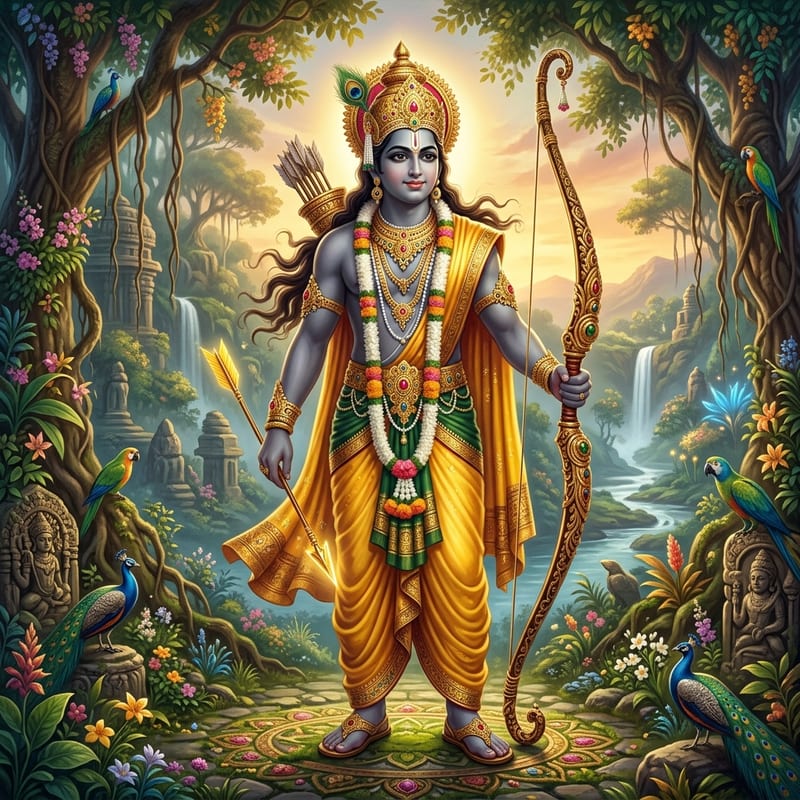
śrīrāmarakṣāstotram
Translation: Sri Rama Raksha Stotram
Meaning: The hymn of protection by Lord Rama.
|| oṃ śrīgaṇeśāya namaḥ ||
Translation: Om, salutations to Lord Ganesha.
Meaning: Invocation to Lord Ganesha for auspiciousness.
asya śrīrāmarakṣāstotramantrasya | budhakauśika ṛṣiḥ |
śrīsītārāmacandro devatā | anuṣṭup chandaḥ |
sītā śaktiḥ | śrīmad hanumāna kīlakam |
śrīrāmacandraprītyarthe rāmarakṣāstotrajape viniyogaḥ ||
Translation: For this Sri Rama Raksha Stotra mantra, the sage is Budhakaushika. The deity is Sri Sita Ramachandra. The meter is Anushtup. The power is Sita. The pin (key) is Hanuman. The recitation of this hymn is for the pleasure of Lord Ramachandra.
Meaning: Introductory metadata stating the sage, deity, meter, and purpose of the hymn.
atha dhyānam |
dhyāyedājānubāhuṃ dhṛtaśaradhanuṣaṃ baddhapadmāsanasthaṃ
pītaṃ vāso vasānaṃ navakamaladalaspardhinetraṃ prasannam |
vāmāṅkārūḍha sītāmukhakamalamilallocanaṃ nīradābhaṃ
nānālaṅkāradīptaṃ dadhatamurujaṭāmaṇḍanaṃ rāmacandram ||
Translation: Now, the meditation. One should meditate on Lord Ramachandra, whose arms reach his knees, holding a bow and arrow, seated in the lotus position, wearing yellow garments, with eyes competing with fresh lotus petals, who is cheerful. His eyes meet the lotus-like face of Sita seated on his left thigh. He has the hue of a dark cloud, is shining with various ornaments, and wears a large crown of matted hair.
Meaning: Beginning of the meditation section. A detailed description for meditating on Lord Rama's divine form.
iti dhyānam ||
Translation: Thus ends the meditation.
Meaning: Conclusion of the meditation section.
caritaṃ raghunāthasya śatakoṭi pravistaram |
ekaikamakṣaraṃ puṃsāṃ mahāpātakanāśanam || 1||
Translation: The story of Lord Rama is of vast expanse, consisting of a billion verses. Each and every letter of it destroys the greatest of sins of mankind.
Meaning: Reading or hearing even a single letter of Rama's story removes great sins.
dhyātvā nīlotpalaśyāmaṃ rāmaṃ rājīvalocanam |
jānakīlakṣmaṇopetaṃ jaṭāmukuṭamaṇḍitam || 2||
Translation: Having meditated upon Rama, who is dark like a blue lotus, with lotus-like eyes, accompanied by Janaki (Sita) and Lakshmana, and adorned with a crown of matted hair.
Meaning: Meditating on Rama along with Sita and Lakshmana.
sāsitūṇadhanurbāṇapāṇiṃ naktañcarāntakam |
svalīlayā jagattrātumāvirbhūtamajaṃ vibhum || 3||
Translation: Holding a sword, quiver, bow, and arrows in his hands, the destroyer of demons (night-wanderers), the unborn and all-pervading Lord who manifested by his own divine play to protect the world.
Meaning: Rama is the unborn Supreme Lord who took form to protect the universe.
rāmarakṣāṃ paṭhetprājñaḥ pāpaghnīṃ sarvakāmadām |
śiro me rāghavaḥ pātu bhālaṃ daśarathātmajaḥ || 4||
Translation: A wise person should read this Ramaraksha (protection of Rama), which destroys sins and grants all desires. May Raghava protect my head; may the son of Dasharatha protect my forehead.
Meaning: The hymn grants desires and destroys sins; invokes Rama to protect the head and forehead.
kausalyeyo dṛśau pātu viśvāmitrapriyaḥ śrutī |
ghrāṇaṃ pātu makhatrātā mukhaṃ saumitrivatsalaḥ || 5||
Translation: May the son of Kausalya protect my eyes; may the beloved of Vishwamitra protect my ears. May the protector of sacrifices protect my nose; may the one affectionate to Lakshmana (Saumitri) protect my mouth.
Meaning: Invokes different names of Rama to protect the eyes, ears, nose, and mouth.
jihvāṃ vidyānidhiḥ pātu kaṇṭhaṃ bharatavanditaḥ |
skandhau divyāyudhaḥ pātu bhujau bhagneśakārmukaḥ || 6||
Translation: May the ocean of knowledge protect my tongue; may the one revered by Bharata protect my throat. May the bearer of divine weapons protect my shoulders; may the one who broke Shiva's bow protect my arms.
Meaning: Invokes Rama to protect the tongue, throat, shoulders, and arms.
karau sītāpatiḥ pātu hṛdayaṃ jāmadagnyajit |
madhyaṃ pātu kharadhvaṃsī nābhiṃ jāmbavadāśrayaḥ || 7||
Translation: May the husband of Sita protect my hands; may the conqueror of Parashurama (Jamadagnya) protect my heart. May the destroyer of Khara protect my middle (waist); may the refuge of Jambavan protect my navel.
Meaning: Invokes Rama to protect the hands, heart, waist, and navel.
sugrīveśaḥ kaṭī pātu sakthinī hanumatprabhuḥ |
ūrū raghūttamaḥ pātu rakṣaḥkulavināśakṛt || 8||
Translation: May the master of Sugriva protect my hips; may the Lord of Hanuman protect my pelvic region. May the best of the Raghus, the destroyer of the demon race, protect my thighs.
Meaning: Invokes Rama to protect the hips, pelvis, and thighs.
jānunī setukṛtpātu jaṅghe daśamukhāntakaḥ |
pādau bibhīṣaṇaśrīdaḥ pātu rāmo'khilaṃ vapuḥ || 9||
Translation: May the builder of the bridge protect my knees; may the destroyer of the ten-headed (Ravana) protect my shins. May the giver of wealth/kingdom to Vibhishana protect my feet; may Rama protect my entire body.
Meaning: Invokes Rama to protect the knees, shins, feet, and the whole body.
etāṃ rāmabalopetāṃ rakṣāṃ yaḥ sukṛtī paṭhet |
sa cirāyuḥ sukhī putrī vijayī vinayī bhavet || 10||
Translation: The virtuous one who reads this protective hymn, endowed with the power of Rama, will become long-lived, happy, blessed with children, victorious, and humble.
Meaning: Benefits of reciting the hymn include long life, happiness, progeny, victory, and humility.
pātālabhūtalavyomacāriṇaśchadmacāriṇaḥ |
na draṣṭumapi śaktāste rakṣitaṃ rāmanāmabhiḥ || 11||
Translation: Those beings who wander in the netherworld, on earth, and in the sky, and those who wander deceptively (demons), are not even able to look at the one protected by the names of Rama.
Meaning: Evil spirits and demons from all realms cannot harm one who is protected by Rama's name.
rāmeti rāmabhadreti rāmacandreti vā smaran |
naro na lipyate pāpaiḥ bhuktiṃ muktiṃ ca vindati || 12||
Translation: Remembering 'Rama', 'Ramabhadra', or 'Ramachandra', a person is not tainted by sins, and attains both worldly enjoyment and liberation.
Meaning: Chanting Rama's names frees one from sin and grants both material and spiritual success.
jagajjaitraikamantreṇa rāmanāmnābhirakṣitam |
yaḥ kaṇṭhe dhārayettasya karasthāḥ sarvasiddhayaḥ || 13||
Translation: He who wears around his neck this protection by the name of Rama, which is the single mantra to conquer the world, has all perfections (siddhis) in his hand.
Meaning: Keeping this protective mantra close brings all forms of success and perfection.
vajrapañjaranāmedaṃ yo rāmakavacaṃ smaret |
avyāhatājñaḥ sarvatra labhate jayamaṅgalam || 14||
Translation: He who remembers this Rama armor known as the 'adamantine cage' (Vajra-panjara), his commands will be unobstructed, and he will obtain victory and auspiciousness everywhere.
Meaning: This hymn acts like an impenetrable cage, granting victory and authority.
ādiṣṭavān yathā svapne rāmarakṣāmimāṃ haraḥ |
tathā likhitavān prātaḥ prabuddho budhakauśikaḥ || 15||
Translation: Just as Lord Shiva commanded this Ramaraksha in a dream, so did the sage Budhakaushika write it down upon waking in the morning.
Meaning: This hymn was revealed to Sage Budhakaushika by Lord Shiva in a dream.
ārāmaḥ kalpavṛkṣāṇāṃ virāmaḥ sakalāpadām |
abhirāmastrilokānāṃ rāmaḥ śrīmān sa naḥ prabhuḥ || 16||
Translation: He who is a garden of wish-fulfilling trees, the end of all calamities, the most beautiful in the three worlds—that glorious Rama is our Lord.
Meaning: Rama is the source of all blessings, the ender of sorrows, and the supreme master.
taruṇau rūpasampannau sukumārau mahābalau |
puṇḍarīkaviśālākṣau cīrakṛṣṇājināmbarau || 17||
Translation: The two youths, full of beauty, delicate yet possessing great strength, with wide eyes like white lotuses, wearing bark and dark deer skin.
Meaning: Describing the beautiful, strong, and ascetic appearance of Rama and Lakshmana in the forest.
phalamūlāśinau dāntau tāpasau brahmacāriṇau |
putrau daśarathasyaitau bhrātarau rāmalakṣmaṇau || 18||
Translation: Eating fruits and roots, self-controlled, ascetics, observers of celibacy; these two sons of Dasharatha, the brothers Rama and Lakshmana.
Meaning: The brothers lived as disciplined ascetics in the forest.
śaraṇyau sarvasattvānāṃ śreṣṭhau sarvadhanuṣmatām |
rakṣaḥ kulanihantārau trāyetāṃ no raghūttamau || 19||
Translation: The refuge of all living beings, the foremost among all archers, the destroyers of the demon race—may those two best of the Raghus protect us.
Meaning: A prayer for protection to the greatest archers and protectors of all.
āttasajjadhanuṣāviṣuspṛśāvakṣayāśuganiṣaṅgasaṅginau |
rakṣaṇāya mama rāmalakṣmaṇāvagrataḥ pathi sadaiva gacchatām || 20||
Translation: With bows strung and ready, touching their arrows, and carrying quivers with inexhaustible arrows, may Rama and Lakshmana always walk ahead of me on my path for my protection.
Meaning: Invoking the armed Rama and Lakshmana to constantly lead and protect the devotee.
sannaddhaḥ kavacī khaḍgī cāpabāṇadharo yuvā |
gacchanmanoratho'smākaṃ rāmaḥ pātu salakṣmaṇaḥ || 21||
Translation: Fully equipped, wearing armor, holding a sword, bow, and arrows, the young Rama, accompanied by Lakshmana, may protect us, moving as our very desire.
Meaning: May the fully armed Lord fulfill our desires and guard us.
rāmo dāśarathiḥ śūro lakṣmaṇānucaro balī |
kākutsthaḥ puruṣaḥ pūrṇaḥ kausalyeyo raghūttamaḥ || 22||
Translation: Rama, the son of Dasharatha, the valiant one, followed by Lakshmana, the strong one, descendant of Kakutstha, the complete Supreme Person, son of Kausalya, the best of the Raghus.
Meaning: Praising Rama through his many illustrious titles and lineage.
vedāntavedyo yajñeśaḥ purāṇapuruṣottamaḥ |
jānakīvallabhaḥ śrīmān aprameya parākramaḥ || 23||
Translation: Known through Vedanta, the Lord of sacrifices, the ancient Supreme Person, the beloved of Janaki, the glorious one of immeasurable valor.
Meaning: Rama is the Supreme God of the Vedas and the beloved husband of Sita.
ityetāni japannityaṃ madbhaktaḥ śraddhayānvitaḥ |
aśvamedhādhikaṃ puṇyaṃ samprāpnoti na saṃśayaḥ || 24||
Translation: My devotee who constantly chants these (names/verses) with faith, undoubtedly attains merit greater than an Ashwamedha (horse) sacrifice.
Meaning: Reciting this hymn with devotion yields immense spiritual merit.
rāmaṃ dūrvādalaśyāmaṃ padmākṣaṃ pītavāsasam |
stuvanti nāmabhirdivyaiḥ na te saṃsāriṇo narāḥ || 25||
Translation: Those who praise Rama—who is dark like Durva grass, lotus-eyed, and wearing yellow garments—with these divine names, those men are no longer bound to the cycle of worldly existence.
Meaning: Praising the beautiful Lord frees one from the cycle of birth and death (Samsara).
rāmaṃ lakṣmaṇapūrvajaṃ raghuvaraṃ sītāpatiṃ sundaram |
kākutsthaṃ karuṇārṇavaṃ guṇanidhiṃ viprapriyaṃ dhārmikam |
rājendraṃ satyasandhaṃ daśarathatanayaṃ śyāmalaṃ śāntamūrtim |
vande lokābhirāmaṃ raghukulatilakaṃ rāghavaṃ rāvaṇārim || 26||
Translation: I bow to Rama, the elder brother of Lakshmana, the best of Raghus, husband of Sita, the handsome one, descendant of Kakutstha, ocean of compassion, treasure of virtues, beloved of the wise/brahmins, the righteous one, the king of kings, devoted to truth, son of Dasharatha, dark-complexioned, embodiment of peace, the delight of the worlds, the ornament of the Raghu dynasty, Raghava, the enemy of Ravana.
Meaning: A comprehensive prayer honoring the many virtues and titles of Lord Rama.
rāmāya rāmabhadrāya rāmacandrāya vedhase |
raghunāthāya nāthāya sītāyāḥ pataye namaḥ || 27||
Translation: Salutations to Rama, Ramabhadra, Ramachandra, the Creator, the Lord of the Raghus, the Master, the husband of Sita.
Meaning: Offering deep reverence to the various glorious forms of Lord Rama.
śrīrāma rāma raghunandana rāma rāma
śrīrāma rāma bharatāgraja rāma rāma |
śrīrāma rāma raṇakarkaśa rāma rāma
śrīrāma rāma śaraṇaṃ bhava rāma rāma || 28||
Translation: Sri Rama, Rama, joy of the Raghus, Rama, Rama. Sri Rama, Rama, elder brother of Bharata, Rama, Rama. Sri Rama, Rama, fierce in battle, Rama, Rama. Sri Rama, Rama, be my refuge, Rama, Rama.
Meaning: A rhythmic chant seeking refuge in Lord Rama.
śrīrāmacandracaraṇau manasā smarāmi
śrīrāmacandracaraṇau vacasā gṛṇāmi |
śrīrāmacandracaraṇau śirasā namāmi
śrīrāmacandracaraṇau śaraṇaṃ prapadye || 29||
Translation: I remember the feet of Sri Ramachandra with my mind. I praise the feet of Sri Ramachandra with my words. I bow to the feet of Sri Ramachandra with my head. I take refuge in the feet of Sri Ramachandra.
Meaning: Complete surrender to Rama in thought, word, and deed.
mātā rāmo matpitā rāmacandraḥ
svāmī rāmo matsakhā rāmacandraḥ |
sarvasvaṃ me rāmacandro dayālu-
rnānyaṃ jāne naiva jāne na jāne || 30||
Translation: Rama is my mother, Ramachandra is my father. Rama is my master, Ramachandra is my friend. The compassionate Ramachandra is my everything. I know of no other, truly I know of no other, I know not.
Meaning: Affirming that Lord Rama is the devotee's only relationship, refuge, and all in all.
dakṣiṇe lakṣmaṇo yasya vāme tu janakātmajā |
purato mārutiryasya taṃ vande raghunandanam || 31||
Translation: On whose right is Lakshmana, and on whose left is the daughter of Janaka (Sita), and in front of whom is Maruti (Hanuman)—to that joy of the Raghus, I bow.
Meaning: Bowing to Rama accompanied by his dearest associates.
lokābhirāmaṃ raṇaraṅgadhīraṃ
rājīvanetraṃ raghuvaṃśanātham |
kāruṇyarūpaṃ karuṇākaraṃ taṃ
śrīrāmacandram śaraṇaṃ prapadye || 32||
Translation: The delight of the worlds, steadfast in the battlefield, lotus-eyed, Lord of the Raghu dynasty, the embodiment of compassion, the creator of compassion—in that Sri Ramachandra, I take refuge.
Meaning: Surrendering to the brave, beautiful, and compassionate Lord.
manojavaṃ mārutatulyavegaṃ
jitendriyaṃ buddhimatāṃ variṣṭham |
vātātmajaṃ vānarayūthamukhyaṃ
śrīrāmadūtaṃ śaraṇaṃ prapadye || 33||
Translation: Swift as the mind, with speed equal to the wind, conqueror of the senses, the foremost among the wise, the son of the wind god, the chief of the monkey army—in that messenger of Sri Rama (Hanuman), I take refuge.
Meaning: A prayer to Lord Hanuman, the ultimate devotee of Rama.
kūjantaṃ rāmarāmeti madhuraṃ madhurākṣaram |
āruhya kavitāśākhāṃ vande vālmīkikokilam || 34||
Translation: Singing 'Rama, Rama', the sweet, sweet syllables, having climbed the branch of poetry—I bow to the cuckoo named Valmiki.
Meaning: Honoring Sage Valmiki, who beautifully composed the Ramayana like a singing bird.
āpadāmapahartāraṃ dātāraṃ sarvasampadām |
lokābhirāmaṃ śrīrāmaṃ bhūyo bhūyo namāmyaham || 35||
Translation: The destroyer of calamities, the giver of all wealth, the delight of the worlds—to Sri Rama, again and again I bow.
Meaning: Repeated salutations to the benevolent Lord who removes sorrow and grants prosperity.
bharjanaṃ bhavabījānāmarjanaṃ sukhasampadām |
tarjanaṃ yamadūtānāṃ rāmarāmeti garjanam || 36||
Translation: The roasting of the seeds of worldly existence, the acquisition of happiness and wealth, the frightening away of the messengers of death (Yama)—is the roaring chant of 'Rama, Rama'.
Meaning: Chanting Rama's name destroys the cycle of rebirth, brings joy, and wards off death.
rāmo rājamaṇiḥ sadā vijayate rāmaṃ rameśaṃ bhaje
rāmeṇābhihatā niśācaracamū rāmāya tasmai namaḥ |
rāmānnāsti parāyaṇaṃ parataraṃ rāmasya dāso'smyahaṃ
rāme cittalayaḥ sadā bhavatu me bho rāma māmuddhara || 37||
Translation: Rama, the jewel among kings, is always victorious. I worship Rama, the Lord of Lakshmi. By Rama, the army of demons was destroyed; to that Rama, salutations. There is no higher refuge than Rama; I am the servant of Rama. May my mind always be absorbed in Rama; O Rama, please uplift me.
Meaning: A summary verse glorifying Rama in all grammatical cases (vibhakti), demonstrating complete devotion.
rāmarāmeti rāmeti rame rāme manorame | (śrīrāmarāmarāmeti)
sahasranāmatattulyaṃ rāmanāma varānane || 38||
Translation: (Lord Shiva to Parvati): 'Rama, Rama, Rama'—by chanting this, I rejoice in the beautiful Rama. O lovely-faced one, the name of Rama is equal to the thousand names (of Vishnu).
Meaning: The single name of Rama holds the spiritual power of chanting the entire Vishnu Sahasranama.
iti śrībudhakauśikaviracitaṃ śrīrāmarakṣāstotraṃ sampūrṇam ||
Translation: Thus ends the Sri Ramaraksha Stotram composed by Sri Budhakaushika.
Meaning: Conclusion of the hymn.
|| śrīsītārāmacandrārpaṇamastu ||
Translation: May this be offered to Sri Sita and Ramachandra.
Meaning: Dedicating the recitation to the divine couple.