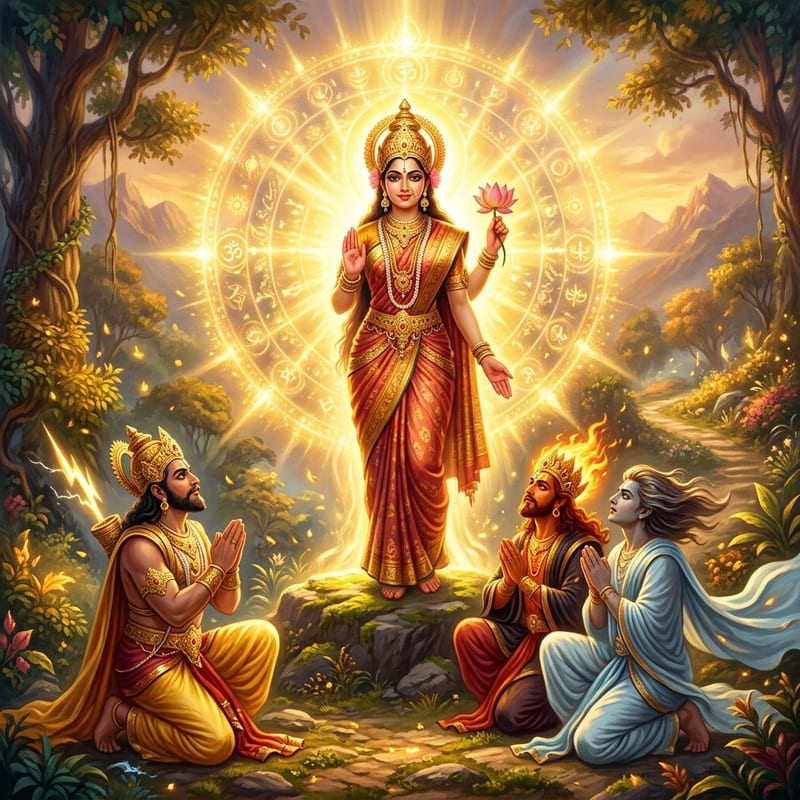
sā brahmeti hovāca brahmaṇo vā etadvijaye mahīyadhvamiti tato haiva vidāñcakāra brahmeti || 1||
She replied, "It is Brahman. Indeed, it is through the victory of Brahman that you attained your glory." From that alone, he understood that it was Brahman.
tasmādvā ete devā atitarāmivānyāndevānyadagnirvāyurindraste hyenannediṣṭha-mpasparśuste hyenatprathamo vidāñcakāra brahmeti || 2||
Therefore, these gods—Agni, Vayu, and Indra—are, as it were, superior to the other gods, for they touched Brahman closest and they were the first to know that it was Brahman.
tasmādvā indro-'titarāmivānyāndevānsa hyenannediṣṭha-mpasparśa sa hyenatprathamo vidāñcakāra brahmeti || 3||
Therefore, Indra is, as it were, superior to the other gods, for he touched Brahman closest and he was the first to know that it was Brahman.
tasyaiṣa ādeśo yadetadvidyuto vyadyutadā(3) itī-nnyamīmiṣadā(3) ityadhidaivatam || 4||
Regarding this, there is this illustration: It is like the flash of lightning, or like the blinking of the eye; this refers to the divine manifestation.
athādhyātmaṃ-ya~ddetadgacchatīva ca mano-'nena caitadupasmaratyabhīkṣṇaṃ saṅkalpaḥ || 5||
Regarding the individual self, it is like the mind that seems to approach Him, and by which one repeatedly remembers Him—this is the path of thought.
taddha tadvana-nnāma tadvanamityupāsitavyaṃ sa ya etadevaṃ-ve~dābhi hainagṃ sarvāṇi bhūtāni saṃvā~ñchanti || 6||
That Brahman is known as "Tad-vana" (the object of desire). It should be meditated upon as "Tad-vana." He who knows Brahman in this way, all beings cherish him.
upaniṣada-mbho brūhītyuktā ta upaniṣadbrāhmīṃ-vā~va ta upaniṣadamabrūmeti || 7||
"Teach me, sir, the Upanishad." "The Upanishad has been spoken to you; indeed, we have told you the Upanishad concerning Brahman."
tasyai tapo damaḥ karmeti pratiṣṭhā vedā-ssarvāṅgāni satyamāyatanam || 8||
Austerity, self-restraint, and work are its foundation; the Vedas are its limbs, and Truth is its abode.
yo vā etāmevaṃ-ve~dāpahatya pāpmānamanante svarge loke jyeye pratitiṣṭhati pratitiṣṭhati || 9||
He who knows this Upanishad in this way, having shaken off all evil, becomes established in the infinite, highest, and blissful heavenly world. He is established.
|| iti kenopaniṣadi caturthaḥ khaṇḍaḥ ||
oṃ āpyāyantu mamāṅgāni vākprāṇaścakṣu-śśrotramatho balamindriyāṇi ca sarvāṇi | sarva-mbrahmaupaniṣada-mmā-'ha-mbrahma nirākuryā-mmā mā brahma nirākarodanirākaraṇamastvanirākaraṇa-mme-'stu | tadātmani nirate ya upaniṣatsu dharmāste mayi santu te mayi santu |
oṃ śānti॒-śśānti॒-śśāntiḥ̭ ||
|| iti kenopaniṣat ||